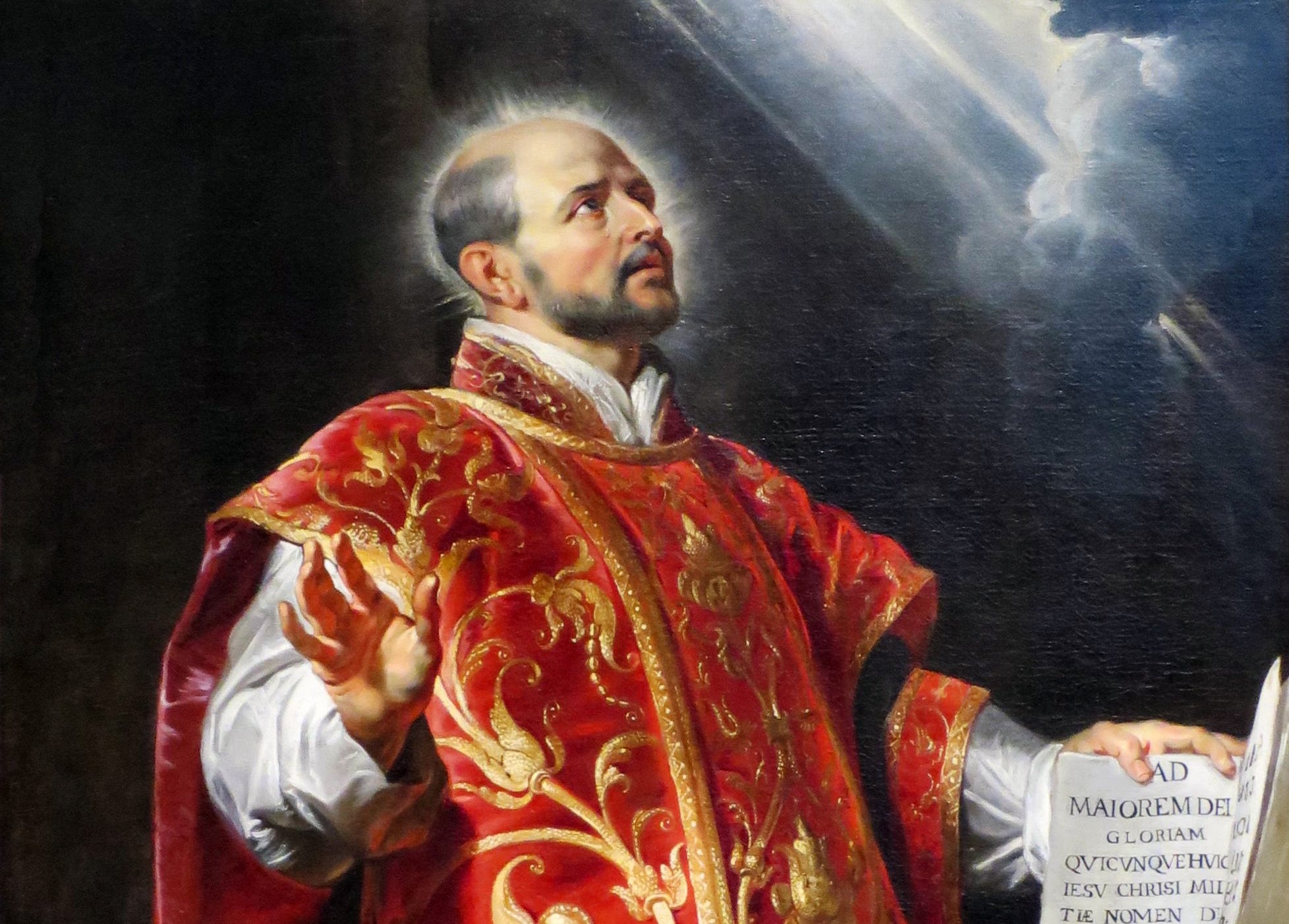
The 31st of July is the dies natalis or heavenly birthday of one of the greatest priests and religious founders of Church history, Ignacio de Loyola, who died on this day in 1556 and was canonized in 1622. St. Ignatius is famous, of course, for having established the Society of Jesus (S.J.) or Jesuits. This order has given the Church many of her most daring and successful missionaries to the most far-flung corners of the earth. St. Francis Xavier comes to mind, who during his journeys baptized an estimated 30,000 converts, driven by the love of God and anxiety for the eternal loss of all who die outside of the Church.
A magnificent painting by the Flemish artist and devout Catholic Peter-Paul Rubens (1577–1640), painted right around the time of the saint’s canonization, vividly captures many of the qualities of Ignatius that made him and his order great.
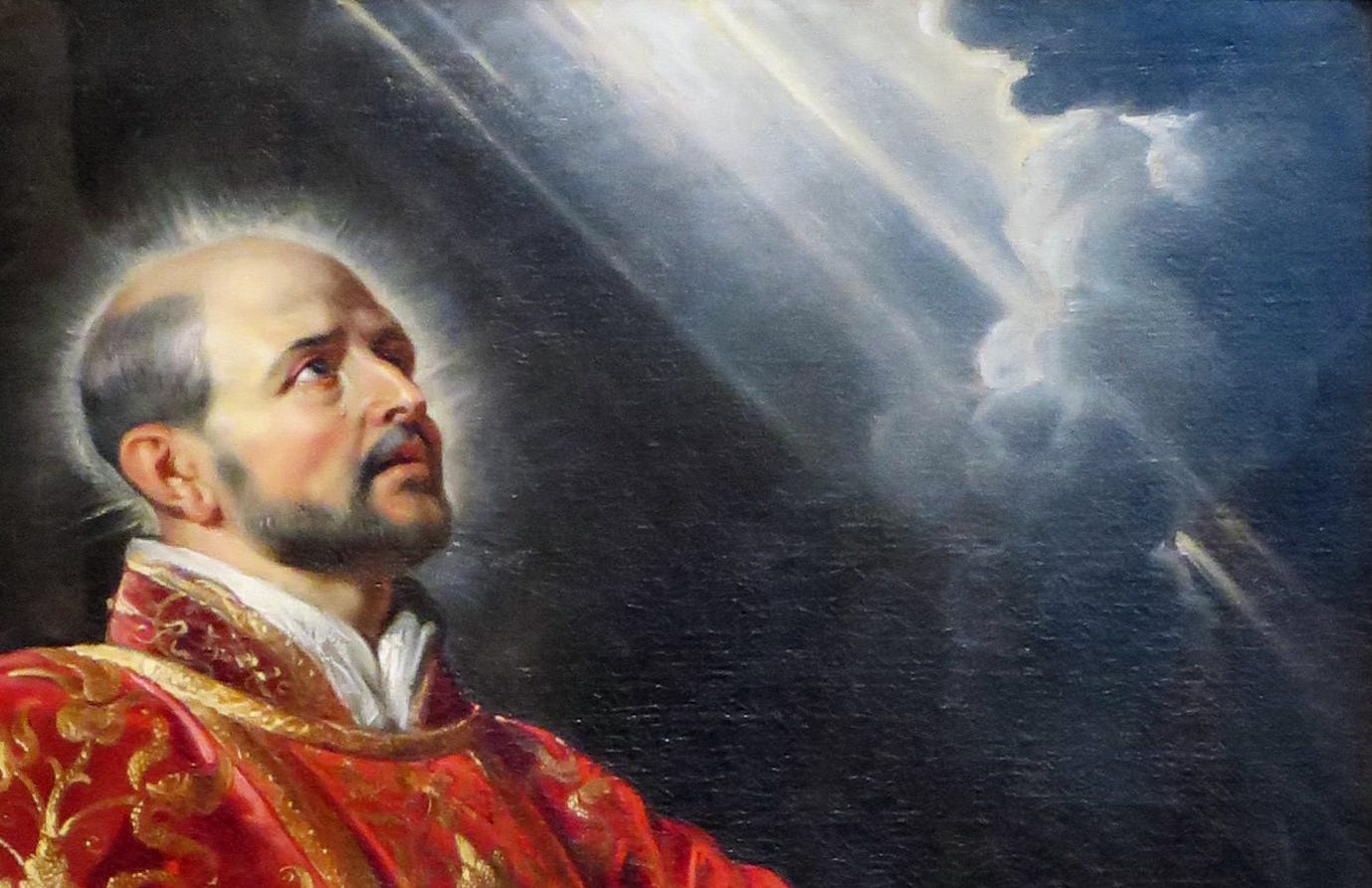
He is shown looking up to heaven in prayerful meditation, awaiting the light of God’s will, the guidance and strength of the Holy Spirit. This no doubt is a reference to the Spiritual Exercises in which Ignatius, on the basis of his own profound spiritual life and his experience in directing others, formulated certain rules by which Christians could distinguish between the voice of God and the contrary voices of the world, the flesh, and the devil—a crucial tool for a world tempest-tossed by the Protestant Revolt, against which the Jesuits campaigned with a fervor that culminated in the astonishing fortitude of the host of Jesuit martyrs of Elizabethan England.
Rubens depicts the face of the saint as calm and resolute, determined to do what God wills, as He wills it, when He wills it. There is neither the agitated haste of one who rushes ahead into trouble with a false zeal, or the pusillanimous hesitancy that doubts, second-guesses, or shrinks in fear of pain and difficulty. With the spirit of Christian chivalry he is ready to take up arms against a sea of troubles.
He has drunk in peace from its very source—“in His will is our peace,” as Dante sang—and therefore can radiate it to others, attracting them to follow him in the friendship, the society, of Jesus. We can also detect, thanks to the subtle brush of Rubens, a combination of remorse for his own sins and lamentation of the sorry state of others, especially heretics, schismatics, infidels, and pagans, for whose conversion he and his faithful spiritual sons will exhaust themselves.