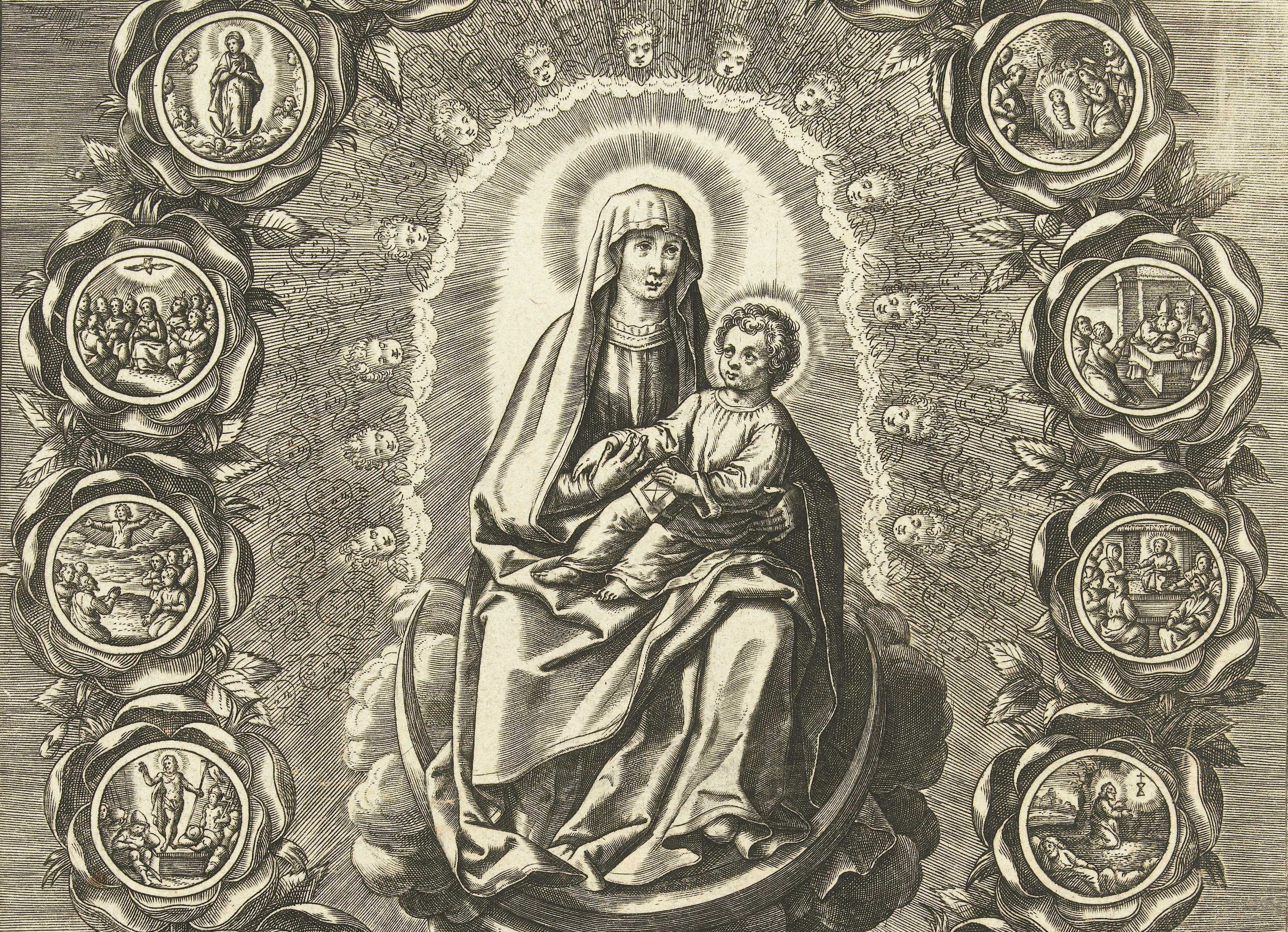
It is well known that traditional Catholics typically do not pray the luminous mysteries with the holy rosary. Some denounce the introduction of these mysteries as yet another innovation promulgated to undermine the received tradition which Catholics should hold dear.
Various reasons are given for the traditionalist distrust of praying the luminous mysteries. The two most frequently heard are as follows. First, it seems impious to suggest that something given to a much-loved saint, namely Saint Dominic, bequeathed to him directly by our Lady amid a vision, can subsequently be improved upon by a pope. Second, the laity, as a part of their devotion to the rosary, have conjoined in their minds the 150 Aves of the 15 mysteries to the 150 Psalms, thereby intentionally offering their rosaries in union with the consecrated members of the Church who pray the divine office throughout the world, a pious practice undermined by the addition of another 50 Hail Marys.
It is worth examining these two objections in order to appreciate their importance. Traditionalists rightly feel that ancient and long-received devotions of the Church ought not to be tampered with on the whim of popes. Perhaps popes genuinely have the legal power to make such innovations—which is to say, perhaps the power to make changes to this or that devotion authentically belongs to their office—but it nonetheless may be immoral for them to do so. After all, it may belong to the pope to change the habit of this or that religious order, but that does not mean that any pope should do so unless there is something about the habit of this or that religious order that’s contrary to faith or morals.
Indeed, making any such changes may be itself damaging to faith or morals, especially given that the Church’s faithful are widely traumatised from ongoing innovations to their life of faith due to revolutions in liturgy, aesthetics, moral attitudes, and a host of other aspects on which the Church should have been in the business of conservation rather than rupture.
Perhaps the pope, for example, has the legal power to change the colour of the brown scapular to a fluorescent pink, but it does not follow that it would be morally right for him to do so, and in doing so he would certainly be executing something gravely injurious to the piety of the faithful—hence it would be manifestly unjust.
If there is a devotion, then, like the holy rosary, which tradition holds was given to a great saint amid a private revelation for the sanctification of the faithful, a devotion to which the faithful has since attached much importance, and on which their spiritual life largely depends, a pope should treat with extreme caution any suggestion that it be tampered with. Indeed, prudence would generally press him to leave it well alone.
The rosary has often been called the ‘psalter of the laity’ not because the lay faithful alone pray it, but because—as noted—it has long been part of their devotion intentionally to unite their recital of it to the prayers offered in religious houses throughout the world. This pious intention is rooted in a tradition that goes back to the origins of prayer beads among Christians.
It was a practice, even among the 3rd-century fathers and mothers of the Egyptian desert, to pray all the Psalms. Those monks who were illiterate, however, would instead say 150 prayers of “Lord have mercy”, or “Jesus, Son of God, have mercy on me, a sinner”, or they would recite that number of Our Fathers. A millennium later, in the 12th and 13th centuries, crusader knights who struggled to combine their martial duties with praying the office, would pray 150 Pater nosters, in continuity with the ancient practice.