



On my first visit to the Abbaye Sainte-Madeleine of Le Barroux, I heard a wonderful sermon by the founding abbot Dom Gerard Calvet (requiescat in pace), who took his text from the Letter to the Colossians: “Set your minds on things that are above, not on things that are of earth” (Col 3:2).
The thrust of the sermon—it was in French but I could still get something out of it, having studied some French in grad school—was this: If we are serious about being Christians, if we really believe in what Jesus has done for us and promises to us, our only home is with Him in heaven—that is the only place we can really want to be. Everything we must do on earth we shall do as well as we can, and with genuine charity, but our heart will already be in heaven.
Listen to what St. Paul says in this passage: “If then you have been raised with Christ”—this already happens mystically in our baptism—“seek the things that are above, where Christ is, seated at the right hand of God” (Col 3:1).
And why, according to Paul, should we be lingering there, well beyond this world, even when it makes us look foolish to our unbelieving neighbors?
“For you have died, and your life is hid with Christ in God” (Col 3:3). When we were baptized, the old man in us, the child of Adam, underwent a spiritual death; his pride and vanity was drowned in the font, and a new man was born from the waters, with privileged access to the world of the Spirit: “hid with Christ in God.” We were inserted into His wounds, into His heart, into His being—and we were given the grace to remain there, if such was our ongoing choice.
Knowing that many would choose the polluted waters of a worldly life to the refreshing waters of life eternal, our Lord even provided an emergency exit from sin, the sacrament of penance, so that no man could ever say his mistakes were fatal.
All that could be done for us has been done for us. St. Paul goes on to say: “When Christ who is our life appears, then you also will appear with him in glory” (Col 3:4). Our Lord’s foremost desire is to bring us to share His glory, the glory He shared with His Father before the world was made (Jn 17:5). If Christ is truly our life, then His life, and thus His glory, will truly be ours.

Christ, Model and Mover
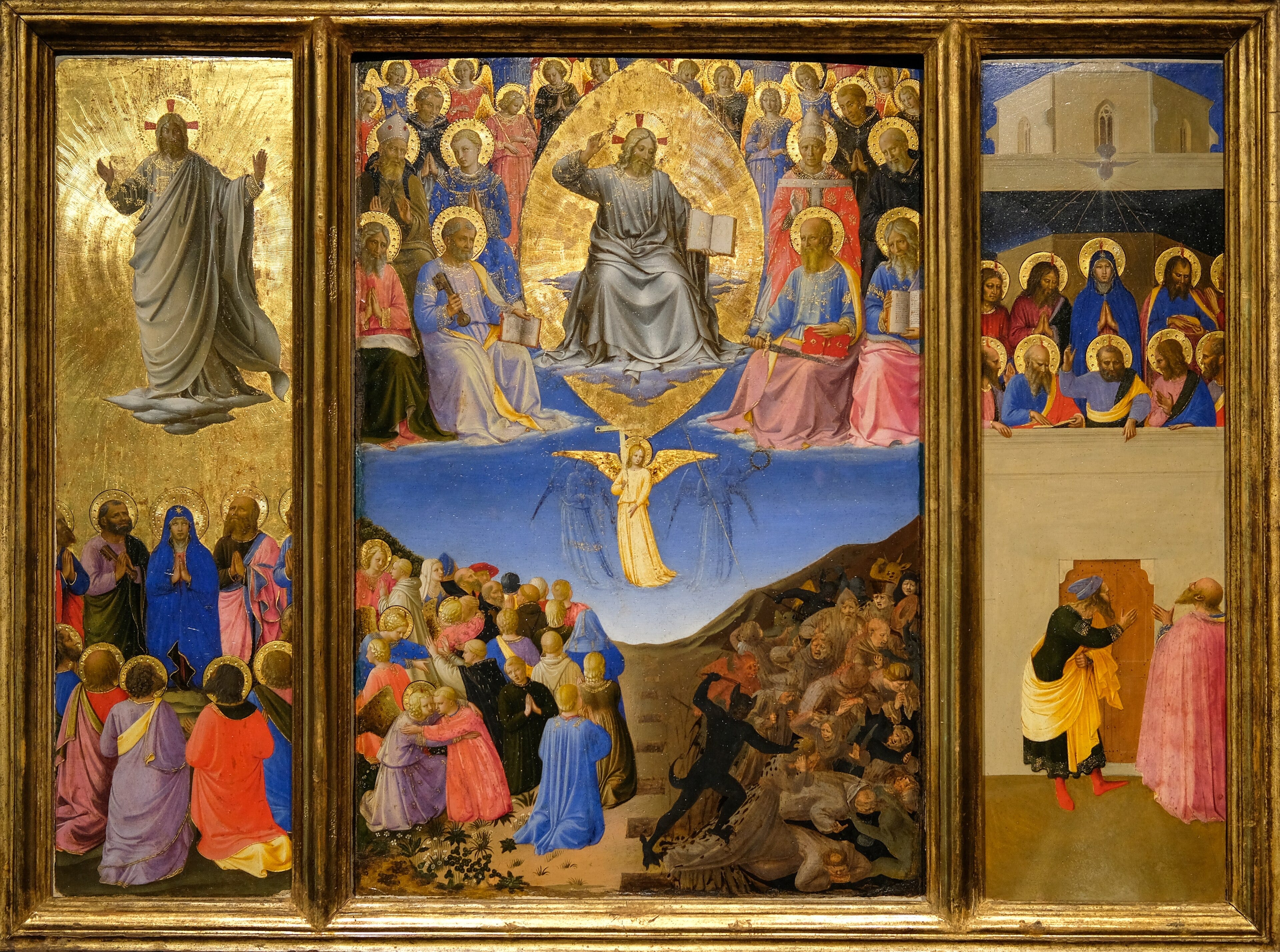
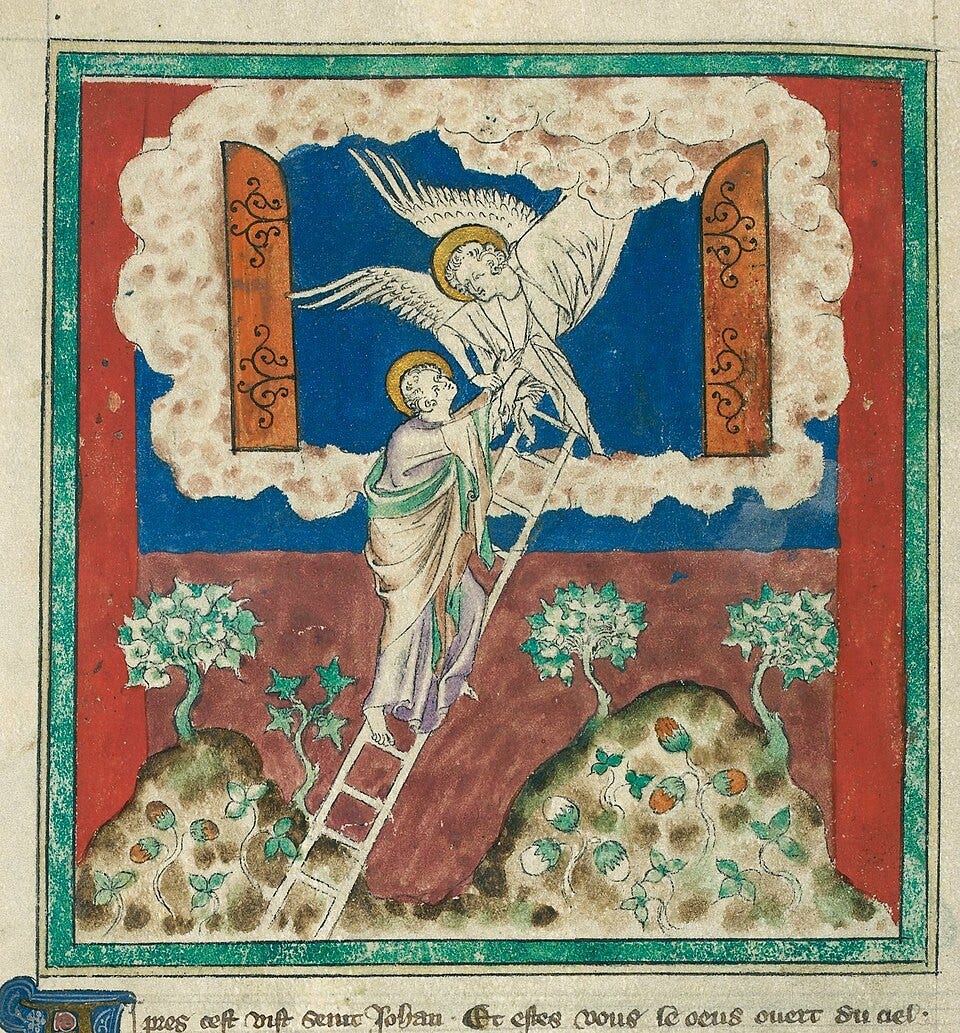
If it is to begin rightly, eschatology, or the study of the “last things,” must begin with the “last things” in the life of Jesus Christ: His death and resurrection and His exaltation as sovereign Judge seated at the right hand of the Father. Sacred Scripture teaches us that Christ’s resurrection is the operative and modeling cause of our resurrection, His ascension of our ascension, His glory of our glory.
As St. Thomas explains, Christ merited for Himself a fourfold exaltation corresponding to His fourfold humiliation in the Passion:
Now in His Passion Christ humbled Himself beneath His dignity in four respects. In the first place as to His Passion and death, to which He was not bound; secondly, as to the place, since His body was laid in a sepulchre and His soul in hell; thirdly, as to the shame and mockeries He endured; fourthly, as to His being delivered up to man’s power, as He Himself said to Pilate (Jn 19:11): “Thou shouldst not have any power against Me, unless it were given thee from above.” And, consequently, He merited a fourfold exaltation from His Passion:
First of all, as to His glorious Resurrection: hence it is written (Ps 138:1): “Thou hast known my sitting down”—that is, the lowliness of My Passion—“and My rising up.”
Secondly, as to His ascension into heaven: hence it is written (Eph 4:9): “Now that He ascended, what is it, but because He also descended first into the lower parts of the earth? He that descended is the same also that ascended above all the heavens.”
Thirdly, as to the sitting on the right hand of the Father and the showing forth of His Godhead, according to Isaiah 52:13: “He shall be exalted and extolled, and shall be exceeding high: as many have been astonished at Him, so shall His visage be inglorious among men.” Moreover (Phil 2:8) it is written: “He humbled Himself, becoming obedient unto death, even to the death of the cross: for which cause also God hath exalted Him, and hath given Him a name which is above all names”—that is to say, so that He shall be hailed as God by all; and all shall pay Him homage as God. And this is expressed in what follows: “That in the name of Jesus every knee should bow, of those that are in heaven, on earth, and under the earth.”
Fourthly, as to His judiciary power: for it is written (Job 36:17): “Thy cause hath been judged as that of the wicked cause and judgment Thou shalt recover.”1
Since Christ is the Head of the Church, His Mystical Body, what He did and suffered had value not only for Himself but also, in keeping with the purpose of the Incarnation (“to seek and to save what was lost”), for all the members of this body. As St. Thomas teaches, Christ merits grace and glory for his members because it is from Him that they receive their very life as Christians, namely, the life of grace, which, when unimpeded, blossoms into the life of glory.2
Thus an analogous exaltation—consisting of our own bodily resurrection, ascension, being seated in the court of the heavenly King, and participating in His righteousness as Judge—is merited for all who are baptized into the Lord’s death, then live by His grace and die in His favor. The merits of Christ become truly ours, and we cannot lose them except by unrepented grievous sin. As Louis Bouyer says: