William Shakespeare has kept alive the deeds of King Henry V for the English-speaking world, and it is gratifying to Catholics here that England’s Catholic past remains a source of national identity and pride. Shakespeare’ account is subject to the usual dramatic simplifications of his trade as a playwright, but he deserves credit for incorporating into his history plays anecdotes and even phrases directly from the chroniclers and other contemporary sources. Shakespeare really does give us a flavour of the late Middle Ages.
One such anecdote is the execution of Bardolf for robbing a church. It is a melancholy moment between the hard-won success of the capture of Harfleur and the battle of Agincourt. This short scene, in which the king confirms the sentence of death on a man who had been a drinking companion in his younger days, has greater significance than meets the eye: a significance not sufficiently brought out by commentators on the play or historians of the 1415 Agincourt campaign.
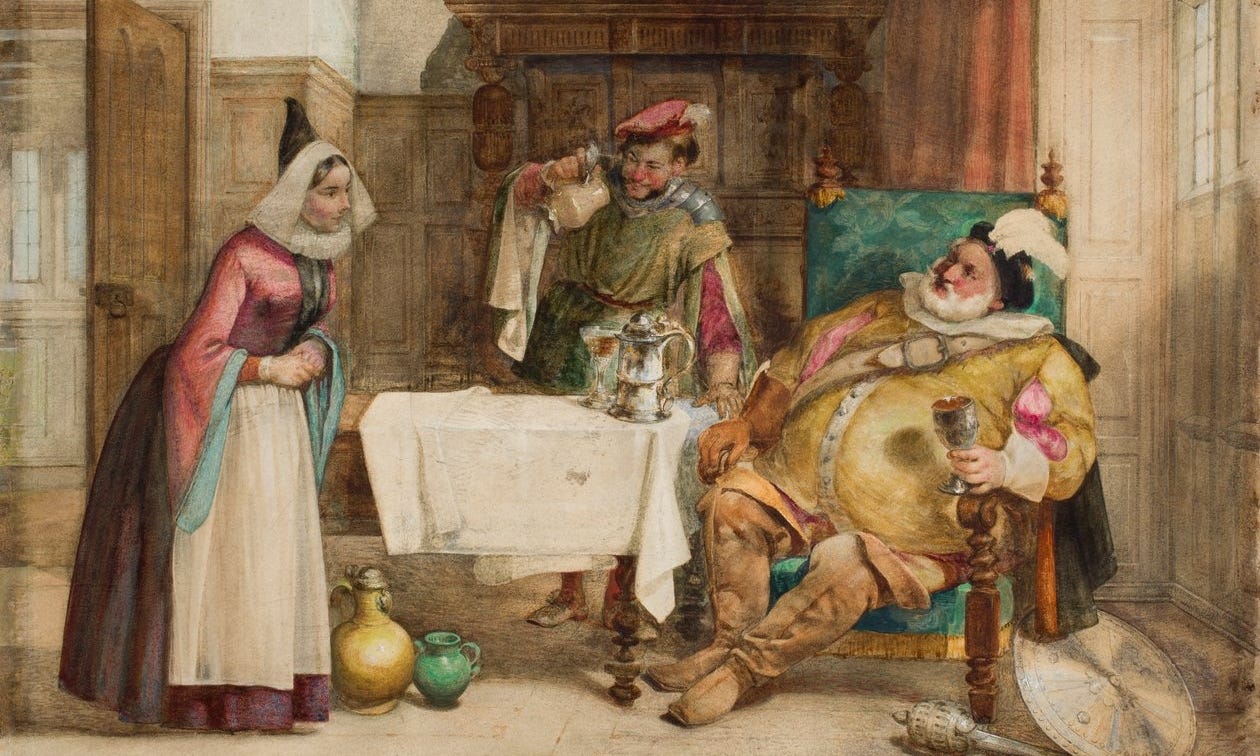
First, a little background. Bardolf had been one of Falstaff’s companions, and Falstaff had been Henry’s close friend before he became king. Falstaff is one of the most popular of Shakespeare’s creations, and is based on two historical figures. One is Sir John Oldcastle, who had been the young Prince Hal’s military advisor when he was fighting Owen Glendower (as Shakespeare calls him: Welsh speakers call him Owain Glyndŵr) in Wales. The other is Sir John Fastolf, who, confusingly, makes an appearance in Shakespeare’s Henry VI Part I as a cowardly English captain in France. Under pressure from the censors, Shakespeare changed his character’s name from Oldcastle to Falstaff, and this is where it gets interesting.
Prince Hal’s youth, contrary to Shakespeare’s depiction, was not spent drinking in East Cheap outside London, but, from his early teens, waging a brutal, under-funded war against Glendower, who had created an independent Principality of Wales. He was assisted in this by an experienced soldier, Oldcastle, but despite this relationship Oldcastle later had a terrible fall from grace. Not only did he adopt the Lollard heresy, but he escaped from imprisonment in the Tower of London in 1413 to coordinate a Lollard uprising the following year. Henry, now king, had his old comrade executed.