


Last week, I began sharing excerpts from Chiron’s remarkable history of traditionalism. Let’s continue. Any of my commentary is in italics; the rest of the text is from Chiron, with page numbers in parentheses.
On two occasions, Dom Gérard [Calvet, founder of Le Barroux] made decisions that placed him afoul of canon law: on December 8, 1972, without the agreement of the Abbot of Tournay, on whom he still depended, he had the first brother of the community, Jehan de Belleville, who had joined him two years earlier, take religious vows; and on June 10, 1974, instead of appealing to the bishop of the diocese, he asked Archbishop Lefebvre to confer minor orders on the first brothers of the community. These two initiatives led to a rupture with the Archbishop of Avignon and with the Benedictine Order. Refusing to leave the nascent community to another superior, and refusing to adopt the new Mass, Dom Gérard was expelled from the Benedictine Order in 1975 and declared suspended a divinis. He remained closely linked to Archbishop Lefebvre until 1988, having his monks ordained by the Prelate of Écône. The growth of the community (eleven members at the beginning of 1977) necessitated the building of a new monastery, the site of which was Le Barroux, a dozen kilometers from Bédoin, in 1978. (218)
What one sees over and over again is a hatred of tradition like that of a defrocked priest who becomes an anticlericalist apostate or satanist or philanderer.
When the abbey [of En-Calcat] adopted the new Mass and a new monastic office, in French, Dom Hugues refused to submit to it. According to one of his friends, the historian Hervé Pinoteau, “his abbot wrote to him that he no longer had a place in the community and he himself replied that it was the abbot who was no longer there.”… it is attested that until the end of his life, in 2009, Dom Hugues Portes was able to remain “faithful to the individual celebration of the Mass in the Tridentine rite, faithful also to the celebration of the breviary, following St. Benedict.” He was not a marginal figure in his monastery, however, and continued to participate in the life of the community and to be the confessor of the nuns of the neighboring abbey of Dourgne, a position he held for thirty years. (222)
The changes in religious life paralleled the changes in liturgical life. (223)
Outrageous:
From 1965 onwards, the monastery [Notre-Dame-de-Bonsecours in Couvrechef, near Caen] underwent many changes as a result of the aggiornamento of religious life and the application of the liturgical reform: introduction of the vernacular in the Divine Office from 1965, adoption of the new Ordo Missae from 1970, communion in the hand, and changes in the application of the Rule and Constitutions, notably the suppression of perpetual adoration of the Blessed Sacrament, a perpetual adoration which was one of the reasons for the congregation’s existence. …
The successive changes that took place at Notre-Dame de Bonsecours, most often without the community being consulted, caused Mother Élisabeth a great deal of sorrow. They appeared to her not as natural developments, but as infidelities to the Rule and to the vows she had professed. …
Father de Bailliencourt argued that fidelity to God and to her vocation allowed her to leave her monastery without the permission of her superiors, and to continue her religious life in another community. On July 24, 1979, without informing anyone in her community, and seizing the opportunity provided by having to receive medical care on the outside, Mother Élisabeth “fled” her monastery and took refuge, at first, with her sister in Versailles. She was fifty-seven years old, and had been in consecrated life for almost thirty-four years. She stayed with her sister for almost a month. On August 1, in Paris, she met with Mother Gertrude de Maissin, and on August 21, she went to Bédoin to meet with Dom Gérard. She discovered a monastery faithful to the traditional observances, a young community, which at that time numbered sixteen monks. The next day, August 22, on the feast of the Immaculate Heart of Mary, she attended Mass for the first time in the priory chapel and, almost ten years after being deprived of it, rediscovered the traditional Mass.
So beautiful—in the face of churchmen treating their charges so wretchedly.
And so, in the autumn of 1979, two traditional Benedictine communities were born, one in Lamairé, on the initiative of Mother Gertrude de Maissin, the other in Montfavet, on the initiative of Mother Élisabeth de La Londe. In both cases, the foundations were irregular with regard to canon law, founded by nuns who had broken away from their communities, and the bishops of the dioceses concerned soon issued warnings. Both communities, however, were to prosper. (225)
Concerning the Capuchins:
Concelebration became the rule, prayer in the conventual church disappeared almost everywhere. Here it’s opportune to remark that concelebration did more to undermine Catholic religious life for men than any other postconciliar innovation. The aggiornamento nearly destroyed religious life, and where it survived, it did so by clinging to whatever scraps and shreds of tradition it could. The more traditional, the healthier. (226)
At the end of 1969, when the new Mass began to take effect, the superior of the Merville community, Mother Thérese-Marie Coache, sister of Father Coache, refused to have it celebrated in their chapel. She also refused, in 1971, to allow the abbreviated French office, Prière du temps présent, to replace the Latin office, and the possibility for the nuns to wear lay clothes. That same year, with another religious, Mother Marie-Xavier, she left the Merville community. They found refuge in the Maison Lacordaire in Flavigny, which Father Coache had just acquired. In 1973, postulants presented themselves and Mother Thérese-Marie decided to restore their original congregation under the name of Little Sisters of Saint Francis and to write new constitutions. (229)
Pages 234–36 tell the harrowing tale of Mother Simoulin, foundress of one of several communities of traditional Dominican nuns (one of them has some 270 sisters in 23 houses, and nearly 3,000 students in 5 countries; while another has some 150 sisters running 12 schools in 3 countries). What noble souls! You can see how the Vatican under Pope Francis did exactly the same thing to traditional religious communities as was done to them back in the 1970s, acts of vicious tyranny: they were declared not Dominicans, not religious, mere laywomen. Of course, they carried on doing what they had solemnly vowed themselves to in the sight of the Lord.
But no matter how bad things get, the one thing that must never be done is… return to tradition!
The Jesuit Louis de Vaucelles, in an article devoted to the vocations crisis, recalled that “the episcopate firmly excludes the return to a type of preparation for the priesthood that is considered outdated” and “rejected the solution advocated by Archbishop Marcel Lefebvre in his seminary at Écône.” (245)
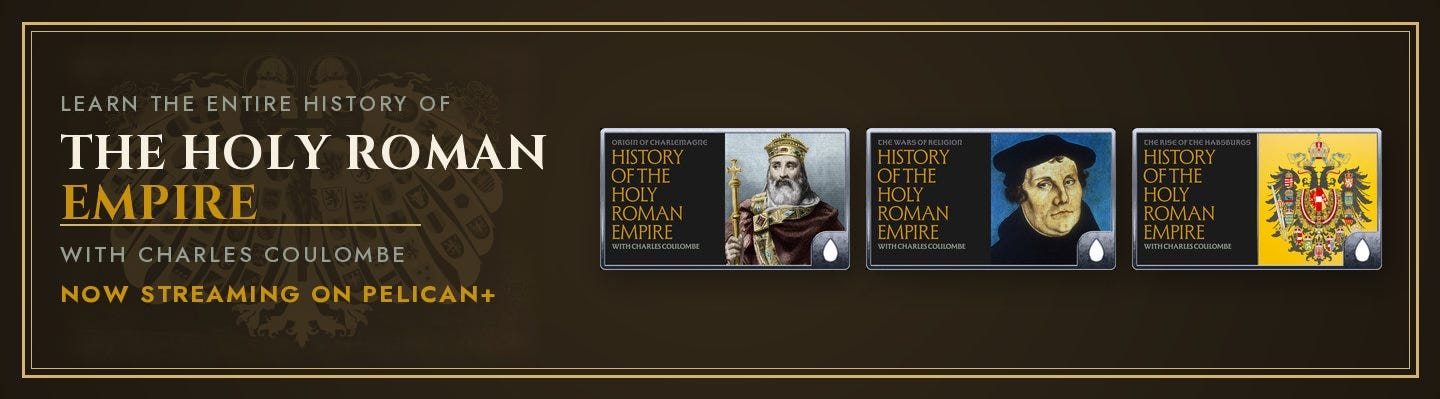
Jean Madiran:
On October 27, 1972, he addressed a letter to Paul VI, which he would make public only several months later. The first words were a threefold plea: “Holy Father, give us back the Scriptures, the catechism, and the Mass.” Scripture is “now falsified by the mandatory versions that the new catechism and the new liturgy seek to impose,” the new official catechisms “no longer teach the three things needful for salvation,” while the new Mass has eclipsed the traditional Mass. He asked the pope to confirm “in their faith and in their just rights the priests and laity who, in spite of the foreign occupation of the Church by the party of apostasy, faithfully keep Holy Scripture, the Roman catechism, the Catholic Mass.” (247-48)
Bishop Adam of Écône, spewing forth the same line they’ve always been using:
The Mass of Paul VI is obligatory. . . . I cannot put up with the formation of a sect in the diocese. . . . All the history of the Church teaches us that true reformers . . . do not withdraw themselves from obedience. (250)
Lefebvre’s famous Declaration of 1974 contains this magnificent paragraph:
Without any rebellion, bitterness, or resentment we continue our work of priestly formation under the lodestar of the perennial magisterium of all time, convinced that we cannot render a greater service to the Holy Catholic Church, to the Sovereign Pontiff, and to future generations. (251)
The same garbage is hurled at traditional Catholics in 2026:
“You are against the Pope and the Council,” accused Cardinal Garrone, who also reproached him for teaching his seminarians to “rely on their personal judgment, on tradition as they understand it. This is free thinking, the worst kind of liberalism!” He also hurled at him: “You are forming a sect. Archbishop Lefebvre will be the pope of a new Church!” (253)
Lefebvre on March 19, 1975:
Know that if a Bishop breaks with Rome it will not be me. My Declaration says as much quite explicitly and strongly. . . . Liberalism has been condemned by the Church for a century and a half. It entered the Church thanks to the Council. The Church is dying from the practical effects of this liberalism. We must therefore do everything possible to help the Church and those who govern her to free themselves from this satanic grip. (254)
That very June 29, 1975, Paul VI addressed a long letter to Archbishop Lefebvre. It was not brought to Écône until July 8. The Pope gave specific pontifical approval to the “conclusions” reached by the Cardinal’s Commission, specifying: “We have personally ordered their immediate implementation.” Consequently, he asked Archbishop Lefebvre to make “a public act of submission.” It was in this letter that Paul VI reproached Archbishop Lefebvre for “daring to fight a Council such as the Second Vatican Council, which is no less authoritative, and in some respects even more important yet than that of Nicaea.” The formula scandalized some, because the Council of Nicaea, in 325, the first ecumenical council in the history of the Church, had been the one that had formulated the Creed. (257)
Chiron shows how energetically Card. Villot, a known Freemason, worked to have Lefebvre condemned and damaged. Lefebvre’s friends tried to persuade him to back down, to grovel before Paul VI. For example, Bp. Morilleau wrote to him something strikingly wrong—exactly not what would have persuaded him in any case:
They [to wit, your opinionated and passionate entourage] have gradually become your usual environment of life or relationships; their influence unwittingly has made you persist in attitudes that have become untenable today. This is not fidelity to Tradition. I am not going to tell you again that Tradition, founded on the Truth and guaranteed by the living Holy Father, is itself a living reality. In every field opinions, methods, habits, formulas risk becoming ossified. (260)
Then Morilleau brings in an exquisite ultramontanist flourish:
I can see no way out that is honorable for you, ‘edifying’ for all those who have placed their trust in you, salvific for the young men for whom you are responsible, outside of a total submission to the Holy Father, who is “Our Lord on earth.”
Paul VI himself directly criticized Lefebvre in an address to all the cardinals in Rome in May 24, 1976—a very unusual thing!—saying exactly what folks like Lofton or Likoudis say today:
Such people [as Lefebvre] diminish the Church’s authority under pretext of tradition; their obedience to that authority is merely lip-service. They draw the faithful away from the ties of obedience to the See of Peter as well as from their lawful bishops. They repudiate the authority of today in favor of that of another age. (261)
Paul VI also declared on that occasion: “Use of the new Ordo Missae is in no way left up to the choice of priests or people,” it was “promulgated in place of the old.” This was the line everyone had been saying, but when the committee of cardinals was called to study the question by John Paul II, they concluded that Paul VI had not, in fact, abrogated the old missal or absolutely mandated the new; and this was the basis of “Summorum Pontificum.”
This must be seen clearly: Lefebvre was the ultimate challenge to Paul VI’s pride in his modernizing project. He threatened his entire pontificate, indeed one may say his entire worldview. And Lefebvre’s success with both vocations and lay support at a time when both were drying up elsewhere indicated the ongoing vitality of the tradition at a time when everyone was supposed to believe it was “of another age,” “ossified,” and therefore could not be fruitful.
Referring to his meeting with Bishop Benelli, Archbishop Lefebvre also wrote the following to Dom Roy: “We are not here dealing with men of the Church…. The time has come to show that we do not belong to that Religion and to keep up the struggle.” (261)
263, in Lefebvre’s text from July 1976:
He twice states: “this conciliar Church is schismatic,” and again: “It is both schismatic and heretical. This conciliar Church is therefore not Catholic. Insofar as the Pope, the bishops, priests, and faithful adhere to this new Church, they separate themselves from the Catholic Church.”
In the Lille sermon [of August 1976], Archbishop Lefebvre also explained why he did not accept the canonical sanctions imposed on him by the Holy See:
I do not consider these penalties to be valid, whether canonically or theologically. In all sincerity, in all peace, in all serenity, I believe that I cannot accede to these suspensions, by these punishments with which I am struck, to the closure of my seminaries, to the refusal to perform ordinations, to the destruction of the Catholic Church. At the hour of my death, when Our Lord asks me: “What have you done with your episcopal and priestly grace?” I do not wish to have to hear from the mouth of the Lord: “You have contributed to the destruction of the Church along with the others.”
He also announced his determination to continue his work forming priests:
We shall have another twenty-five new recruits this year at the seminary in Écône… As you can see, despite the difficulties we face, the young people understand very well that we are forming true Catholic priests. That is why we are not in schism, we are the continuators of the Catholic Church. It is those who make novelties that are going into schism. As for us, we continue Tradition. (266)
Lefebvre in I Accuse the Council:
The spirit that dominated the Council and inspired so many ambiguous and equivocal and even frankly erroneous texts was not the Holy Spirit, but the spirit of the modern world, a liberal, Teilhardian, modernist spirit, opposed to the reign of Our Lord Jesus Christ. (268)
This said in 1977; how much has really changed, 50 years later?
“Traditionalists are upset and scandalized at seeing themselves rejected by the churches and the Church” and “the liturgical subversion.” (273)
February 1978:
On February 26, Archbishop Lefebvre gave a very long reply to the Congregation: over eighty pages. The response was a well-reasoned critique of the Council’s doctrine of religious liberty, of “liberal ecumenism,” and of the new liturgy, which he described as “equivocal, bastardized, and nauseating to true Catholics, even if it is sometimes valid.” (274)
Lefebvre in November 1979 (I think):
I have never celebrated the new Mass according to the rite introduced in November 1969; I have always considered it dangerous and poisoned by a false ecumenism. (281)
He affirmed, with regard to the celebrations of the new Mass that “[m]ost of these Masses are sacrilegious and they pervert the faith by diminishing it,” but he refused to consider invalid all Masses celebrated according to the new rite, “as long as the essential conditions for validity exist, that is to say, the matter, the form, the intention, and a validly ordained priest.” (282)
Regarding the Pope and his authority, even though he said that Paul VI had contributed to the “awful demolition of the Church” by many of his acts and words, he “acted much more as a liberal than as an adherent of heresy. For as soon as the risk he was taking was pointed out to him, he made the text contradictory by adding a formula contrary to what was stated in the wording, or by writing an equivocal formula, which is the characteristic of liberals who are inconsistent by nature.”
Archbishop Lefebvre rejected the thesis of what some would soon call “the Church in eclipse,” as he felt that “the question of the Church’s visibility is too necessary to its existence for God to omit it for decades,” and he stated: “Far from refusing to pray for the Pope, we redouble our prayers and supplications that the Holy Spirit may give him light and strength in the affirmation and defense of the faith.” (283)
Dom Gerard Calvet:
The “Ultras” mistake failure in the exercise of the papacy for vacancy of the Apostolic See. They equate “bad pope” with “nonpope”; “resistance to the pope” with “rejection of the pope.” This imprudent upping of the ante has ever been a temptation throughout history among “right-wing schismatics,” those who push the requirement of purity to the extreme (Donatists, Jansenists, Old Catholics). (285)
Madiran in 1980 (!):
The longer we wait, the deeper the wounds to the Church will be, and the more advanced the unravelling of the Catholic fabric. Undoubtedly, there will remain many pending questions: but they will begin to be usefully dealt with from the moment when the nullity of the prohibitions against the Mass, against the catechism, against the person of Archbishop Lefebvre, and against the priests he formed and ordained in view of a new springtime of the Church is acknowledged. (287)
All the way back in 1982, here’s what Ratzinger was thinking. How long it took for “Summorum Pontificum”… 1982–2007, or 25 years!

On November 16, 1982, Cardinal Ratzinger, four other cardinals, and a Curia bishop met to discuss the question of the Mass, independently of the “Lefebvre question,” although it was on everyone’s mind all the same. The participants were unanimous in their view that “the Roman Missal in the form in which it was used until 1969 must be granted throughout the Church by the Holy See,” so long as the Mass of Paul VI was not considered suspect of “heresy or invalidity” and that the new liturgical calendar was followed. A papal document was to recall “the essence of the sacred liturgy,” denounce “the widespread abuses,” and expose “the intimate identity of the old and new missals, of the ordinary form and of the permissible form, which are in no way opposed.” And in the future it would be necessary to envisage a “synthesis of the two missals which preserves the achievements of the liturgical restoration, but which abandons certain exaggerated innovations.” (297)
Madiran’s reaction to “Quattuor Abhunc Anno”:
“The traditional Mass is no longer forbidden outright; this is progress, or rather a slightly lesser evil.” Nevertheless, he expressed his dissatisfaction: “It remains, however, a suspect Mass, subject to prior authorization; this is an enormous and senseless scandal.” (302)
Lefebvre in November 1983:
The problem of the situation of the faithful and the present papacy renders obsolete the difficulties of jurisdiction, disobedience, and apostolicity. These notions presuppose a Pope who is Catholic in his faith and in his government. (309)
Lefebvre, August 29, 1987:
“Since the Chair of Peter and the positions of authority in Rome are occupied by antichrists, the destruction of Our Lord’s Reign is proceeding apace within his Mystical Body here below, especially through the corruption of the Holy Mass”; consequently there was an “absolute necessity” to ensure the perpetuation of the priesthood by bishops: “As this modernist and liberal Rome continues its work of destroying the Kingdom of Our Lord, as evidenced by Assisi and the confirmation of Vatican II’s liberal theses on religious freedom, I find myself compelled by Divine Providence to pass on the grace of the Catholic episcopate which I have received, so that the Church and the Catholic priesthood may continue to subsist for the glory of God and the salvation of souls.” (317)
“The official link with modernist Rome is nothing in comparison with the preservation of the Faith.” (322)
Madiran refused to express a definitive view—this is how I am too:
Jean Madiran, one of the most trusted voices in traditionalism at the time, was unwilling to take a public stand for or against the consecrations before the event. In the newspaper Présent, he published press releases and statements both from those in favor of the consecrations and from those opposed. This was not a refusal to choose, but a more general view of the situation. He did not want “the whole religious problem to be reduced to [this] single question. . . .The decisive question remains that of the Mass, the catechism, the traditional version and interpretation of Scripture.”
Yet his personal view was this (from his diary, June 29, 1988):
We’ve been given demonstrations that, in extraordinary cases, bishops can be consecrated without a papal mandate. But it is not the simple absence of a mandate that is at issue. I fail to see where it has been demonstrated that it is not forbidden to consecrate bishops against the expressly manifested formal will of the Pope. Or at least, I don’t see how such a demonstration could avoid postulating or implying sedevacantism. (324)
Lefebvre citing Quito:
Our Lady prophesied that during the nineteenth century and most of the twentieth, errors would spread more and more strongly in the Holy Church, and that they would lead to catastrophe, corrupt morals, and the disappearance of the faith. This is something we cannot fail to notice. And I apologize for continuing the account of this apparition, but it speaks of a prelate who will absolutely oppose this wave of apostasy and impiety by preserving the priesthood, by making good priests. . . . I was stunned myself when I read these lines, I can’t deny them, it’s recorded in the apparition archives. (325)
What a bizarre formulation!:
They were assured by Cardinal Ratzinger that “the Pope’s will is to give a place in the holy Church to those who are attached to the spiritual tradition.” (327)
Bp. Garnier of Luçon in 1992 explained why he didn’t want to implement “Ecclesia Dei” of 1988:
Can you imagine us bishops managing what is known as biritualism? . . .We bishops are doing everything we can not to have to deal with bi-ritualism some day. In other words, if we were to accept, if we were to say yes to the application of the indult, to the Motu proprio, it would really only be in one or two chapels per diocese, with priests appointed by the bishop, of course, for a certain number of Sundays in the year, but not necessarily all of them, so that those who take advantage of these assemblies according to the old ritual, from time to time, also come and celebrate the Eucharist according to the new one, and thus manifest, in reality, and not just in words, their attachment to the Council and to the Church. (330)
Think of Bergoglio and Roche!:
In 1992, for example, Bishop Raffin of Metz considered the motu proprio Ecclesia Dei to be “a merciful parenthesis for people who must gradually come to terms with Paul VI’s Ordo Missae, for there can be no question of turning the Tridentine Missal into a new Latin rite like those that have existed and still exist.” (334)
Dom Robert le Gall, abbot of Kergonan wrote off Msgr. Klaus Gamber’s book:
His whole book amounts to a collection of little historical quibbles designed to justify a kind of allergy to what he irreverently calls the “ritus modernus.” (334)
Note how Madiran welcomed John Paul II’s “Veritatis Splendor”:
At last, the word we’ve been waiting for— or rather which, discouraged as we were, we were no longer expecting. . . . Nothing presaged that the announced encyclical “on morals” would be this strong, this radiant, this total: it is an encyclical on the law of God and the human call to life eternal. (338)
Archbp. Re in 1993 (!):
He asserted that the new Mass should remain the “general law,” while “the use of the previous rite is currently a matter of privilege which must remain an exception.” (340)
In his assessment, journalist Michel De Jaeghere, who for the previous three years had directed the summer universities of Renaissance catholique (close to the SSPX), considered that the tenth anniversary of the motu proprio could not be celebrated with joy because it was also the tenth anniversary of the condemnation of Archbishop Lefebvre. He noted that the July 1988 excommunication had struck first and foremost the bishop who, for twenty years, embodied the defense of the Tridentine Mass and the Catholic priesthood, a bishop to whom a large number of the priests who today benefit from the faculties of the motu proprio owe their formation, their vocation perhaps, their ordination in any case; that without his resistance, obstinacy, and repeated disobedience, there would be no Society of Saint Pius X, no Fraternity of Saint Peter, no monastery at Le Barroux, no Chartres pilgrimage. (345)
The controversy over the legitimacy of celebrating the Mass of Paul VI, even occasionally, continued to divide traditionalists, particularly the Fraternity of St. Peter. (348)
Bp. Fellay:
In his homily, the Superior General of the SSPX issued two pleas to the Pope: “Do justice to the Mass. Not to us— who are we? But to the Mass, give it back its rights, give the Church’s tradition back its rights, for it has rights.” (351)
Two days later, on January 18, 2002, the return of SSJV members to full communion in the Church took place during a ceremony at the cathedral in the presence of Cardinal Castrillón Hoyos. Bishop Rangel signed, on behalf of all the members of the Union, a doctrinal declaration on the acceptance of the Second Vatican Council “in the light of Holy Tradition” and the validity of the new Ordo Missae “whenever it is celebrated correctly and with the intention of offering the true Sacrifice of the Holy Mass.” On the same day, a decree from the Congregation for Bishops established the SSJV as a personal Apostolic Administration. The decree specified that “faculty is granted to the Apostolic Administration to celebrate the Holy Eucharist, the other sacraments, the Liturgy of the Hours, and other liturgical actions according to the Roman Rite and the liturgical discipline of Saint Pius V.” (355)
Liturgically speaking, the final years of John Paul II’s pontificate were marked by a major ceremony that vividly reaffirmed the “right of citizenship” of the traditional rite. On May 24, 2003, Cardinal Castrillón Hoyos celebrated a solemn Mass in the rite of St. Pius V at the Basilica of Santa Maria Maggiore, in the presence of five cardinals and several prelates of the Curia. … The choice of date is also a coincidence, or a deliberate sign: this solemn reaffirmation of the traditional Mass took place exactly twenty-seven years after Paul VI’s famous address to the Consistory on May 24, 1976, in which he declared that the novus ordo was obligatory and “promulgated in place of the old.” (356)
What an effeminate primadonna!—as if anyone was forcing them at gunpoint to give up the NOM:
The day after the motu proprio was published, Mgr Luca Brandolini, bishop of Sora-Aquinio Pontecorvo, a member of the Liturgical Commission of the Italian Episcopal Conference and a former collaborator of Archbishop Bugnini, declared:
Today is a day of mourning for me. My throat is in knots and I can’t hold back the tears. But I’ll obey the Pope because I’m a bishop and because I like him. But I can’t hide my sadness at the collapse of one of the most important reforms of the Second Vatican Council. . . .This is the saddest moment of my life as a priest, a bishop, and a man. It is a day of mourning, not only for me, but for all those who lived and worked for the Second Vatican Council. Today, a reform has been wiped out for which so many worked, at great sacrifice, driven only by the desire to renew the Church. (363-64)
Behold: the Super-Dogma!
In concise terms, the CEF expressed its expectations and caution: “Under no circumstances will the Council be negotiable. No ecclesial group can substitute itself for the Magisterium.” (367)
Among the things against which Bp. Fellay objected to Card. Levada early in 2012 was the following:
the soundness of the Novus Ordo Missae, which, irrespective of its validity and the liceity of its promulgation, presents deficiencies harmful to divine worship. (370)
Unless I missed it, Chiron never points out that the SSPX disputed the validity of the excommunications on canonical and theological grounds—an unusual lacuna in an otherwise detailed history.
The SSPX also justified its position by recourse to canon law (both old and new), which provides for extraordinary cases in which a marriage cannot, “without grave inconvenience,” be celebrated before a priest with faculties. Here, the “inconvenience” is, in ordinary parishes, both the pastoral preparation prior to the reception of the sacrament, the marriage Mass according to the new rite, and the preaching during the ceremony. … In fact, the Pope [Francis] asked the bishops to “guarantee the legal security of marriages contracted within the framework of the SSPX, so as to appease consciences”: to grant delegations to celebrate marriages and to register celebrations in Catholic registers. (381)
“The Church is a world,” as Émile Poulat used to say, a diverse and changing world. He also pointed out, in reference to Msgr Ducaud-Bourget, that his “life and mystical faith . . . a traditional faith” became, “without changing one iota, traditionalist through the simple course of history and of the Church.”10 It was historical change, particularly change in the Church, that made of him a “traditionalist.” In a word, traditionalism might be defined as a reaction and a will to transmit the faith. (398)
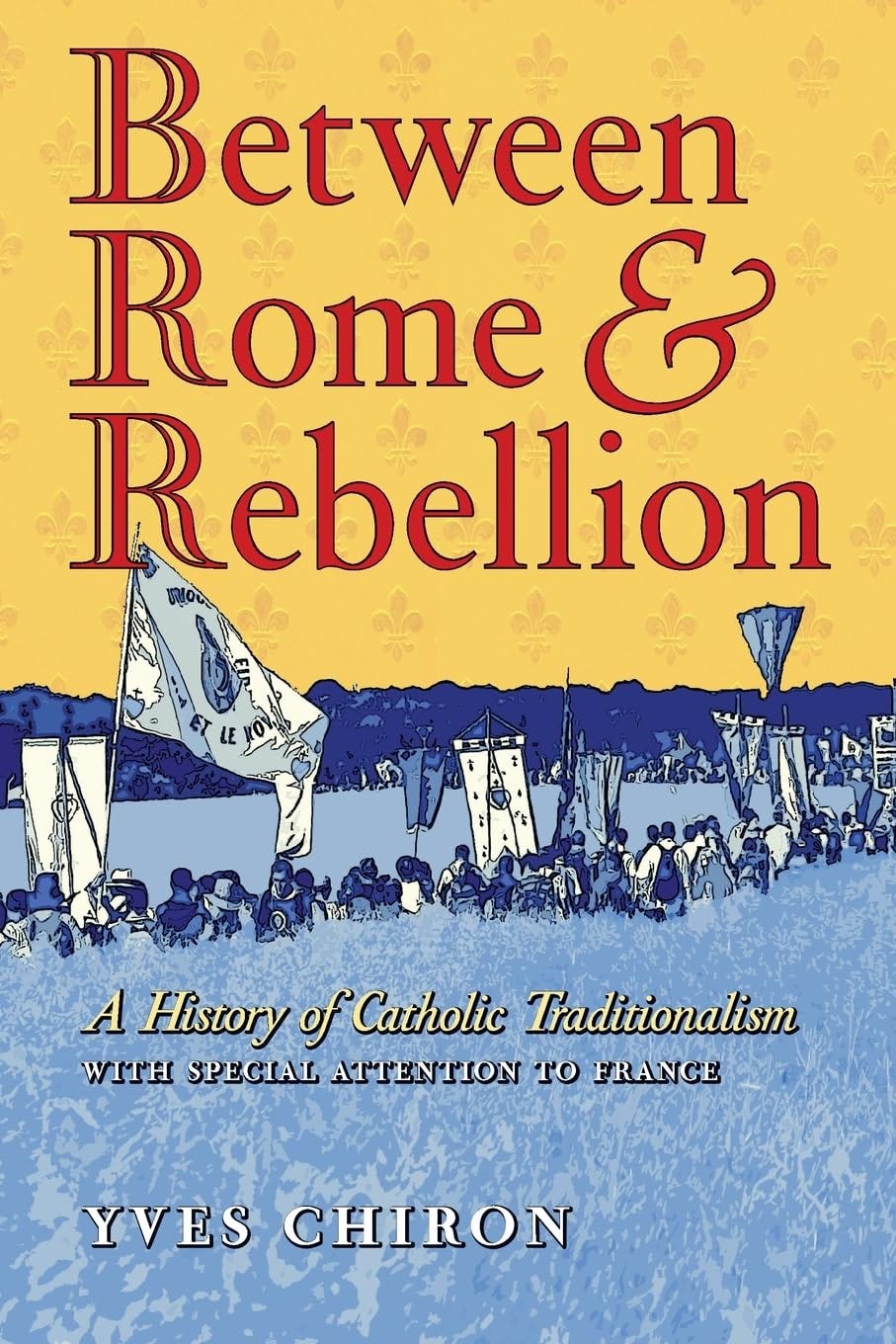
Between Rome and Rebellion: A History of Catholic Traditionalism with Special Attention to France is publised by Angelico Press. You can obtain it from the publisher or from Amazon.
Thanks Dr K, another thoroughly informative post. Our Lord, it seems to me, teaches us mainly in two ways: parables and actions.
You could write a hundred parables on the stupidity, arrogance, and violence of the modernist project perpetrated by Church officials against the faith to date, you would be hard pushed to write one against the defenders of Tradition, without resorting to contradiction and hard heartedness.
In actions, it seems defenders of the faith act only in last resorts, whilst the modernists continually innovate novelties and foist them upon the faithful.
I've reached the point in all of this, where I'm simply unwilling to make excuses for rejecting the modernist Church and the Novus Ordo. I'm just not going to remove my brain and pretend that the demolition team holding high office, have legitimate authority, when they promulgate heresy.
Not once did Our Lord ask us to contort our intellect and blind ourselves to the obvious.
Anyone still clinging to the revolution in this age of full availability of historical sources, where the evidence to use our reason is available like it never has been, is truly confirming themselves as a revolutionary.
A bit of a digression but as usual, Revolutionaries co-opt the narrative by projecting culpability, moving the goalposts of reason and demanding compliance.
The communion of prelates ought to be confirmed - if at all - by signing the Oath Against Modernism, not by pledging allegiance to a Council, the most dominant feature of which is ambiguity.