


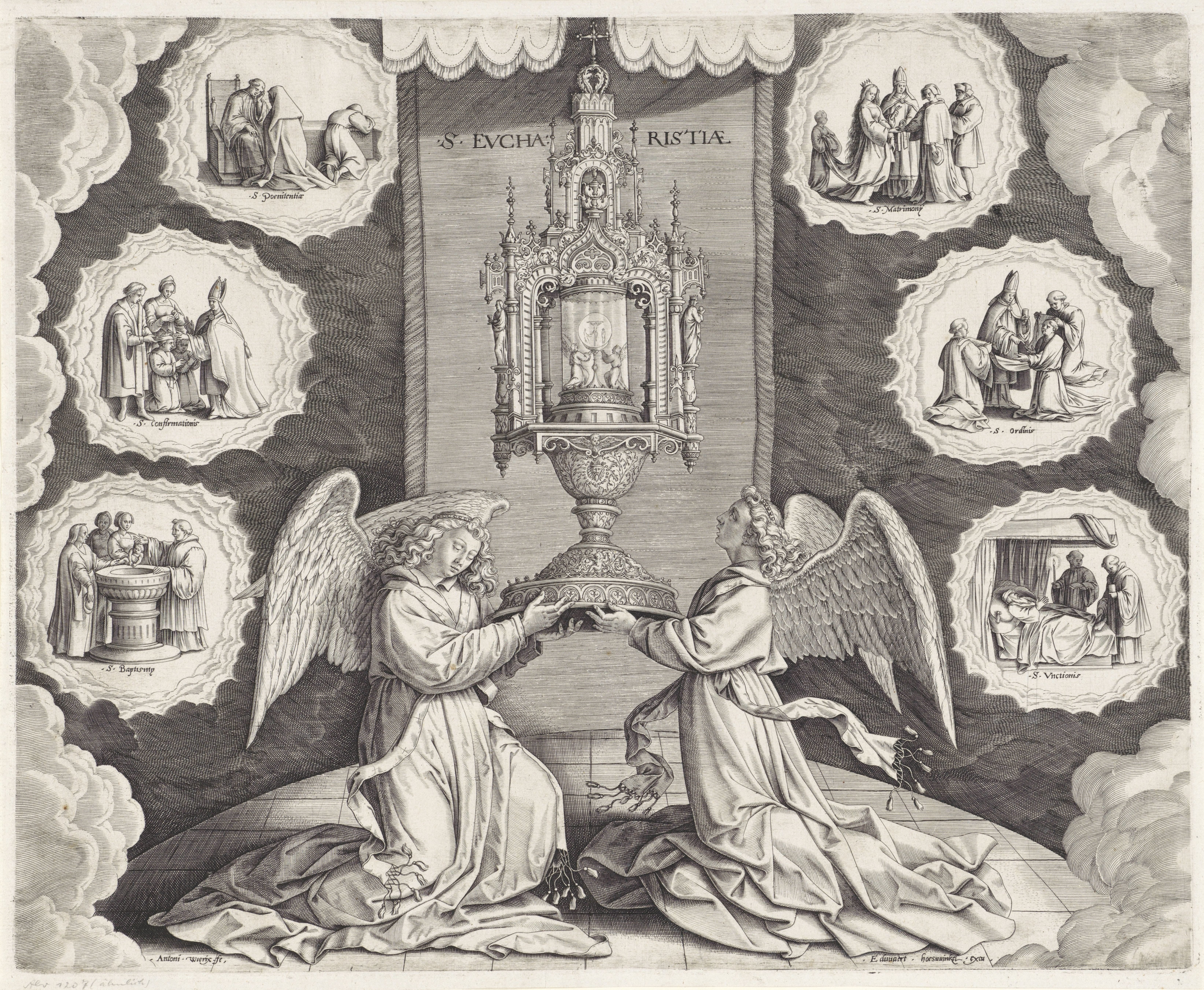
In 1969, A Short Critical Study of the Novus Ordo Missae was published with the signatures of two powerful cardinals, Antonio Bacci and Alfredo Ottaviani. Nicknamed “The Ottaviani Intervention,” it quickly become a classic, and has never gone out of print. But... where was its companion volume? You know, the one about the other six sacraments?
For, indeed, the reform of the Mass was accompanied by profound overhauls of the rituals for baptism, confirmation, marriage, holy orders, penance, and extreme unction (the last two renamed reconciliation and the anointing of the sick). And the changes to these were no less profound, no less meaningful, no less consequential.
Understandably, debates about liturgical reform have coalesced around the new missal for decades, since the Holy Mass is the Church’s central act of worship and touches the daily lives of Catholics. Yet if the new rite of the Mass deserves criticism for its diminished signification of the Church’s faith, the same holds for the new rituals of the sacraments, which were produced according to the same assumptions and principles.
Esteemed liturgical theologian Fr. Claude Barthe confronts this question in his short but potent work, The Seven Sacraments, Past and Present: A Short Critical Study of the New Rituals. Fr. Barthe takes up particular points of comparison between the old and new rituals, looking to the matter and the form (the elements used, the words spoken) as well as the ceremonies surrounding them. He asks, and answers, the question: Did the effort to “adapt the rites for modern man” end up diluting and dissipating the very faith they were supposed to express more effectively?

In this well-documented book, Fr. Barthe helps readers to see why a coherent defense and practice of tradition must reach beyond the Mass to embrace all of the Church’s rites—at a time when some are seeking to rule out the very possibility of doing so. The Roman Rite, he explains, is a unified world of prayer, and its components should not be arbitrarily divorced. If the traditional Mass deserves to be honored and prayed in our churches, the traditional form of each and every sacrament should be given no less honor and be no less readily available.
Perhaps in time, this book, too, will become famous, and people will start speaking of “The Barthe Intervention”!
I encourage tradition-loving Catholics to take up this brisk and battling book. Find out why it caused a firestorm upon its 2025 publication in France. Consider gifting it to priests you know who love the Mass of the Ages but may not yet fully understand how it is but the crown jewel of an entire ensemble of closely connected and harmonious parts.
Today, I will share some passages from this book, to whet the reader’s appetite.

In his Foreword, Bishop Athanasius Schneider writes:
All that the Church Fathers and most Roman Pontiffs, that is, the perennis sensus ecclesiae, warned against— innovations, improvisations, and breaks with the rites of the previous era— all this was carried out in an incomprehensible manner during the liturgical reform following the Second Vatican Council, with the approval of the Holy See. The rites of the sacraments of the post-conciliar reform depart strikingly from the constant and essential qualities of the Church’s liturgy, as inspired by the Apostles, faithfully developed according to the same sense by the Church Fathers, and carefully protected for centuries by the Roman Pontiffs.
Among the characteristics of the ritual of the “new sacraments” that contrast with the liturgy of all time, the following elements can be noted: the diminution of sacredness; the systematic weakening of biblical symbolism and typology, especially the link with the types of divine worship of the Old Covenant (such an attitude was typical of the ancient Christian Gnostics and partly also of Martin Luther); an overly academic and artificial tone; novelties invented with improvisations; anthropocentrism; a neo-Pelagian tendency (the obvious weakening of the doctrine of original sin and the weakening of the prayers of repentance and propitiation) associated with a naturalistic tendency (the weakening of the awareness of the existence and the action of evil spirits, hence an almost systematic omission of exorcisms). (xiii-xiv)
Abbé Claude Barthe deserves great credit for pointing out the deficiencies and clearly anti-traditional characteristics of the new ritual of the sacraments in a thorough and fair presentation. After an impartial reading of this study, one must honestly arrive at the conclusion that we must return to the sacramental spirit and rites as the Church has always preserved them, in accordance with the norm and spirit of the Church Fathers and of almost all the Roman Pontiffs. (xvi)

Now, turning to Fr. Barthe:
Seeking to deprive the Christian people of the immemorial liturgy of the Roman Church is gravely unjust, given that the Tridentine liturgy shows every sign of being a key vehicle for the transmission and preservation of the deposit of faith. Indeed, since Pope Francis’ motu proprio Traditionis custodes of July 16, 2021, which drastically restricts the celebration of the traditional Roman Mass, a campaign has been underway, especially in France, to chip away at the various forms of traditional worship: the Tridentine Mass is permitted, but only as a concession which is gradually being reduced (as can be seen in the bans on pilgrimage Masses), and traditional sacraments are strictly prohibited. However, the transmission of this doctrinal and spiritual treasure, by its very nature a taking part in the traditio of the deposit of faith, must be whole and intact.
Let us begin by stating that we are experiencing an exceptional crisis in the Church, one that is completely atypical, and that it is important, while attempting to survive, to avoid normalizing the abnormal. (1)
Explaining why “the new liturgy cannot be divided: it must be accepted or rejected in its entirety,” Fr. Barthe writes:
The liturgical reform is a single entity, “a block,” to borrow an expression used by Clémenceau about another revolution, and is intended to be so. From this perspective, what the current provision proposes, by distinguishing between the Mass and the other sacraments, is unthinkable. The reform of the missal is undoubtedly the most important aspect of the liturgical reform, but the aim of the latter is comprehensive. All the liturgical books have been modified, and profoundly so.
The comprehensive character of the post-conciliar liturgical reform is clear in its desire to manifest a new face of the Church through transforming the entire Roman liturgy so as to offer a lex orandi better suited to the people of this time (notably by smoothing out the expression of harsh dogmas, of the Mass as a propitiatory sacrifice, of baptism as a struggle against the devil, and so on). As the celebration of the other sacraments is less important than that of the Eucharist, they are not given as much attention.
Nevertheless, it is the whole world of the Tridentine liturgy that has been discarded. In fact, the new liturgy constitutes a different world. Even if Summorum Pontificum speaks of different “forms” of the Roman rite, these are in fact two distinct rites, but not in the same way that the Eastern rites are distinct from the Roman rite: the new rite is intended to replace the old one, as one set of things supplants another.
Truly, in the liturgy, all the parts cohere and communicate with one another around the center, the Eucharist, to which all the other sacraments are ordered. The old missal and the reformed missal are thus the respective hearts of the old and new liturgies. Anyone who rejects the new missal would be inconsistent if he accepted the new rites of the sacraments. (7-8)
If the new liturgy is “a block,” the old liturgy also constitutes a coherent whole that likewise cannot be dismembered. (9)
Today, defenders of the traditional liturgy are a minority within the Church. To employ the language of strategists, they are fighting a battle of the weak against the strong. But the “weak” benefit here, with divine assistance, from the supreme strength of a just cause, according to the criterion of the sensus fidei. They are all the more successful in making their voices heard because their cause is in harmony with the very essence of the transmission of the deposit of faith as summed up in the concept of Tradition. In fact, in this theoretically unequal battle, the “traditionalists,” although in the minority, benefit from the guilty conscience of the “moderns” and their vague sense of illegitimacy.
However, the “traditionalists” do not in any way hold the reins of power. And this situation entails constraints: any negotiating of their positions, any inch given, is extremely hazardous for them as things stand. And each particular transaction is dangerous for all those attached to the traditional liturgy, as I will emphasize regarding the requirements of the common good. On the other hand, once this liturgy has regained its place, either throughout the Church or in certain parts of it, showing tolerance towards followers of the new liturgy, by allowing them a transition process so that they can more easily become accustomed to the old liturgy in stages— a process known as the “reform of the reform”—will certainly be appropriate. (10-11)
Speaking of extreme unction:
Such is always the case with liturgical reform, in which the “return to the sources” aspect of rites is combined with a devaluation of their meaning. In fact, the transformation of this sacrament has gone hand in hand with a general de-dramatizing of death, which is medicalized and relegated to hospitals. (54)
Quoting the novelist François Mauriac, in words that I think are both hopeful about God’s mercy and realistic about the situation:
“Grace seeps or trickles through the rubble of the ruined liturgy.”
In an appendix, Fr. Barthe addresses the issue of “the lack of authority of the new liturgy”:
Is it disobedience when there are no grounds for obeying? Is it disobedience not to submit to a law that manifestly does not serve the common good? Unlike previous councils, Vatican II sought neither condemnation nor dogmatization. The development of a new form of teaching in which it situated itself—“authentic teaching” or “pastoral” teaching— was a skillful masterstroke: it introduces novelties, which devalue tradition, and simultaneously enables itself to be in tune with the times. This type of teaching allows for the expression of new doctrines (e.g., the “sincere reverence” with which the Church regards other religions), while at the same time nullifying the authority of the previous magisterium without having to actually contradict it, since we remain in the “pastoral” sphere. And all of this in a manner that fits in with a modern intellectual freedom that rejects all dogmatization except that of freedom itself.
It is only natural that the liturgical reform produced a new rule of worship, variable and barely binding, constantly opening up numerous options and leaving maximum leeway for interpretation by celebrants. The norm of worship reflects the norm of faith and vice versa: lex orandi, lex credendi. Or more precisely, the absence of norms in the strict sense: it is no longer a question of a lex with this form of worship, which contemptuously rejects the ancient rituals and avoids “rigidity” as much as possible, thereby reflecting a poorly defined, weakened message (like the “weak thinking” of modern people).
The choice is therefore to obey either the sensus fidei or that which is not a law, in that it does not involve an obligation of obedience. In any case, those who, from the moment the new missal was published, expressed the harshest criticism, did indeed consider it as being legitimately open to criticism. (103-4)
This manufactured liturgy will never become a tradition, even if, over the past half-century, it has become a habit, one that will still be difficult to uproot. (113-14)
Fr. Claude Barthe’s “The Seven Sacraments, Past and Present: A Short Critical Study of the New Rituals” may be obtained from the publisher or from any Amazon site.

I would like to take this opportunity to share with readers of Tradition & Sanity announcements of two TLM pilgrimages in 2027 worth knowing about.
A prefatory remark: I’ve noticed a happy development in recent years, which seems to confirm a general trend pointed out by countless observers — namely that wherever Catholicism still exists, it is becoming more traditional, or at least more “tradition-friendly.” Thus, it used to be the case that it was nearly impossible to find a group pilgrimage to the famous religious sites, be it Lourdes or Fatima, Jerusalem, Santiago de Compostela, or what have you, that also featured the daily celebration of the traditional Roman Rite. But today, if you look at companies like St. Charles Catholic Pilgrimages or Syversen Touring, you will quickly find several trips with Latin Mass chaplains.
Without prejudice to any of the other wonderful trips taking place, here are two pilgrimages I will be co-leading in 2027. Each will be suffused with traditional liturgy, sacred music, theology, prayer, and good conversation.
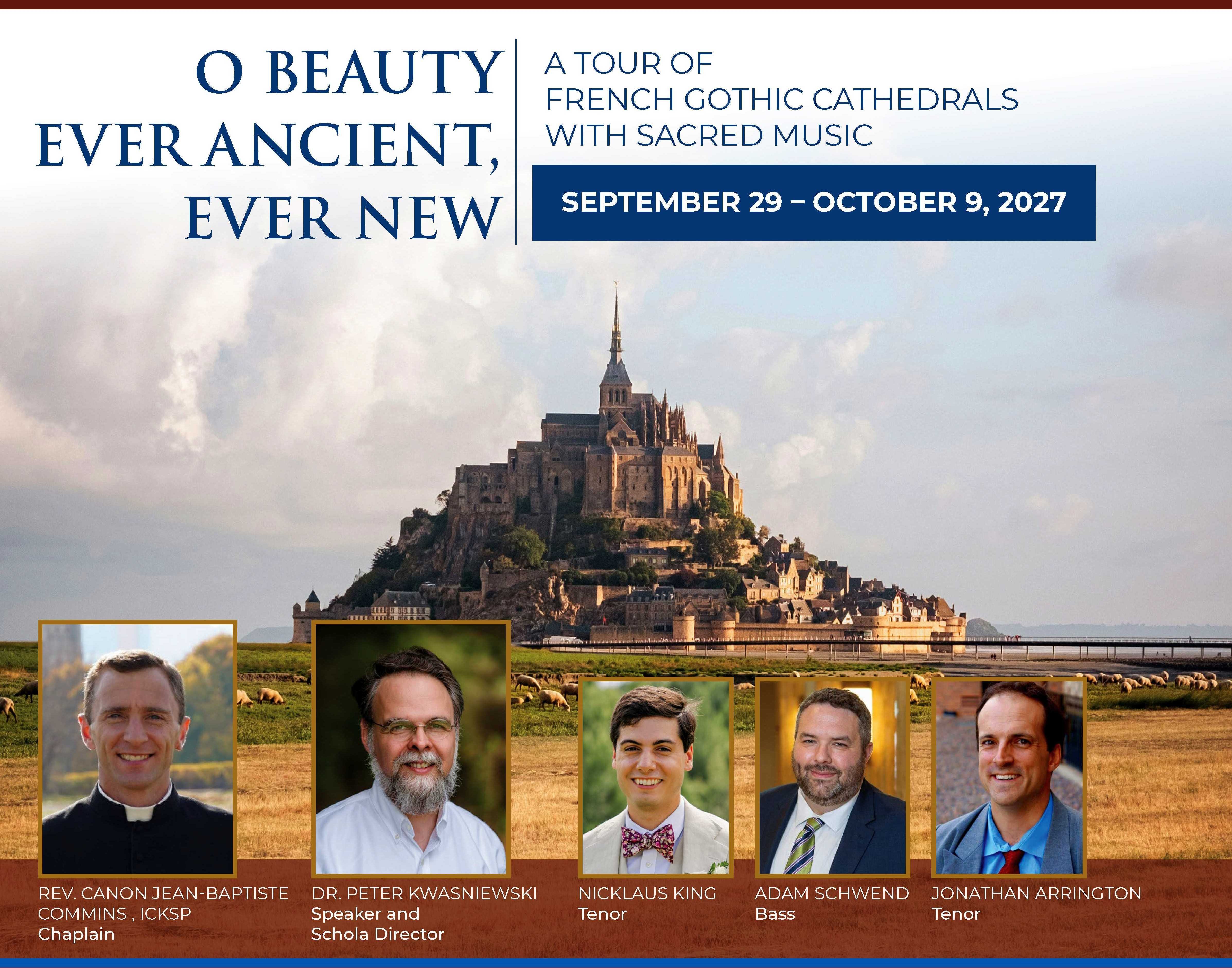
O Beauty Ever Ancient, Ever New: French Gothic Cathedrals with Sacred Music
From September 29 to October 9, 2027, I will be co-leading a pilgrimage to sacred sites in France that offers a rare immersion in the Church’s tradition.
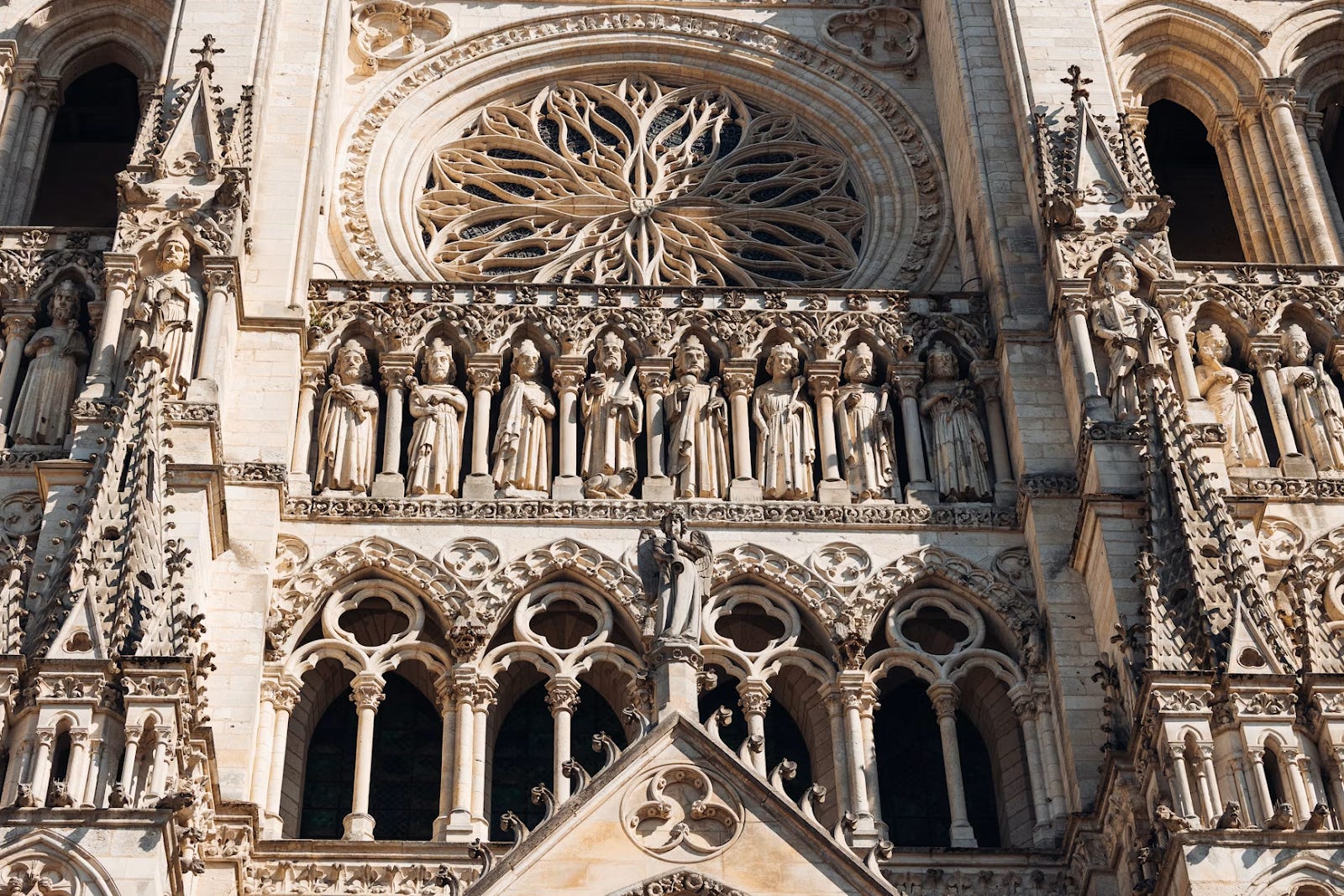
We will contemplate the theological vision embodied in Gothic architecture (including the cathedrals of Paris, Chartres, Beauvais, Amiens, and Rouen), and venerate relics and holy sites (Mont St. Michel, St. Denis, Sainte Chapelle, Miraculous Medal chapel, the Carmel of Lisieux and Les Buissonnets, the site of St. Joan of Arc’s martyrdom). I will be offering commentary as the trip proceeds, in addition to casual conversations with each of the participants.
We will come together for daily High Mass offered by Canon Jean-Baptiste Commins, ICKSP. A particular highlight will be the professional men’s schola that I will be directing, which will sing Gregorian chant and Renaissance polyphony for every Mass. For an idea of the kind of music we’ll be singing:
Formed by the Church’s liturgy and the legacy of French Catholic culture, we will seek to draw closer to Christ in His mysteries. The itinerary concludes with a Seine River cruise.
***N.B.: there’s a $300 per person Early Booking Discount for deposits received before 9/29/2026 and a $200 per person Check Discount for those paying the remaining balance by check after the initial deposit.
For more information, visit the pilgrimage page.
Then there’s…
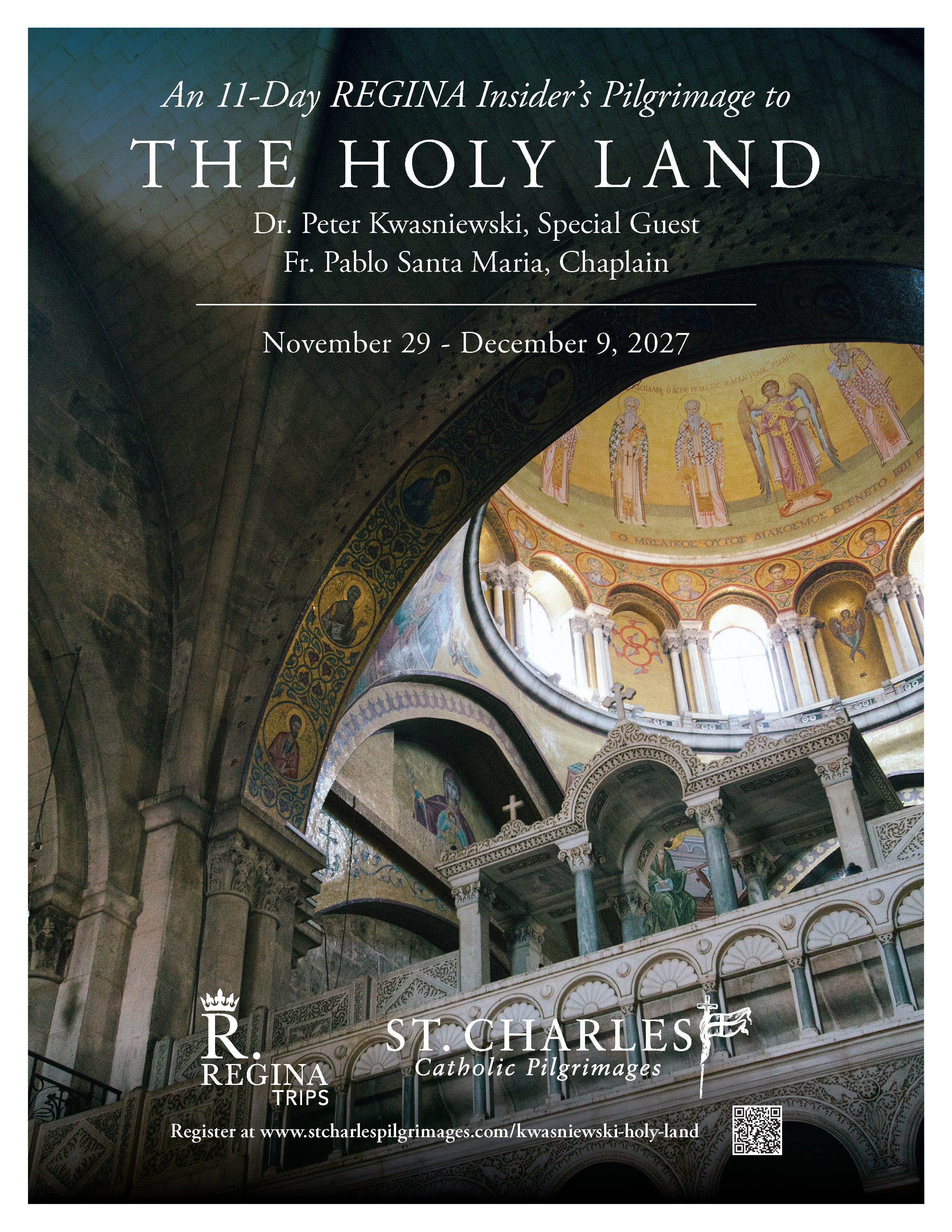
The Holy Land: An 11-Day REGINA Insider’s Pilgrimage
Those who are looking for a traditional Catholic pilgrimage to the Holy Land, look no further. On this Regina/St. Charles trip, taking place November 29 to December 9, 2027, we will have daily Latin Mass with a wonderful priest, Fr. Pablo Santa Maria—and we will sing whenever we can, whether inside or outside of churches, utilizing special Masses and chants for the Holy Land.
Our tour manager will be the incomparable John Paul Sonnen of Liturgical Arts Journal, one of the most widely-traveled and culturally knowledgeable Catholics you will ever meet in your life. Our local guide will be Amer Shehadeh, revered for his experience, lore, and connections. And I will be offering theological and liturgical commentary, as well as being available for conversations over meals or on walks.
A rare opportunity and still a few spots open. For details, see this page.
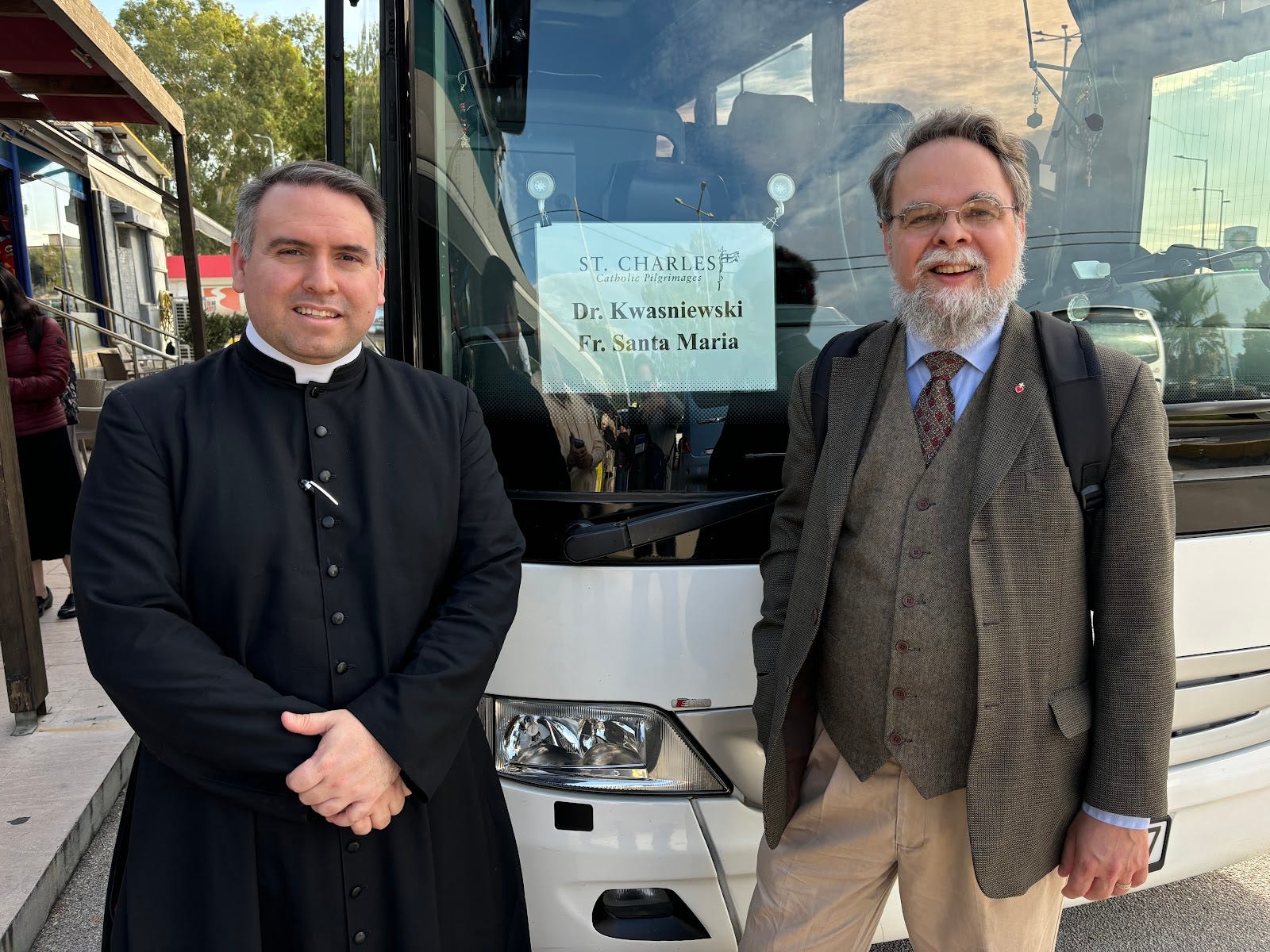
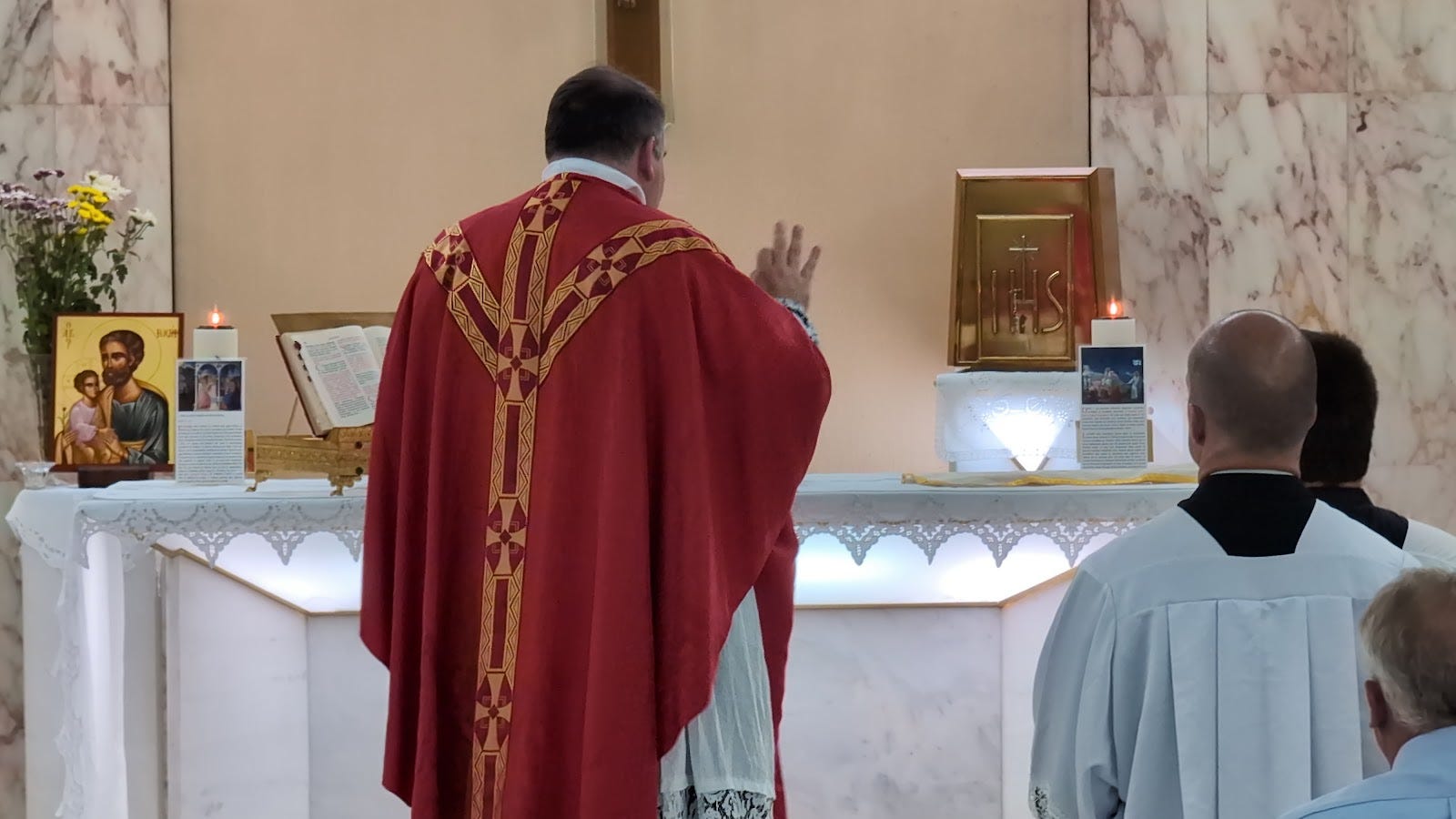
Hope to meet (or meet again) some of the readers of Tradition & Sanity on one or the other of these extraordinary pilgrimages.
A detailed history of what went down, starting decades earlier:
https://archive.org/details/3-work-of-human-hands-a-theological-critique-of-the-mass-of-paul-vi_202508
Okay, sometimes these things just happen to hit you hard. At mass on Sunday (Roman Rite low 1962) I happened to be struck by the Secret in my St Andrew Missal 1945 as I pondered on the injustices of not just the attacks on the SSPX but Diocesan TLMs.
Túa nos, Dómine, sacraménta custódiant: et cóntra diabólicos sémper túeantur incúrsus.
May Thy Sacraments, O Lord, keep and guard us; and may they ever defend us against the assaults of the devil.
This is it. This is why they are going so hard, because they know the traditional sacraments sustain the laity in moral rectitude and ward off the tepidity of the new liturgy. They know the SSPX have a far reaching mission, and so they target them first by Ecclesia Dei, then try to nullify their reach by strategically approved alternatives, then finally nuke them. Interestingly each of these have been own goals and have paradoxically increased awareness of the treasures beyond the conciliar project.
Then the Bergolian Gaolers of Tradition and the acceleration of its implementation, betrays exactly how desperate they have become.
It's the sacraments they hate. The theurgy. The consequences of proper formation. They are racing against time.