


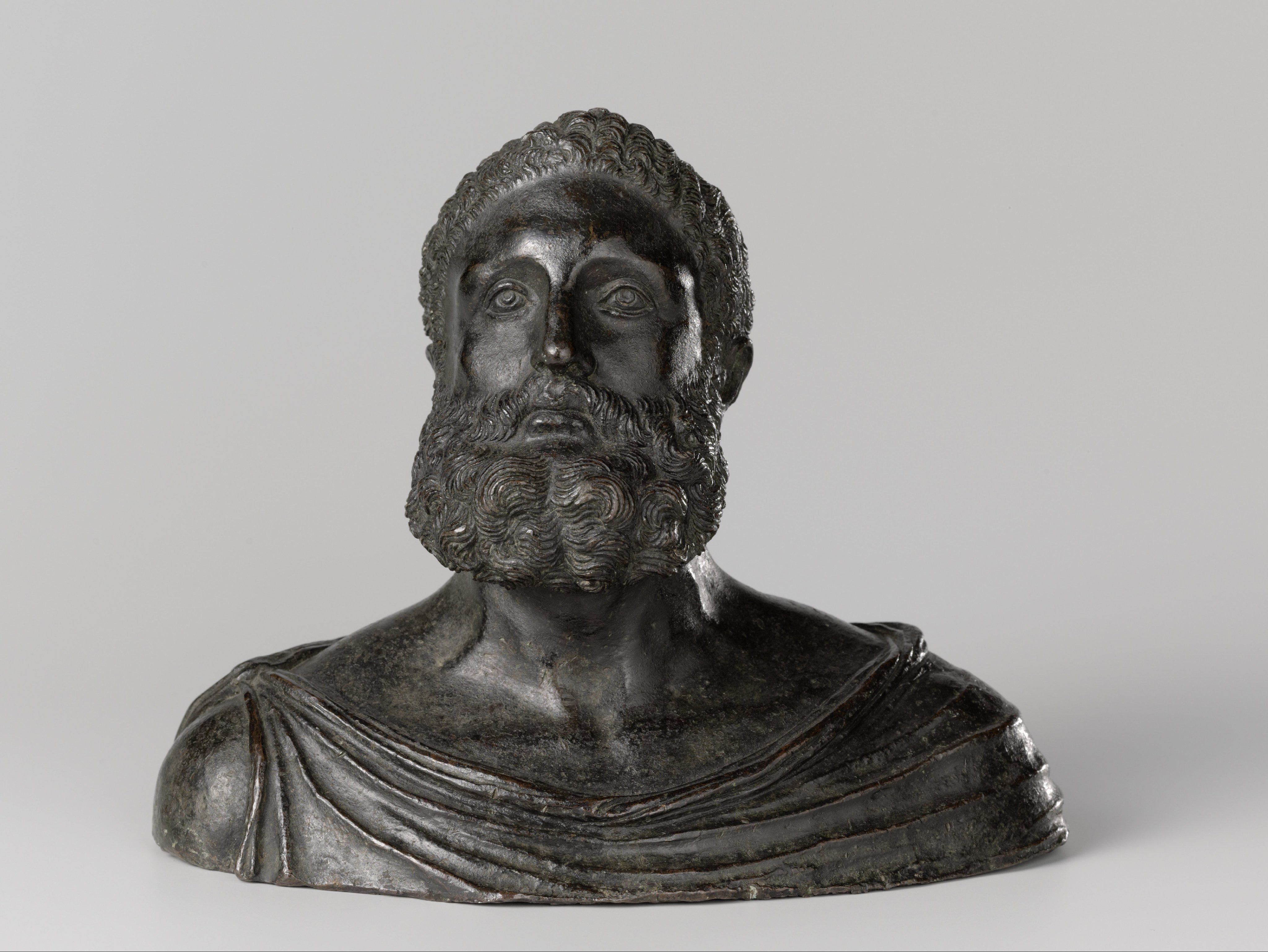
When you study the annals of history, and when you consult the records of memory and experience, you can see plenty of examples of pagans—unbelievers—who appear to have, and to exercise, certain moral and intellectual virtues. They may excel in those virtues beyond those who are believers. Some pagans can even exemplify heroic self-sacrifice.
Christian theology teaches that charity—the love of God for His own sake and the love of our neighbor on account of Him—is the “form” of the virtues, that is, it is what makes all virtues to be true virtues in God’s eyes. St. Augustine went so far as to say that “the virtues of the pagans are vices.”
How can we square these things? Can pagans really have virtues? Or if we say this, do we undermine the radical primacy of God’s grace for doing good?
The question actually involves several related questions, so it is a knot with many interrelated threads. That makes it a good question, a very deep question, and therefore not easy to answer.
To begin with, St. Thomas makes clear in his treatise on the virtues in the Prima Secundae in the Summa Theologiae that there are two modes of human virtue based on two different ends. All virtue is for the sake of the end or goal of human happiness, but there are two forms of happiness: the relative happiness of this life, and the perfect happiness that is eternal. Both forms are willed by God, though the earthly is subordinated to the heavenly and should minister to it.
The Greeks, above all Plato and Aristotle, had faint inklings of the soul’s beatitude; Plato saw that the intellect could rest only in the vision of the Good Itself, and Aristotle recognized that the highest and defining power in man, the intellect, was ordered to the contemplation of God as its fulfillment. Only Christianity revealed the vocation of man to the beatific vision of God, when, as St. John declares, “we shall see Him as He is,” when we shall participate in His very life—something a pagan thinker could hardly have dared to propose.
Correspondingly, there is a natural mode of virtue which is ordered to the natural happiness of this earthly life, which for the Greek philosophers is perfected in contemplation of God as naturally knowable by reason; and there is a supernatural mode of virtue which is ordered to the supernatural happiness of the life of the world to come, and of which the necessary premise is the infusion of the theological virtues of faith, hope, and charity. For example, St. Thomas will speak of a natural and supernatural mode of the cardinal virtues (prudence, justice, fortitude, and temperance). The same applies to the many other virtues enumerated in ancient ethics—numbering over a hundred!—which St. Thomas discusses in the Secunda Secundae.
It should be noted that the theological virtues have only a supernatural mode, because they come from God and are directed to God. The cardinal virtues of the pagans were ordered to happiness in this life, but when we possess the gift of sanctifying grace and charity, the exercise of these virtues then becomes ordered to a supernatural end as well, to which earthly goods are subordinated.
Then we must ask: Are we so certain that all pagans lacked charity? Obviously, many pagans both past and present lack charity—even many Christians lack charity. But were the ancient pagans necessarily entirely excluded from the life of charity?