
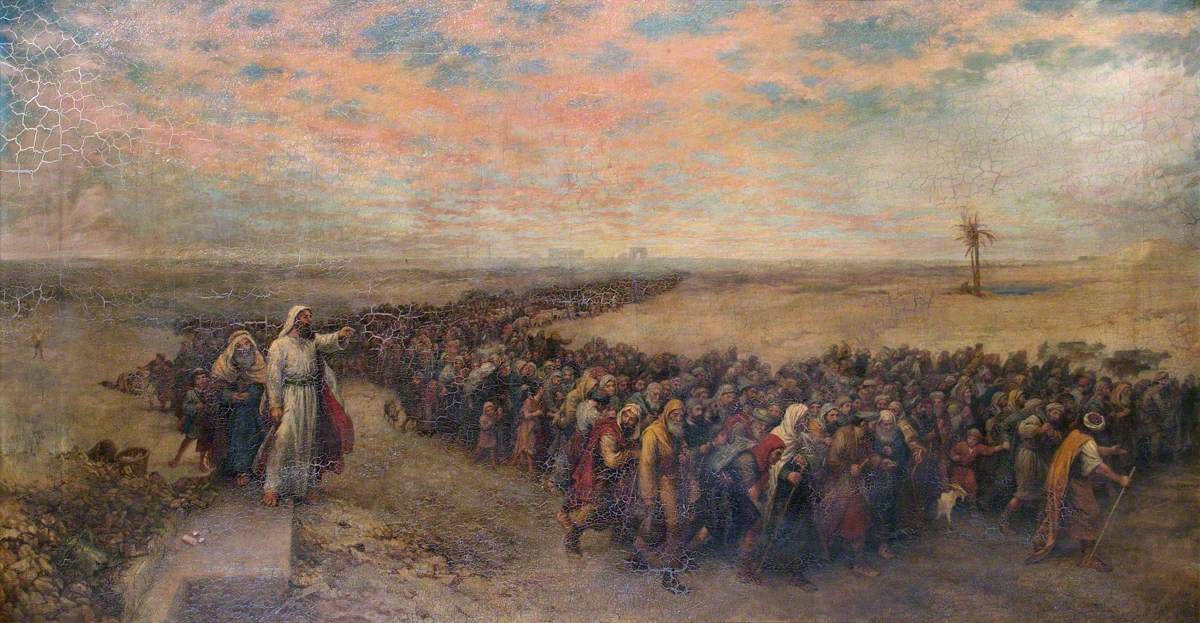
Exodus from Slavery into Life
The basic pattern of Christian existence
“O God . . . hear me as I tremble in this darkness and reach out your right hand to me. Hold your light before me and call me back from my wandering, so that, with you guiding me, I may return again to myself and to you.” (St. Augustine)
Man cannot find completion or rest in himself, but only in one who is other than himself. His entire life, from infancy to adulthood to old age, is marked with a need for others, and within this neediness there abides a desire for the Other who will complete him and bring him rest.
He is capable of discovering through reflection that in this world he is always in some way estranged not only from God, but even from himself; what is more, he can see that the former is the cause of the latter: I am not myself because I am not yet perfectly united to my origin and end.
From their long experience of conversion and love, the saints know this truth better than anyone else. William of St. Thierry prays to the Lord: “As long as I am with You, I am also with myself; but I am not with myself as long as I am not with You.” His friend St. Bernard of Clairvaux agrees: “He who gave me Himself, gave me back to myself.” They are good disciples of St. Augustine, who said: “Unless my being remains in Him, it cannot remain in me.”
Above all other times of the Church’s year, Holy Week reminds us of this fundamental lesson. The Christian sacramental life solemnly enacted in liturgical ceremonies and their devotional echoes is a school that opens our eyes more and more to the presence and absence of God—to His majesty and beauty, and to the misery and darkness of fallen man. The public, cultic worship of God aids in divesting man of himself (the old self, his own “property”) and clothing him with Christ—or better, changing him into Christ from deep within, thus realizing the soul’s innate potential to be what God created it to be: a clear and beautiful image of Himself.


