


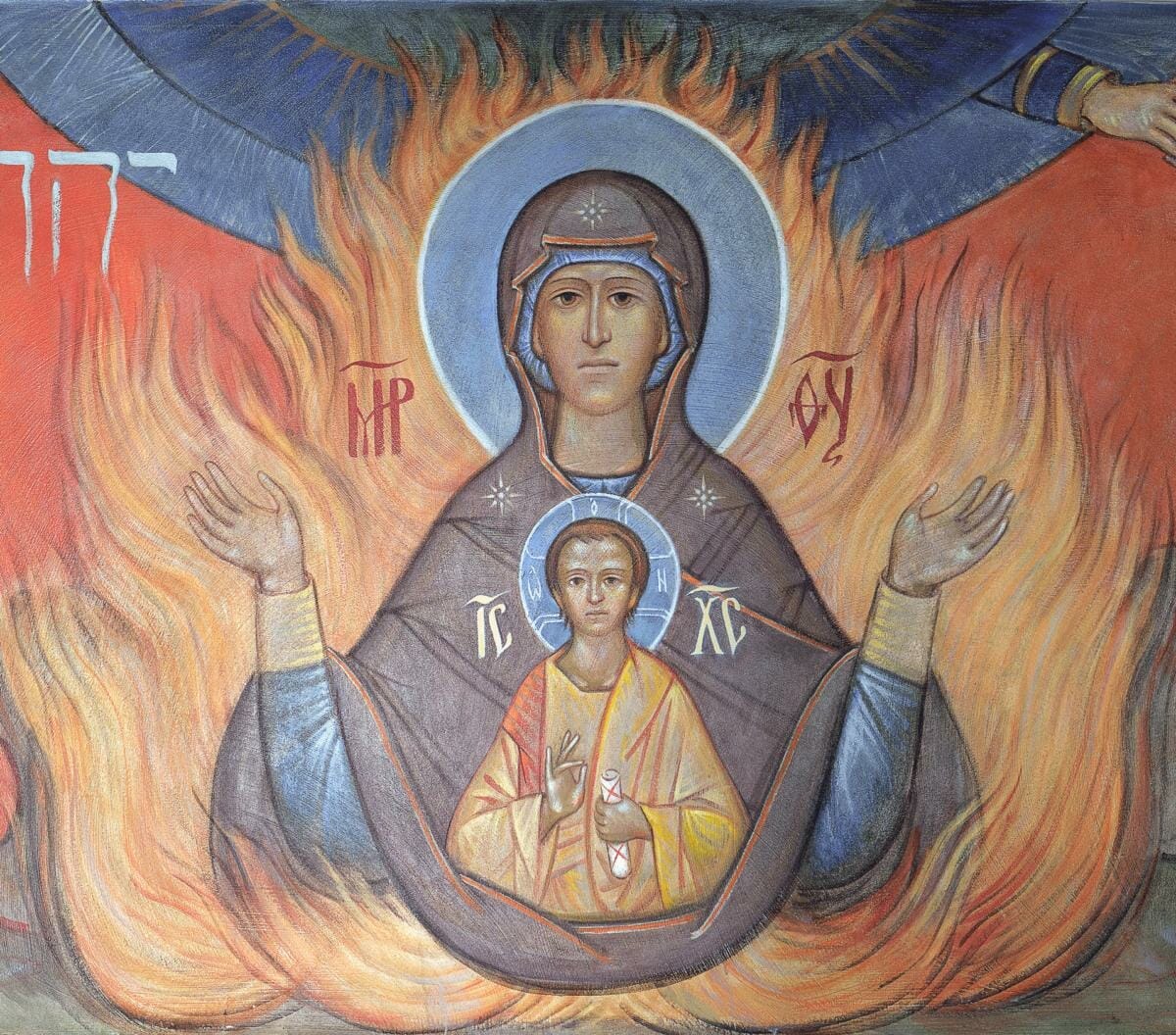
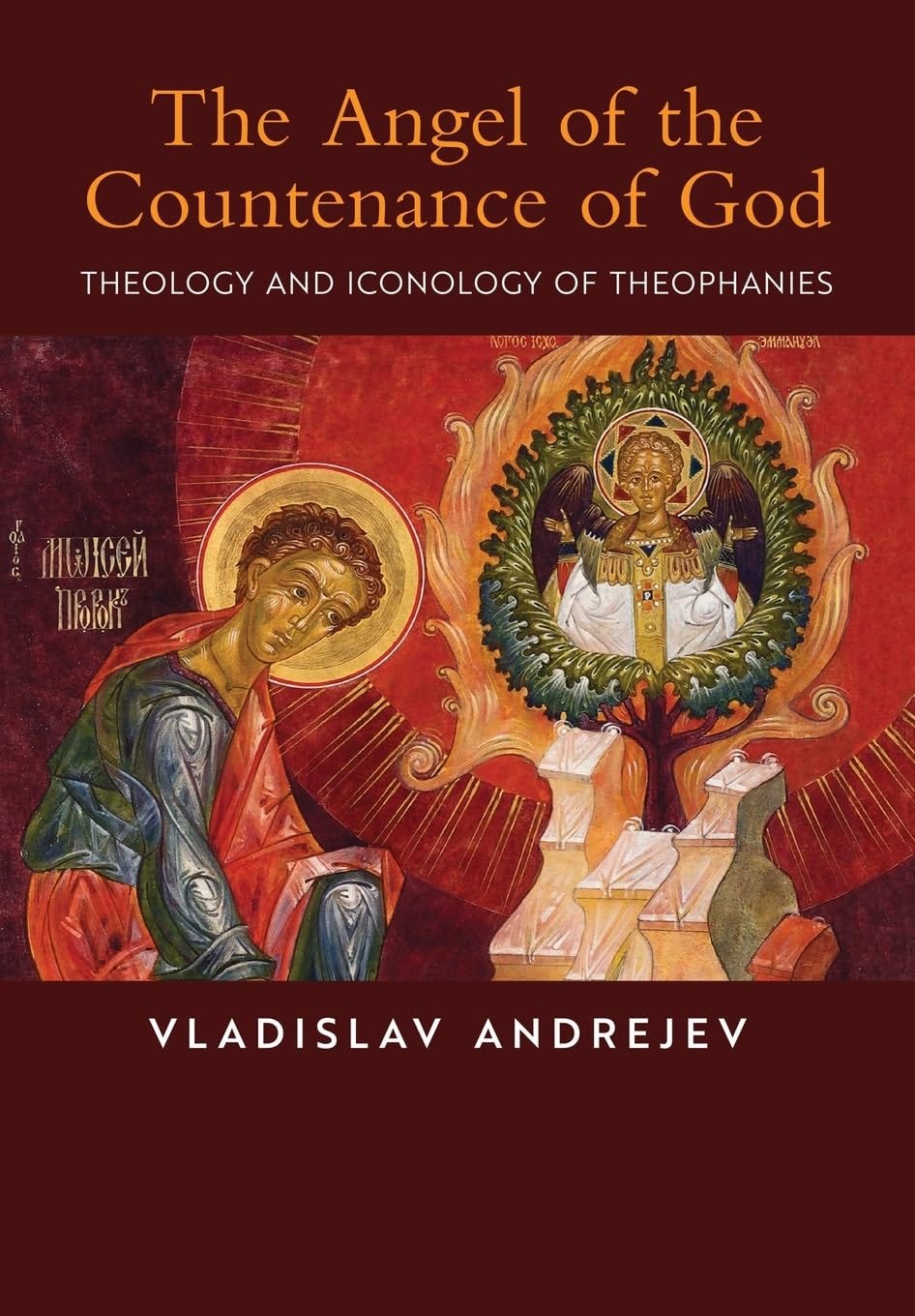
Some years ago I read a fascinating book, though I will admit it was rather dense and at times difficult to understand: Vladislav Andrejev’s The Angel of the Countenance of God: Theology and Iconology of Theophanies, published by Angelico Press in 2021. Andrejev (b. 1938) is the founder of the Prospon School of Iconology. I have always been fascinated with Eastern icons and with the theology of the icon as it was hammered out during the iconoclasm controversies in the Byzantine empire, from which we in the West have so much to learn as we weather the storm of the third wave of iconoclasm (circa 1960 to the present), which targeted the primordial icon of the liturgy itself, which not even the original iconoclasts dared to touch.1
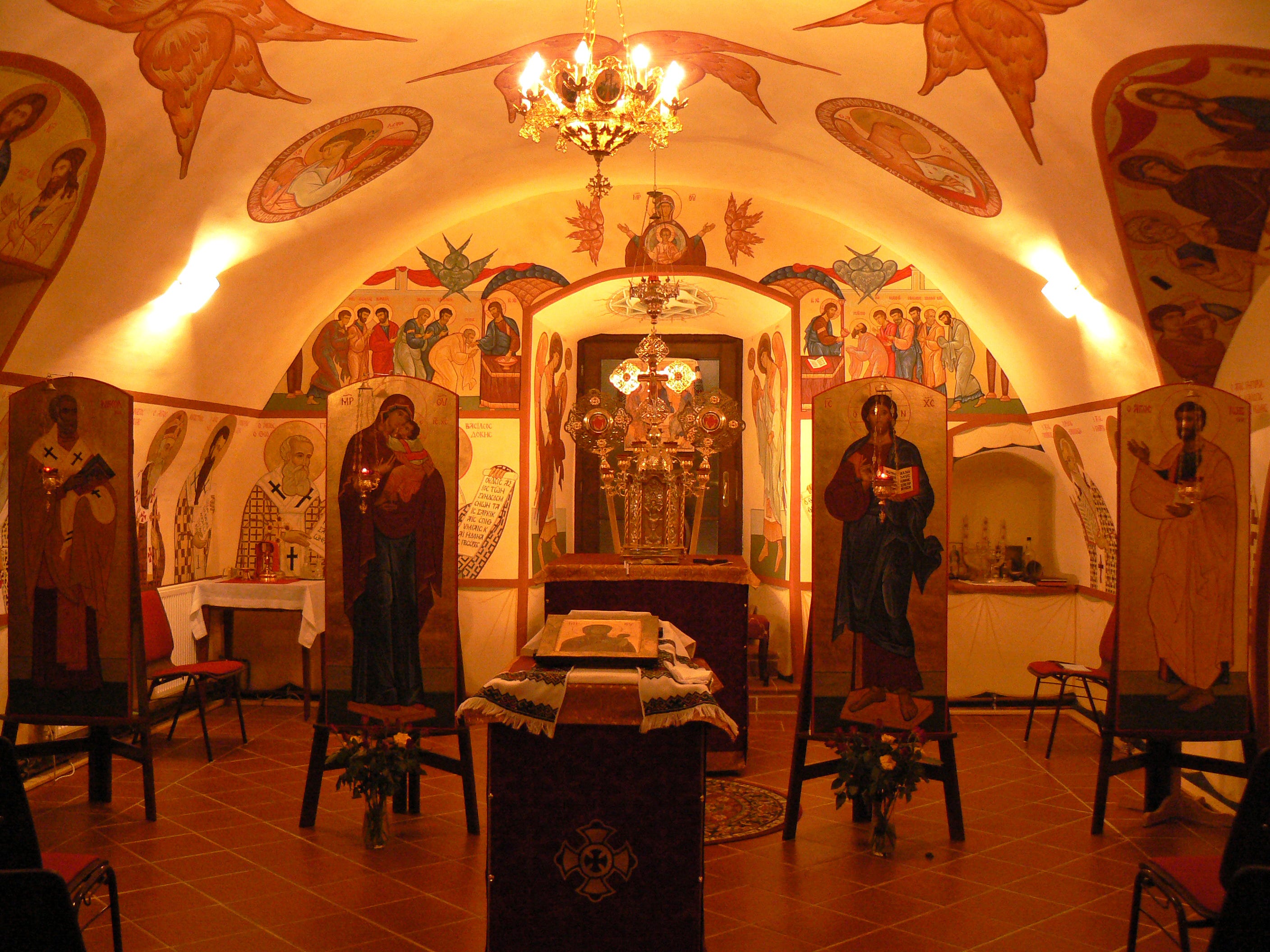
Here’s the chapel in Gaming, Austria, where I first fell in love with the Byzantine Divine Liturgy and with its lavish use of icons:
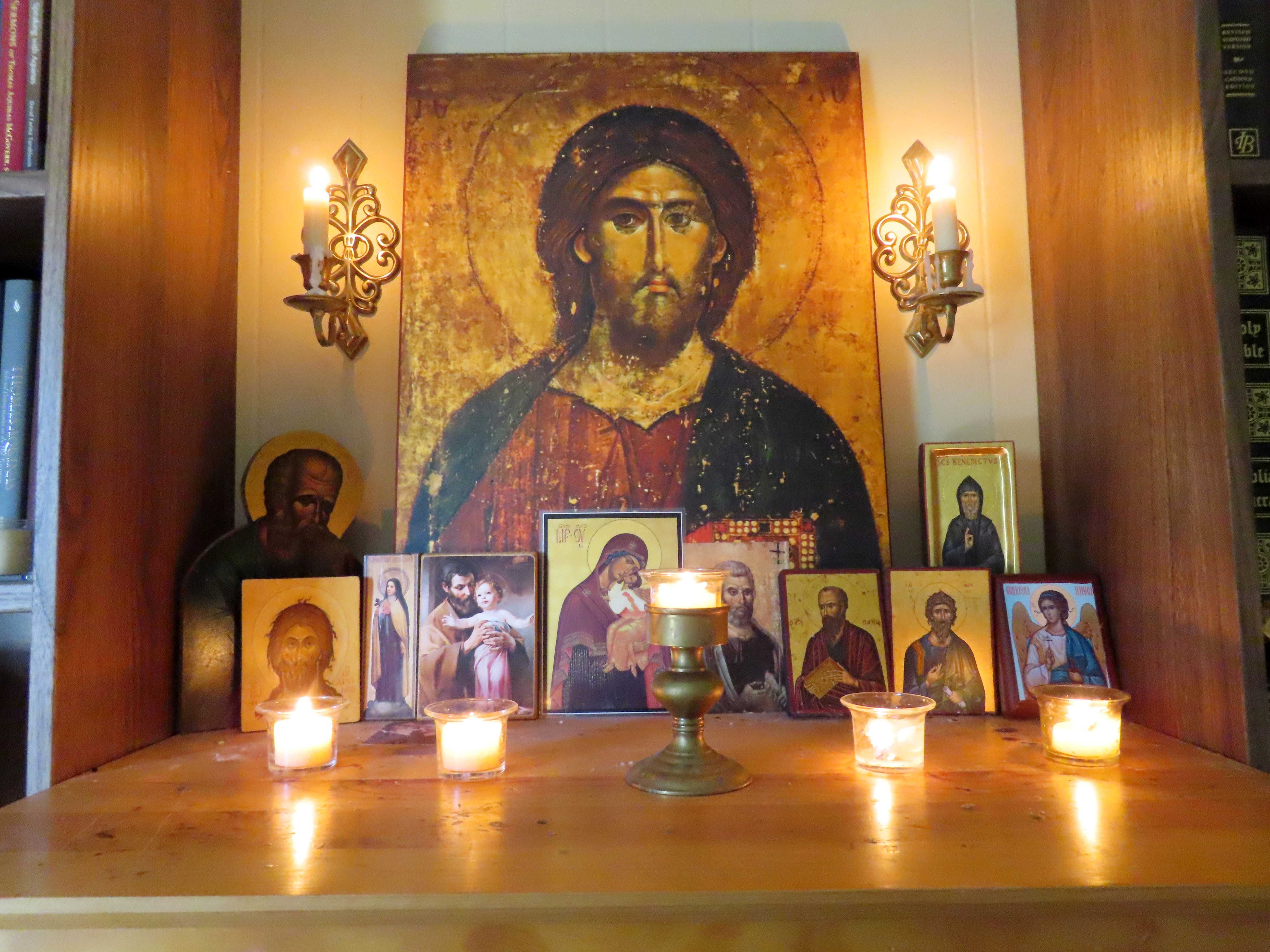
And here’s what the icon corner in my bedroom looks like, where I pray the Divine Office by candlelight:
For me, Eastern and Western tradition have long been mutually reinforcing and deeply nourishing, even if I worship primarily in the Roman rite. Readers of my book The Once and Future Roman Rite will know that I dedicate an entire chapter to the profound parallels between these traditions in their authentic forms.
Thus, I read Andrejev with great eagerness to learn. What follows are some of the passages I highlighted for future meditation, and now I share them with you for your edification. I should hasten to add that Andrejev’s book is not so much about the art of the icon (there are many other full-color books on that topic) as it is about the theological anthropology and metaphysics behind icons.
I found especially delightful his mini-commentary on the Song of Songs, a book to whose exegesis I have given a lot of time. (In fact, Os Justi Press recently published a book about it that I consider one of the very best ever to have appeared: Timothy Kelly’s Wounded I Sing: The Song of Songs and the Incarnation of the Son of God.) Truly, this poem is an inexhaustible font of mystical prayer.
Page numbers in parentheses. —PAK
Emmanuel is constantly born in the “veils” of Man’s inner faith. This is exactly how Christians greet each other at Christmas: “Christ is born.” They do not say “was born,” because that would only sound like a memory of two thousand years ago. They say “is born,” because Christ is eternally born and grows in every Christian soul, in the same way as He is hypostatically born in the bosom of His Father. The biblical events are lost in the mists of time, but their essence is of unfading significance for religious life, forming the basis for the perception of future Theophanies. (91)
According to the Talmud, Abraham was the first to recognize God’s power over the world and, therefore, called Him the Lord, as distinguished from the prior generalized name “God.” We should see the ontological difference between these names, because “God” is a generally valid name, while “the Lord” is a personal name that is directly related to a believer’s improvement of life. Almost all people are believers to a greater or lesser extent, but not every believer can call God “the Lord,” but only those who are willing “in the Spirit” to recognize His authority over them and do His will. It is said that “the devils also believe, and tremble” (Jas 2:19), but they do not do His Will at all and, although they listen to God, they are afraid to call Him “the Lord.” … Therefore, the prayer “Lord, have mercy” features this, as it were, intimate Name of God, rather than any other name. (95)
The Holy Name of Jesus (quoting Alfeyev):
Among all the names of God, the Tetragrammaton is distinguished by its special holiness and importance.
The life at Solomon’s Temple is focused on honoring the name of God: the Temple is called after the Lord’s name; the Temple is where the Lord’s name dwells; they come to the Temple having heard the Lord’s name; and they profess the Lord’s name in the Temple. (99-100)
Quoting Averintsev:
If the Christology of the Church Fathers had been entirely guided by the evolution of ideas law without the miracle of Revelation, the evolution of ideas from both the Wisdom literature and the Greek Platonic sources could have inevitably led only to Arianism. Therefore, the victory over Arianism was about overcoming the imaginary autonomy of the evolution of ideas. (130)
Quoting Florovsky:
The properties of God are not only mentally conceivable or thinkable attributes. They are not abstractions or inventions. They are powers and actions—actual, essential, and life-giving revelations of the Divine Life. (137)
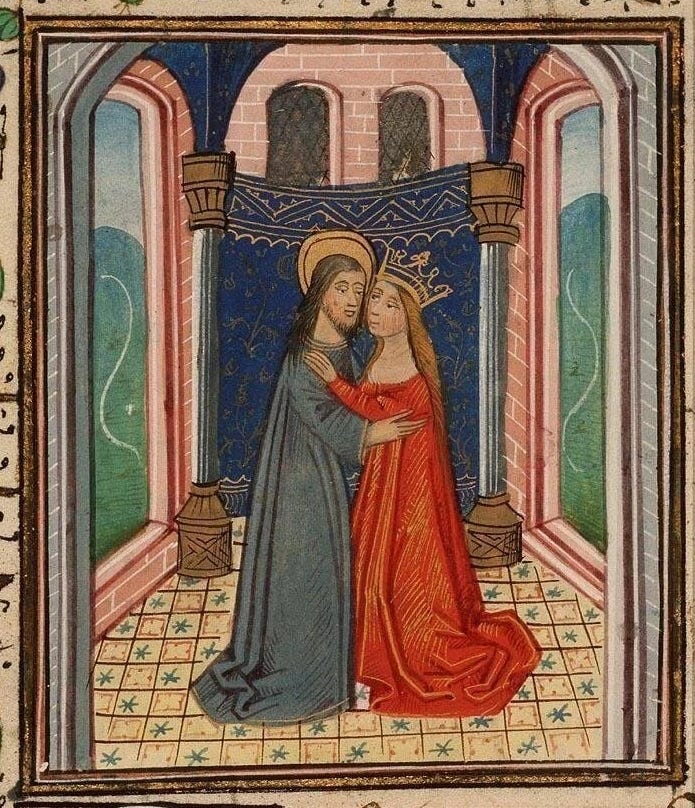
Comments on the Song of Songs
Indeed, the title “The Song of Songs” (eighth century BC), according to one of the earliest Christian commentators, Origen, means “the best song of all.” This is the most mysterious book of the Bible, according to commentators, and the most difficult one in terms of logic, which is not surprising, because it is a poem about Love. The language of love is deeply intimate, extremely symbolic, and ecstatically mystical.
The Book of the Wisdom of Solomon is a “full-blooded sister” of the Song of Songs and both of them are amazingly rich in symbolism, but the Song of Songs is gold refined in the crucible of Man’s fiery aspiration to God, and the Love described in this book is understood both as the Eros of the human valleys and as the Agape of the heavenly Spirit. In addition, the Song of Songs is a lyrical poem whose dialogues and monologues are not only about love. Pre-eminently, they are about praise of Love, the essential Agape of God. Like an abundant rain, Love is poured out without measure by the Lord on the created world, and we know about love reuniting us with God only owing to our inherent seminal Logos, the Bridegroom of our souls, who, having found an “earthly bride,” returns with her to His Father. (166)
The Song of Songs is the New Testament written in ancient times, and that is why this book is prophetic. It is written in a special figurative, antinomial, i.e., iconological, language, whose height of expression and special tone of symbolism surpasses that of all the biblical prophets.
Rabbi Akiva (died in AD 135) supported the canonical books: “No man in Israel ever disputed the status of the Song of Songs… The whole world is not worth the day on which the Song of Songs was given to Israel, for all the Writings are Holy, but the Song of Songs is the Holy of Holies.” (167)
There are also those who reject the spiritual significance of the Song of Songs in the new times of “scientific” interpretation of the Bible, because this book, like “a voice crying in the wilderness,” calls to God, yet there is no mention of God in it. In addition, this book has no prayers or national features, unlike the other books of the Old Testament. All this shows that Love has an enduring value for all living things, because God Himself is Love, and He created the whole world with Wisdom and Love.
In the Song of Songs, the beloved one is often called now “sister,” now “spouse,” and sometimes even both names are used: “Thou hast ravished my heart, my sister, my spouse” (Song 4:9–11). In the times of Solomon, a sister could not be a spouse, which means that the book symbolically refers to a mystical feeling of faith that connects God’s Virgin Sophia and God’s Agape into a single image of action. In his great wisdom, Solomon says, “Say unto wisdom, Thou art my sister; and call understanding thy kinswoman” (Prov 7:4) and “I loved her, and sought her out from my youth, I desired to make her my spouse, and I was a lover of her beauty” (Wis 8:2). Again, the Bridegroom takes a “sister” as a “spouse” for himself. So, the movement of God’s Wisdom (Sophia) and Love (Agape) towards the Logos, who lives in the temple of the human soul, should be understood as inseparable. For the believer’s Soul, Christ is a Brother, by the human nature, and a Hypostatic Bridegroom, by the divine nature. The soul is Christ’s sister, by virtue of its created nature, and His Bride, by virtue of the gracious gift of conjugal deification. (168)
Quoting Archimandrite Ambrose:
Even though some scholars tried to create a pattern of development of the action or movement of the theme in the book of the Song of Songs, they could not achieve their purpose, which was impossible due to the fact that the book has no beginning, end, or middle. This is an excerpt or revelation from eternity about God’s Love for Man and about the love expected from Man for his God as an essential response. Human language has no adequate words for Agape. It has to use imperfect human language and graciously descend to earthly images. The language of the book is special; it is absolutely above any language rules and, as it were, beyond human speech. (169)
Before the seventeenth century, commentators still adhered to the tradition of the ancient Fathers. The eighteenth century, however, saw a sudden change in view concerning biblical studies, and commentators began to identify the Song of Songs as folk erotic poetry rather than spiritual and sacred literature. This is understandable, because this was an era of triumphalist scientific thinking, with its discursive and material approach to everything, including Divine things. But even though the “philosophical” mind can somehow understand love at the Eros level, God’s Agape is beyond it. (172)
The Soul should become a Sister and a Spouse turned in love to God. “Spouse” refers to the Soul as being different in nature from the Bridegroom yet subject to conjugal deification, while the word “Sister” shows Her human affinity with him. … The God-Man Bridegroom exists in two natures, while His Bride—the Church, as the Soul, exists as His Sister by human nature and His Bride by Divine nature. (175; 177)
Chosen from among brides and virgins, the Immaculate Virgin Mary, the Unwedded Bride, became a living Ark into which the Logos placed himself instead of the stone tables of the Old Testament. The image of the Virgin is reunited with the image of the Mother nursing the Infant God. From then on, the iconological image of the Holy Virgin Mother has reminded believers of the conception and birth in their hearts of Logos Immanuel sown by the Holy Spirit rather than the flesh. Since then, “My kinsman is to me a [fragrant] bundle of myrrh; he shall lie between my breasts [in the heart]” (Song 1:13). We justify our lives only by conceiving from the seed of God and living in harmony with the meaning of the creation of the world and Man. (184)
The marriage of the Lamb and the Bride is crowned with the ekstasis of communion of the Bride. “Bring me into the house of wine; set love before me” (Song 2:4). The annunciation to the Soul engulfed in the flames of Love transforms itself into the act of knowledge of God and of conception from the Holy Spirit. However, not only does the Soul come to know the mystery of God’s Love, but also God to the same degree deeply immerses Himself into the Soul and comes to know the mystery of the human heart. (185)
According to Gregory of Nyssa, this verse is about the wisdom-loving Virgin, the Soul, who is filled with such a strong Love that she is not satisfied with the cup prepared by Wisdom and, to quench her thirst of love, asks to be brought into the house of wine to set her mouth to the very winepress pouring out the spiritual drink of Agape. This daring rise to the heights of Love can be compared with the state of the Virgin Mary at the Annunciation. Only she who passed through this fire of immeasurable Love of seedless conception could boldly ask her Son to turn water into wine at the marriage (!) feast in Cana. The divine Logos Himself was present at the wedding, but was not recognized by the earthly bride and bridegroom. Therefore, He said to His Mother Bride: “Woman, what have I to do with thee?” However, He worked the miracle for the sake of the all-encompassing Love between the Bridegroom and the Bride as symbolized in its earthly aspect. Here, we see the convergence of conceptual aspects of “wine” at the earthly wedding (Eros) and then at the wedding of heavenly Communion (Agape). (185)
Quoting Fast’s Commentary:
With the Bride, seven parts of her body were named and praised, which meant the fullness of grace of the Church, because the Church is the Body of Christ, while the number seven, according to the Fathers, is the church number of this century. With Christ the Bridegroom, nine parts of His body were praised and three characteristic features were described, making a total of twelve (9+3=12) comparisons. With the Bride, the number seven refers to the fullness of grace of the visible and earthly Church. With Christ the Bridegroom, the number twelve, consisting of nine and three, refers to the nine angelic orders (of the Heavenly Church) and the Divinity of the Holy Trinity glorified by the visible and invisible Church: Holy, Holy, Holy, the Lord of Sabaoth; heaven and earth are filled with Your Glory. (186)
Quoting Maximus:
The mystery of the Incarnation of the Word (Logos) contains in itself the whole meaning (τήν δύναμιν) of the riddles and symbols of Scripture, the whole significance of visible and invisible creatures. (189)
Every believing Soul called upon and chosen by God in a noble harmony of its body, soul, and mind is a Virgin Sister, according to human nature, and a Virgin Bride, according to the Divine Nature. (189)
Baptism in the fiery element of Love concludes the Trinity cycle of New Testament salvation.
God the Father revealed his Will having chosen Israel and through the Angel of His Divinity brought the people out of the midst of the pagan world.
God the Son came into the world, was truly incarnated in the holy land of promise, and through the Angel of Sophia gave the people the Beatitudes and the rule of spiritual anagogy.
God the Holy Spirit descended, and the people prepared by Christ were pierced and kindled with the divine fire of Love; from then on, the baptized in the name of the Trinity have been “sealed unto the day of redemption” (Eph 4:30) by the Holy Spirit. The Holy Spirit kindled in believers’ hearts the firstfruits of deification, elevating Man from the image of general righteousness by law to the blessed likeness to the Divine Logos. From then on, the spermatic Logos became an active and guiding principle in human lives, and God’s Name began to speak in Man through Baptism and Chrismation. The day of the descent of the Holy Spirit became the Eighth Day in the spiritual calendar of monotheistic faith and the First day of the living Kingdom anticipated in the Coming of Christ—the King, Prophet, and Priest. (209-10)
Quoting Macarius:
But the Three Children, because of their righteousness, while they were in the visible fire, had in their hearts the divine and heavenly Fire ministering within their thoughts and exerting its energy in them. That very Fire showed itself outside them. It (the Angel) stood between them and the visible fire, and restrained it, that it should not burn the righteous . . . . As, then, the Three Children, having thoughts of righteousness, received in themselves the Fire of God, and worshipped the Lord in truth, so now faithful souls receive that divine and heavenly Fire, in this world, in secret; and that Fire forms a heavenly image upon their humanity. (218)
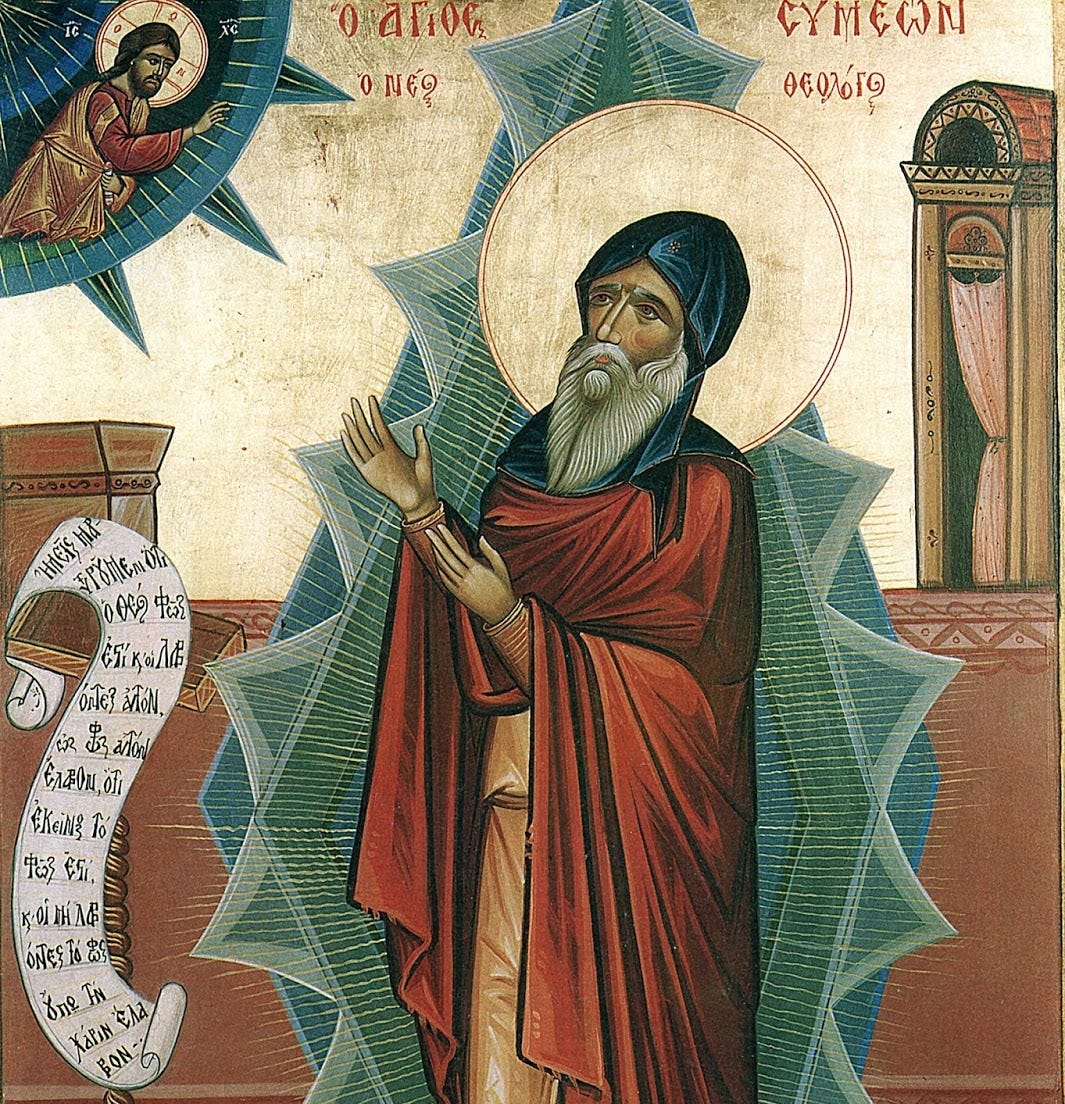
St. Symeon on Love
Quoting Symeon the New Theologian:
When I recalled the beauty of undefiled love, its light suddenly appeared in my heart. I was ravished with its sweetness and lost my senses; I lost all perception of this life and forgot all the things of this world.
Love desired, how fortunate are those who have embraced you, for they will no longer have a yearning to embrace any human beauty.
How fortunate are they who are moved by divine love to cling to you.
How fortunate are those who caress your beauty and delight in it with great desire, for their souls will be sanctified by the undefiled blood and water which issue from you.
How fortunate are those who passionately embrace you, for they will be altered for the better in spirit and will exult in their souls, because you are inexpressible Joy.
How fortunate are they who gain possession of you, for they will count the treasures of the world as nothing, for you are indeed wealth “beyond the dreams of avarice.”
How blessed and thrice-blessed are they whom you accept, for though they be apparently without any glory, they will be more glorious than those who are glorious, more honored than those who are honored.
How worthy of praise are those who pursue you; even more so those who have found you. Most blessed are those who are loved by you, received by you, taught by you, those who have dwelt in you and been fed by you with immortal food, that is the Lord, Jesus Christ. (228-29)
The main instrument in the knowledge of God is the heart capable of letting in the energies of the noetic mind. Actually, the human heart is the center of Man’s mystical life; the heart is home to a Cross where the horizontal physical nature and the vertical noetic nature intersect, and there, at the point of intersection, God’s Presence is depicted…. The image of the Cross inscribed in the heart is the main organ of religious experience and mystical ekstasis of the human spirit. St. Macarius the Great says, “the heart governs and reigns over the whole bodily organism; and when grace possesses the ranges of the heart, it reigns over all the members and the thoughts.” (243)
St. Symeon:
O excess of love! He Who embraces all things makes His home within a mortal corruptible man, He by Whose indwelling might all things are governed, and the man becomes as a woman heavy with child. O astonishing miracle and incomprehensible deeds and mysteries of the incomprehensible God! A man carries God consciously within himself as light, carries Him Who has brought all things into being and created them, including the one who carries Him now. He carries Him within as a treasure inexpressible, unspeakable, without quality, quantity, or form, immaterial, shapeless, yet with form in beauty inexplicable, altogether simple, like light, Him Who transcends all light. (245-46)
The Church combines the uncreated, noetic, and material worlds; making it possible for every person who has reached the hypostatic faith to be a god by grace, an angel by his mind’s conformity to the heavenly powers, and man by the flesh of natural feelings correlated with the cosmos. (267)
In fact, part of the strange theology of the iconoclasts is that the Eucharist alone was the symbol or image given to us by Christ and therefore the Eucharistic liturgy by itself should suffice; bringing in artistic representations of Christ and the saints is a distraction at best, a temptation to idolatry at worst.
"The song of songs is the New Testament written in ancient times": what a great observation! This lovely essay goes some way towards demonstrating exactly this, unveiling what is on the other side of our encounter with Christ, who stands at the door and knocks.
It is a mystical reality, full of the substance of heaven which can only be related in allusions of beauty, joy, comfort and grandeur.
Thank you Peter for another immersive exploration.
For a moment, I realized that *holy mystery is elevating - in a whole different league to "ideals." To the extent that I am ignorant because most of this is way over my head - allusions and relations I would never have conceived - perhaps it can actually be said that, "ignorance is bliss." In my case, in that limited sense.