


Preface
Fr. Joseph Fessio, SJ, is a man who needs no introduction. Most famous for being the founder of Ignatius Press, he played an important role at the 1987 Synod of Bishops that few Catholics today are aware of. He was one of twenty experts appointed to that synod by Pope John Paul II, which discussed lay ministries among other topics, and which led to that pope’s apostolic exhortation Christifideles Laici, in which he famously criticized the “clericalization of the laity.”
In a paper distributed to the participants, Fr. Fessio presented in broad outlines the case against female laity being admitted to liturgical ministries such as acolyte and lector. This text seems to have been published in Origins 17/32 (January 21, 1988), but I discovered it in the fairly obscure newsletter of the St. Joseph Foundation, which is where the text I have scanned and reproduced below came from. At the time, Fr. Fessio was a member of the Foundation’s National Advisory Committee.
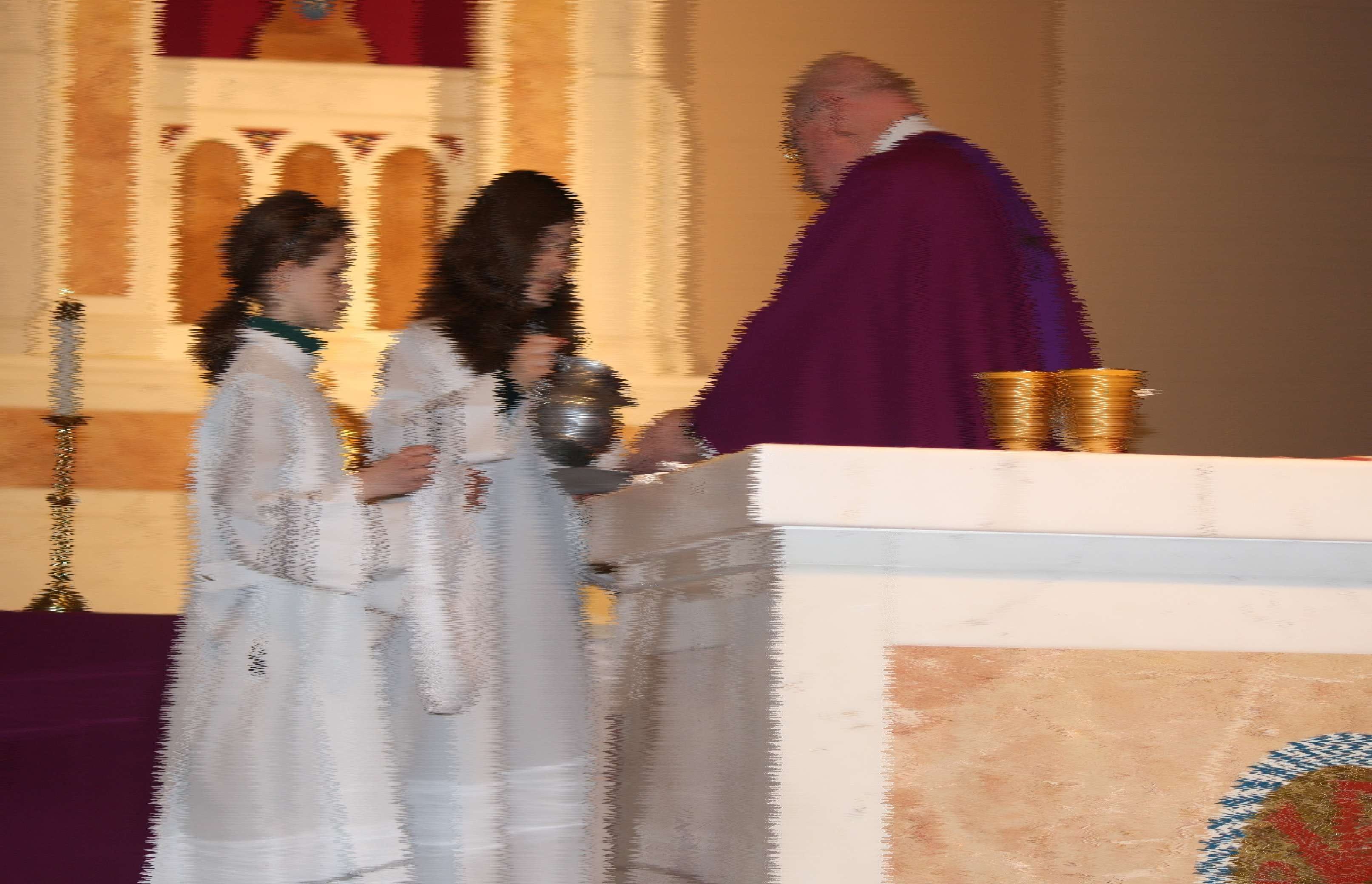
While Fr. Fessio’s arguments are sound and strong, and apparently persuasive enough to have caused the synod to waver on the question, he and those who took the traditional stance lost the battle. Infamously, John Paul II would cave on female altar servers (as Paul VI had already caved on women as substitute readers), and Francis would introduce a further rupture by legislating that women can be “instituted” acolytes and lectors. Such nonsense has nothing to do with the traditional Minor Orders and Subdiaconate, which are part of the Church’s immemorial tradition and still remain in use today in traditional institutes of apostolic life and religious communities. My book Ministers of Christ is dedicated to the explication and defense of these lower Orders as well as the refutation of the feminist novelties.
Without further ado, here is Fr. Fessio’s superb intervention from 1987. May it be read far and wide. —PAK

I. Introduction
In the discussions of the possible admission of women to the stable non-ordained ministries of acolyte and lector and also of the admission of women to the function of acolyte as altar servers, the impression has often been given that the main or only reasons against such admission are of a cultural, pastoral or psychological nature. In particular, some have said there seem to be no intrinsic reasons of a doctrinal or theological character against such admission.
The purpose of this brief expose is simply to outline some of the major philosophical and theological elements which many theologians consider relevant to this issue. There is, of course, an a priori presumption in favor of the existence of such theological arguments, since it is unlikely that a consistent 2,000-year tradition of the Catholic Church across many ages and cultures would be based on merely contingent or culturally conditioned foundations. The intent of this expose is neither to be complete and detailed nor persuasive in its argumentation. This would require much greater scope that the brief outline of relevant philosophical and theological elements presented here. Moreover, the limitation to such elements is not meant to neglect or deny the very many weighty arguments which can be brought to bear from the cultural, pastoral and psychological perspectives. But the intent is to indicate that what may appear to be merely a matter of ecclesiastical discipline in fact involves principles derived from philosophical anthropology, Trinitarian doctrine, Christology, and ecclesiology.