


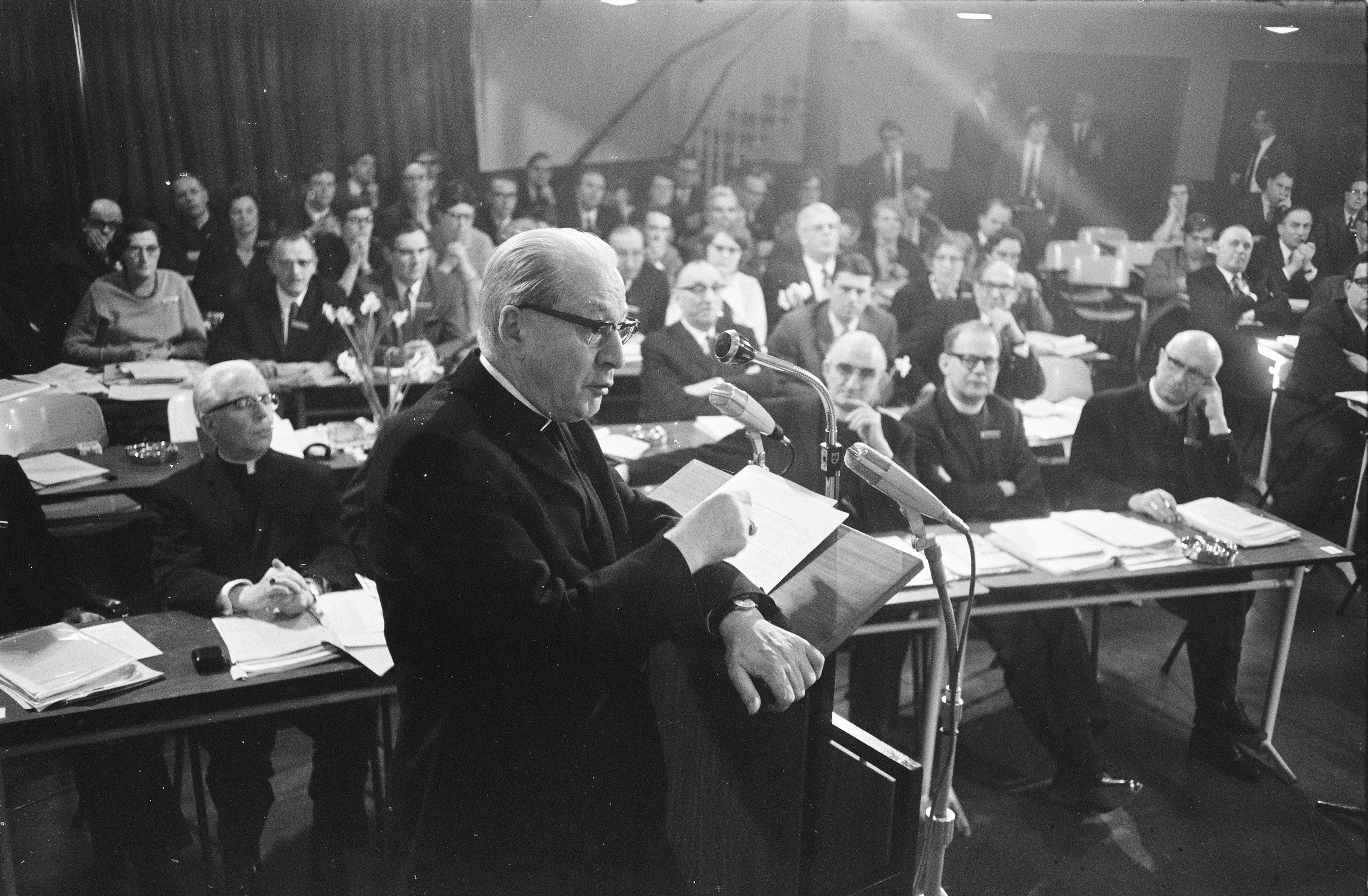
I’ve been surprised at the extent to which Catholics nowadays seem to be unfamiliar with the fact that all the business on synodality as promoted by and under Pope Francis is simply a warmed-over, church-wide application of a model that was already (disastrously) implemented in the Netherlands in the 1960s.
We learn about this in the fascinating study by Yves Chiron called Between Rome & Rebellion: A History of Catholic Traditionalism, with Special Attention to France. Let’s hear it from the author, one of the greatest living Catholic historians:
“The Dutch bishops accompanied it, and tried to limit its disastrous effects, but also, through some of their initiatives, encouraged it. A month before the end of the Second Vatican Council, they announced in Rome itself that a ‘provincial council’ would be organized in the Netherlands ‘to implement Vatican II.’ It was eventually called a ‘pastoral council.’ It was a broad consultation that was not limited to bishops and theologians and was not organized in any single place. It took place all over the country, beginning on November 27, 1966, and lasted several years. It was the work of some 12,000 work groups in which bishops, priests, religious, and laity were involved. During the meetings, which often took place in the presence of the press and under the watchful eye of the cameras, all subjects concerning the Church and the life of Christians were discussed: the expression of the faith, authority in the Church, the ministries, priestly celibacy, the reform of religious life, relations with non-Catholics, conjugal morality, etc.” (p. 154)
Sound familiar?
In his related book (also excellent!), Paul VI: The Divided Pope (pp. 258–59), Yves Chiron discusses other aspects of that event, contrasting the harsh treatment meted out to traditionalists with the mild and vacillating treatment given to the openly heretical Dutch:
“Father de Nantes, contesting the sentence, demanded that his writings be examined by the Congregation for the Doctrine of the Faith. They were; their author was summoned twice to Rome to be heard by the Congregation, which finally published in August 1969 a ‘notification’ which, curiously, did not condemn his theses but declared simply: ‘In rebelling in this way against the Catholic magisterium and the hierarchy, Fr de Nantes disqualifies the whole of his writings and activities.’ This ‘notification’ against a theologian was the first the Congregation for the Doctrine of the Faith had made since the Council and the reform of the Holy Office. Other, generally progressive, theologians such as Hans Küng (whose works had already been examined by this date by the same Congregation) were never the object of any sanction during the pontificate of Paul VI. This resulted in the Congregation for the Doctrine of the Faith being accused of partiality.
N.B. Paying subscribers of this Substack will now have access to full articles right here. Pelican+ remains my main base (and I encourage you to try it out, as it offers many good things that have no parallels on Substack), but you now have two ways to obtain access to the thrice-weekly posts at Tradition & Sanity.