


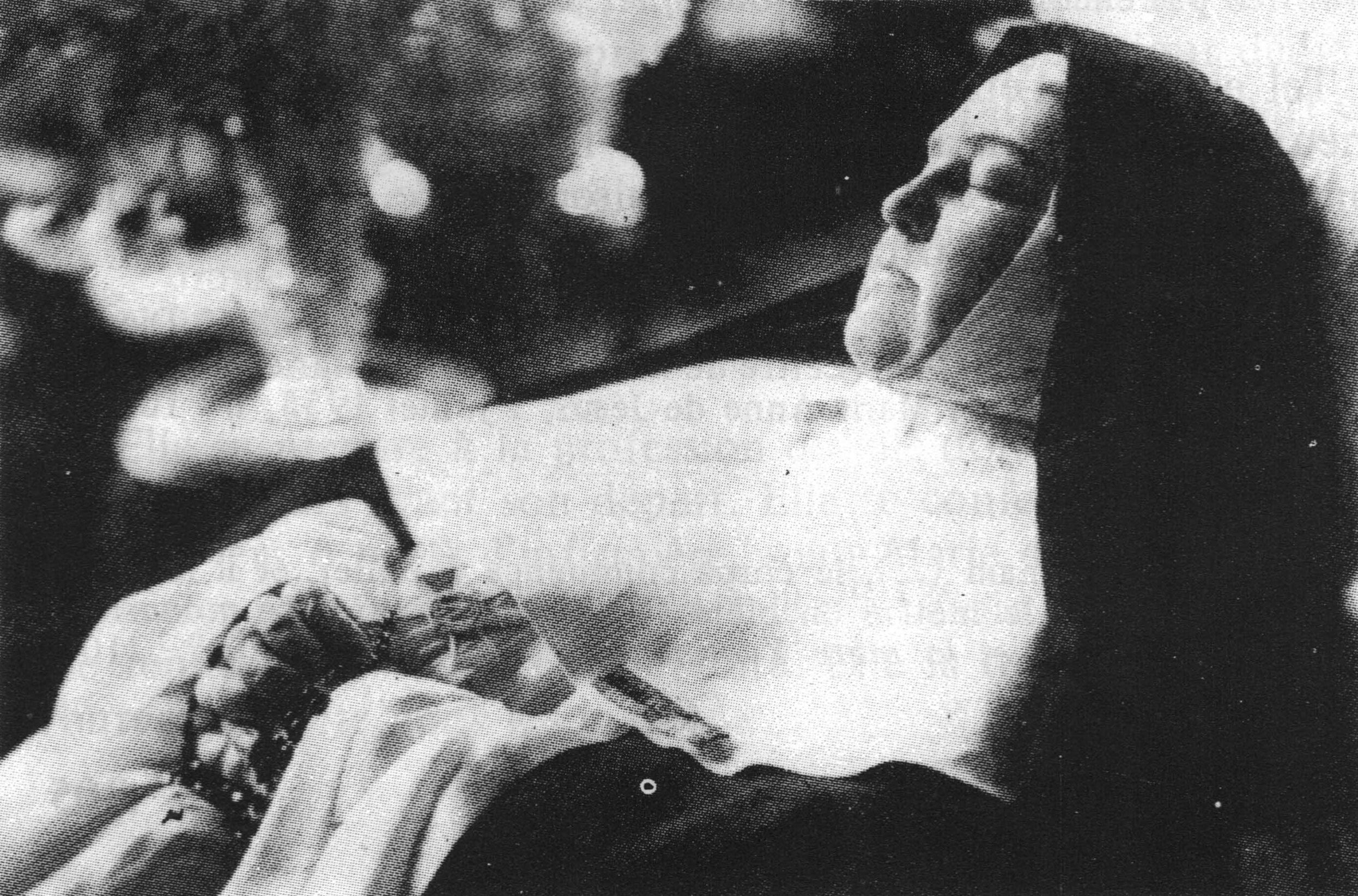
One of the most remarkable mystics of the twentieth century is also, paradoxically, one of the least well-known: Mother Yvonne-Aimée of Malestroit (1901-1951). Her life was filled with such numerous and exceptional mystical phenomena that the Vatican in 1960 actually placed a moratorium on publications about her. The famous Mariologist and hagiographer René Laurentin obtained permission from Cardinal Franjo Seper to write a book on her, and he later obtained permission from Cardinal Ratzinger to publish it. The French original was entitled Yvonne-Aimée de Malestroit, Un Amour Extraordinaire (O.E.I.L., 1985; repr. Guibert, 2012); the biography finally came out in English in 2024, translated by Jim Gallagher:
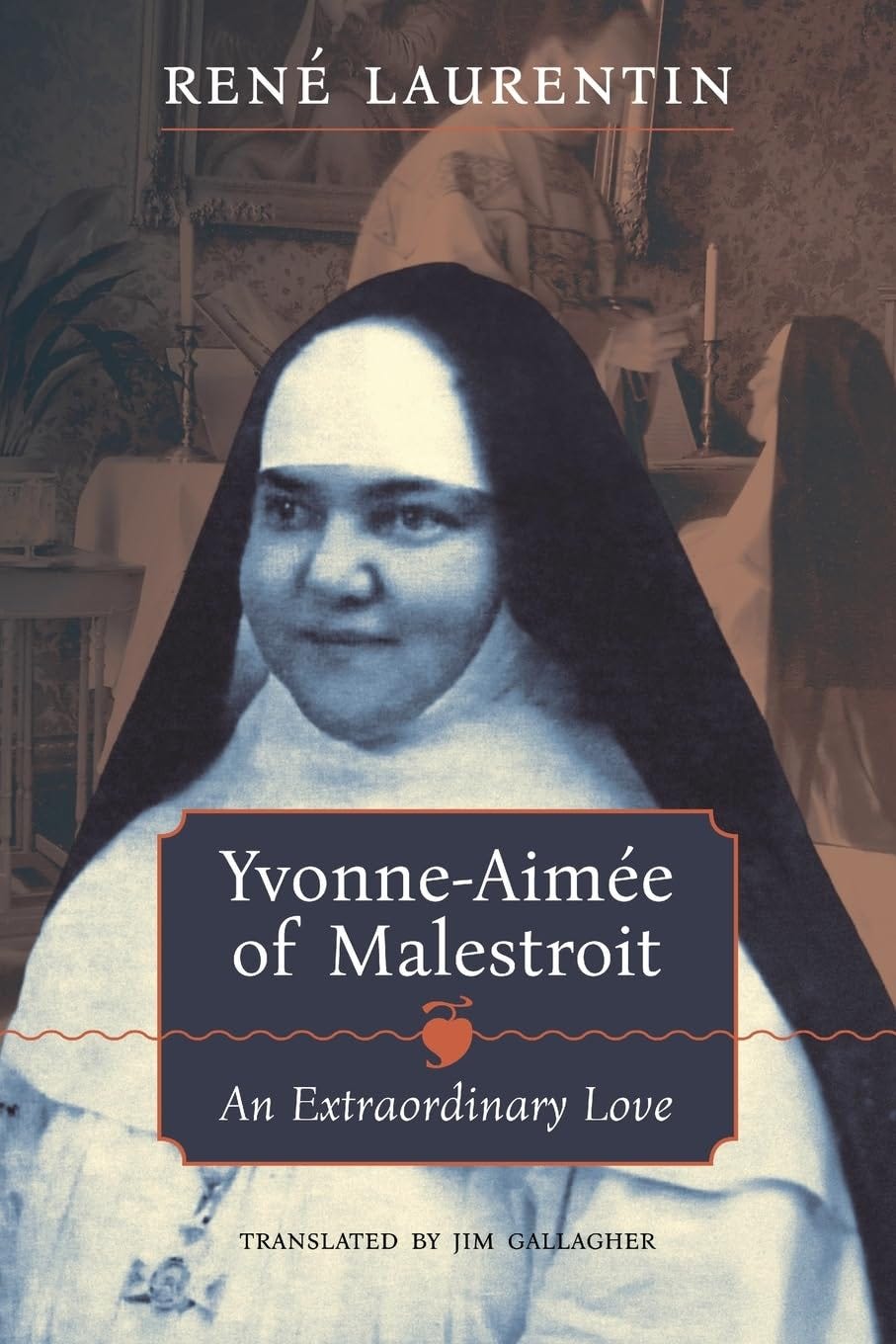
Years before I knew of this biography, I had already been introduced to Mother Yvonne by good Benedictine friends who had taught me her beautiful prayer “O Jesus, King of Love, I put all my trust in Your loving mercy” (or “merciful goodness”: “O Jésus, Roi d’amour, j’ai confiance en votre miséricordieuse bonté”), which I pray every day, multiple times.1
Then Angelico Press invited me to review the page proofs of Gallagher’s translation of Laurentin, which I eagerly agreed to do. Excerpts really cannot do any justice to a life so glowing with light, so crushed by suffering, and so exalted by divine ecstasy, but I still would like to introduce readers to Mother Yvonne, in the hopes that at least a few of them will be struck by what they read and will seek out the full biography.
Let me sum it up by quoting what I heard another well-informed person say: “Mother Yvonne is the ‘female Padre Pio’ of our times.” All the astonishing miracles you’ve heard about in connection with Padre Pio are found in analogous form in her life. I, for one, give thanks to the God of marvels for raising up such inexplicable, indefinable, incomprehensible persons, who are not only proofs of His existence, but, far more importantly, proofs of His jealous and overwhelming love.
Many of the excerpts below consist either of Mother Yvonne’s diary entries, or her counsels to her nuns, or of words she heard the Lord speak to her.
“It is night, total night. But I am trying to love the dark, and I’m beginning to get there. It’s not easy” (Letter to Miss des Georges, May 10, 1930, no. 135). (142-43)
“I shall water your heart with the delicious water of my heart. Accept the clouds. I’m hiding behind them.” (148)
“I don’t like a holiness that grows too quickly. It is cheap wood. It can lead to pride. Our failures give us experience and humility. Jesus loves souls who do not get discouraged but start again” (Articles, p. 25). (149)
She set about restoring the liturgy, according to the authentic tradition of her order. “We are learning to make the bows . . . a bit deeper than before, but it’s very beautiful. The chants were revised by the fathers of Solesmes. So everything is perfect and liturgical,” she wrote to Miss Bato. (May 18, 1933, no. 319) “To abandon oneself to the liturgy, isn’t it to be led, lifted up, moved by love? Isn’t it by the liturgy that you attract our attention, oh my Jesus, above all the undertakings of your love for us?” she would write later. (Notebook, April 18, 1942, no. 179) (152)
“Our sanctification is the work of each day. It is not to go over our past, which is left to the divine mercy. It is not to think of the future, which we abandon to the wisdom of the Good Lord. It is to content ourselves with the present manifestation of the divine love under whichever form it comes. It is now!” (Letter to the novitiate, September 9, 1933, no. 562) (153)
“My child, life is a small sum of money which you must spend only on the service of God.” (153)
“Above all, be kind. Kindness is what is most Godlike and most disarms people.” (January 22, 1934, no. 50) (154)
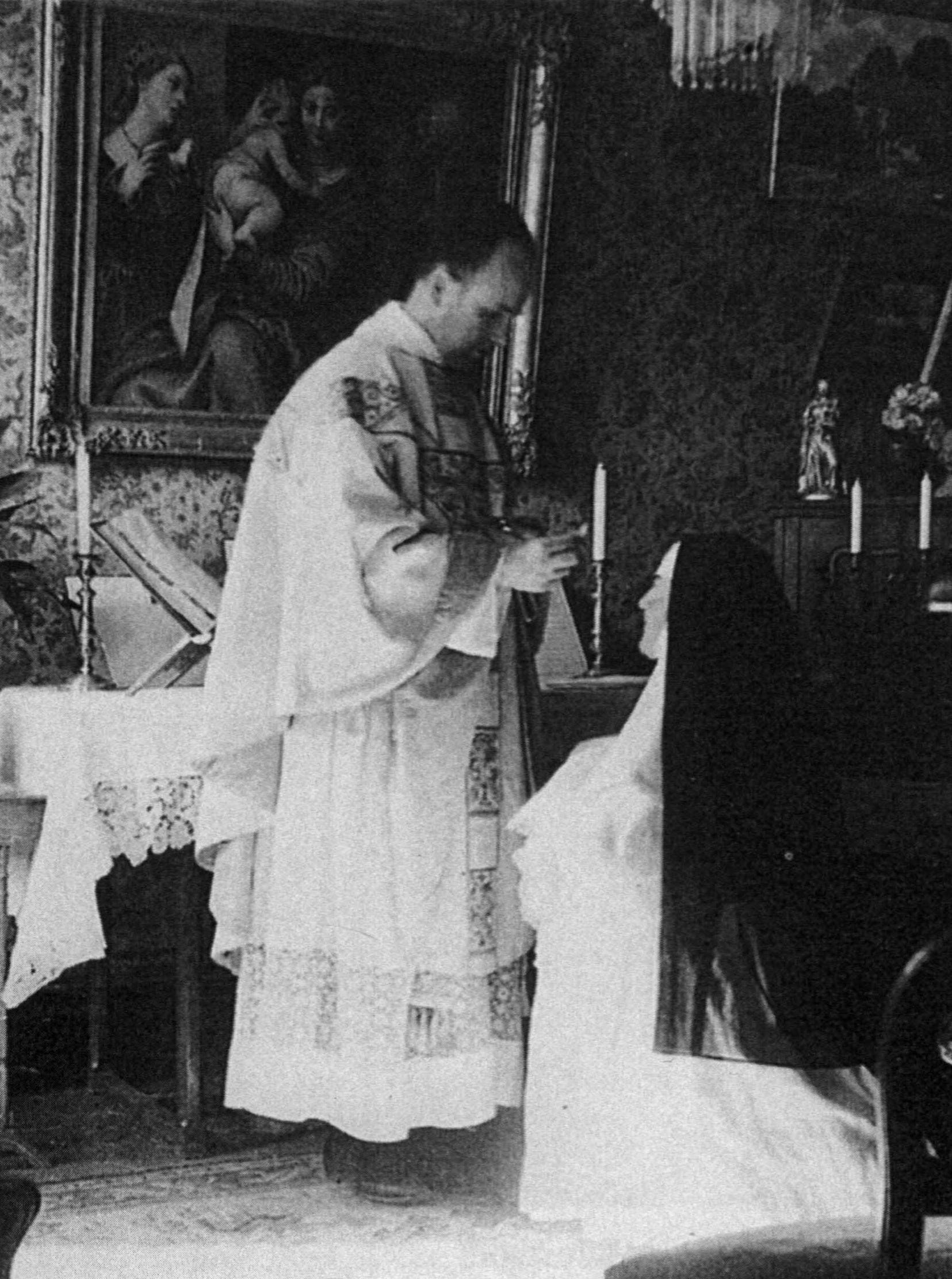
“This morning I went to draw from the well of truth. I was alone in the chapel. I stepped onto the sanctuary and sat on the step of the altar. There I drew on him, him the good Lord who has no other wish but to have us participate in his joy. So, my little sisters, let us be as one in the intimate joy of the Holy Trinity who lives in us; in the Father who in an eternal present now begets in us his Word; in the Word who, in us, never stops praising the Father, in the Holy Spirit who, in us, is the substantial joy of the Father and of the Son.” (Letter to the novitiate, September 4, 1934, no. 448) (155)
“If I were to look at my faults and failings then there would be something to be scared of. But I found it simpler to entrust myself completely to him who wanted me here. If I had looked at myself too much I know that I would have lost my peace and my joy. But in looking at him I found strength and abandonment. And looking at my mothers and my sisters, who all appeared so happy, I felt my heart open wide. . . . My fears melted away in love” (Letter to the superior of Douarnenez, May 15, 1935, no. 246). (157)
“Holiness does not consist of doing extraordinary things. It consists uniquely of letting yourself be consumed. Many do not know how to forget themselves. If they continue, that will end up stopping the flow of grace” (Articles, p. 135). (159)
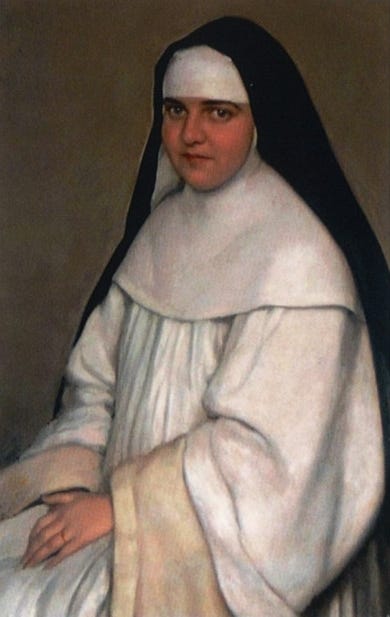
Then Jesus reassured her about her interior life and conduct, which she sometimes had doubts about:
“You have served me well and your deficiencies have never offended me. You have been able to remain hidden and often not understood, living your poor life, attentive to my least desire, not allowing to enter into your mind, nor your heart, nor into your will, the least indocility.
“You have not asked why, nor expressed fear, nor excuses. You are the most loving and most docile of my creatures, you have allowed your flesh to be tortured, expiating the faults of my blind sons, taking their crimes upon yourself. . . .
“You are a tender and hidden spouse . . . your heart is like a candle that never burns out, and like incense rising constantly toward me. . . . You are a torch of fire burning in the night, you are like a dazzling sword fighting [for] the causes I charge you with. Your role will expand more and more, but you will serve me yet a while in secret . . . you who go without hesitating where I tell you to go, who say what I want you to say, who keep quiet at a sign of my hand.” (Ibid.) (168)
“See how you invade my heart, my blood, my flesh, my mind, my soul. I am no longer in this moment the poor small and fallen being that must die; I am she to whom God comes to tell a secret. . . . Here I am, free with the freedom of the angels. . . .” (169)
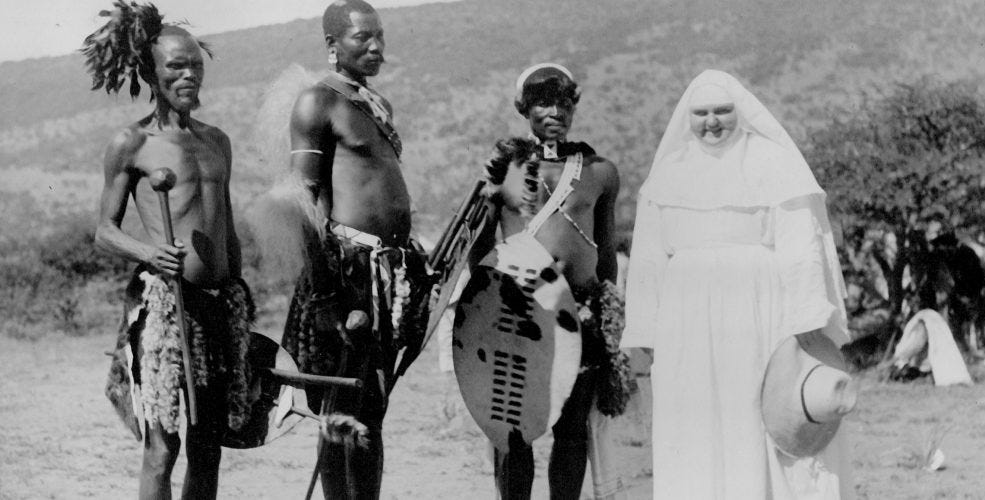
“Don’t worry about the inevitable demands stretching your reason and common sense. It has to be, and I don’t mean that you won’t be marked and affected by certain painful things but your heart will not be broken. You’ll see. You’ll come out of it more dazzling, you will radiate a clear light, radiant and beneficent.” (170)
“I’m fully aware that I can’t manage to do everything and he only asks me to do well all that I am able to do…. Don’t try to do everything. Possess myself in God, possess God, be possessed by him; everything is in that.” (171)
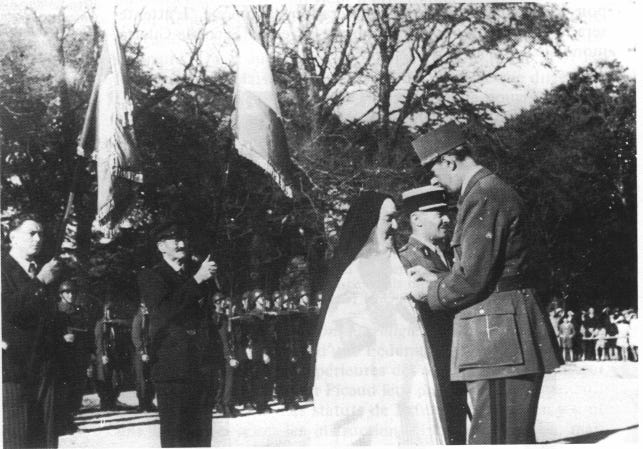
What’s more, vocations were becoming rarer. Catholic Action, then at its height, was casting a shadow. Don’t become a nun, you’ll be more useful in the world, seemed to be the advice all around: “This shortage is due in large part to priests who don’t know how to encourage vocations, nor direct them,” observed Mother Yvonne-Aimée, “not to mention those who prevent them from reaching, and turn them away from, the convent door, so as to keep the elite in the Catholic movements. Forgive me for laying out so boldly my thought but it is the divine thought and it is why I go there with so much assurance . . . with you” (Letter to Bishop Picaud, January 28, 1946, no. 83). (196)
“What merit would you have if you always had the joy of having worked well? It’s not at those times that you give the most. You’re satisfied— and it’s good that you have this joy in order to continue a task that is not at all pleasant for you.
“But believe me, it’s when you carry on without the taste for it, when you speak without knowing the result…it’s when you simply do your duty conscientiously and solely for the love of God that you give, you gain, you purchase! And everyone — more or less obviously — but every one of us, must know these feelings of weariness. . . .
“And in no way must we ever let them sadden us. . . . I am not reassured when I hear someone boast that he is successful in everything he does. That can’t be, or can only be for a time. It is not the ordinary path by which God leads souls.” (January 20, 1946, no. 64) (204)
Yvonne-Aimée of Malestroit: An Extraordinary Love by René Laurentin is available from the publisher or from Amazon.
It was Our Lord Himself who revealed this invocation to Mother Yvonne-Aimée on August 28, 1922; it was subsequently indulgenced by Pope Pius XI and John XXIII. See Laurentin, p. 71.