


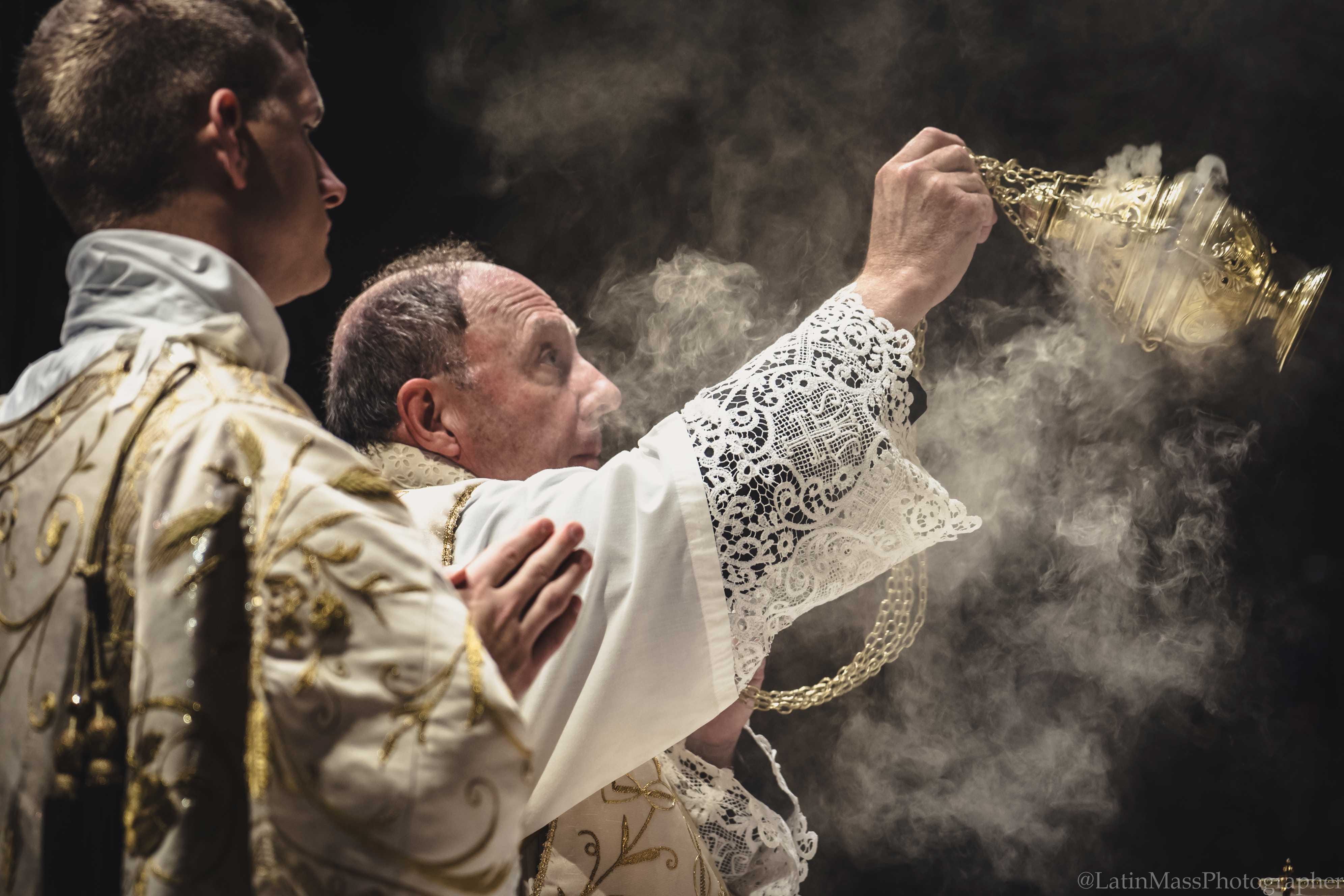
It has often seemed to me bizarre in the extreme that incense is rarely encountered in many Catholic churches. Incense appears everywhere in Scripture—in the law of Moses, in the books about Temple worship, in the Psalms where it serves as a primary symbol for prayers rising up to God, in the Gospel account of Zechariah, in scenes of heaven from both Testaments. On the following verse of Scripture—
And I saw an angel come and stand before the altar, having a golden censer; and there was given to him much incense, and the smoke of the incense of the prayers of the saints ascended up before God from the hand of the angel.
—Romano Guardini comments:
So writes Saint John in the mysterious book of the Apocalypse. The offering of incense is a generous and beautiful rite. The bright grains of incense are laid upon the red-hot charcoal, the censer is swung, and the fragrant smoke rises in clouds. In the rhythm and the sweetness there is a musical quality; and like music also is the entire lack of practical utility: it is a prodigal waste of precious material. It is a pouring out of unwithholding love. “When the Lord was at supper Mary brought the spikenard of great price and poured it over his feet and wiped them with her hair, and the house was filled with the odor of the ointment.” Narrower spirits objected. “Whereto this waste?” But the Son of God has spoken, “Let her alone. She hath done it against my burial.” Mary’s anointing was a mystery of death and love and the sweet savor of sacrifice.1
The sweet-smelling smoke was always there in Hebrew worship and became even more prevalent in Christian worship, where, in contrast with the bloody animal sacrifices of the old covenant, it fittingly represented the rational worship of a mind raised up to God in union with Christ, Himself the pleasing oblation par excellence. The importance of it is well captured by one of the antiphons for Lauds on the Solemnity of Corpus Christi: Sacerdotes sancti incensum et panes offerunt Deo, alleluia, “The holy priests offer incense and bread to God, alleluia.”2 The bread has managed to survive—but what of the incense?
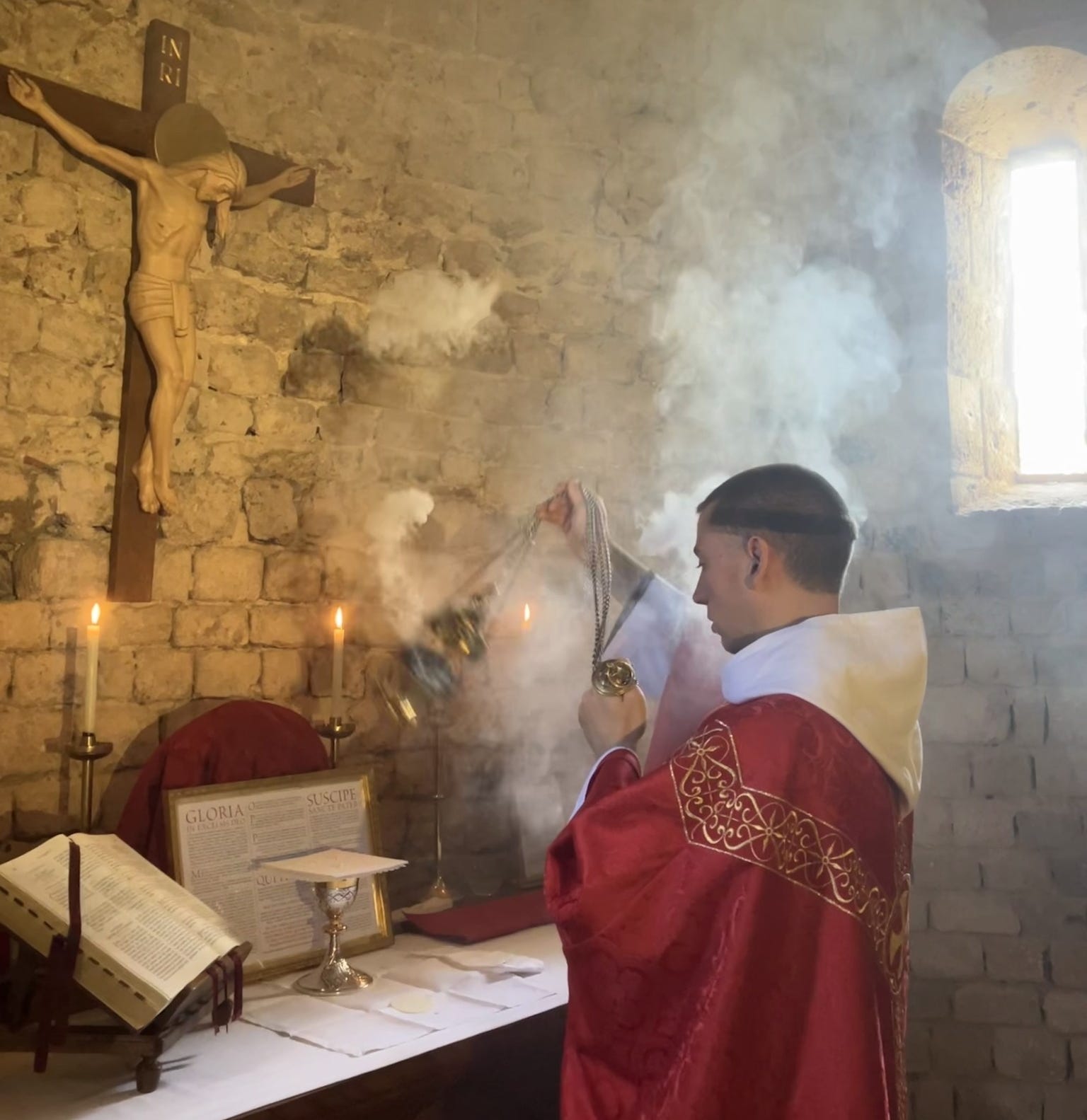
Then there is the subjective experience of the worshiper. Every time incense is brought forth at Mass or the Divine Office, it just feels like worship is now under way. Something special is happening here that no words or songs can convey by themselves; someone is present who deserves the treatment owed to a king or a god.3 The fragrance surrounds you, gets into your hair and your clothing. Your line of vision is interrupted by a hanging haze, which subconsciously says: You are in the midst of mysteries that cannot be clearly seen but must be worshiped on bended knee. When the embers are glowing well and the grains are heaped on with abandon, those clouds of incense make everything hazy, as if seen through a veil—a drifting image of the pilgrimage of the Christian’s life, as he passes through this vale of tears.
To continue the quotation from Guardini:
The offering of incense is like Mary’s anointing at Bethany. It is as free and objectless as beauty. It burns and is consumed like love that lasts through death. And the arid soul still takes his stand and asks the same question: What is the good of it?
It is the offering of a sweet savor which Scripture itself tells us is the prayers of the Saints. Incense is the symbol of prayer. Like pure prayer it has in view no object of its own; it asks nothing for itself. It rises like the Gloria Patri at the end of a psalm in adoration and thanksgiving to God for his great glory.…
Prayer is a profound act of worship, that asks neither why nor wherefore. It rises like beauty, like sweetness, like love. The more there is in it of love, the more of sacrifice. And when the fire has wholly consumed the sacrifice, a sweet savor ascends.4