


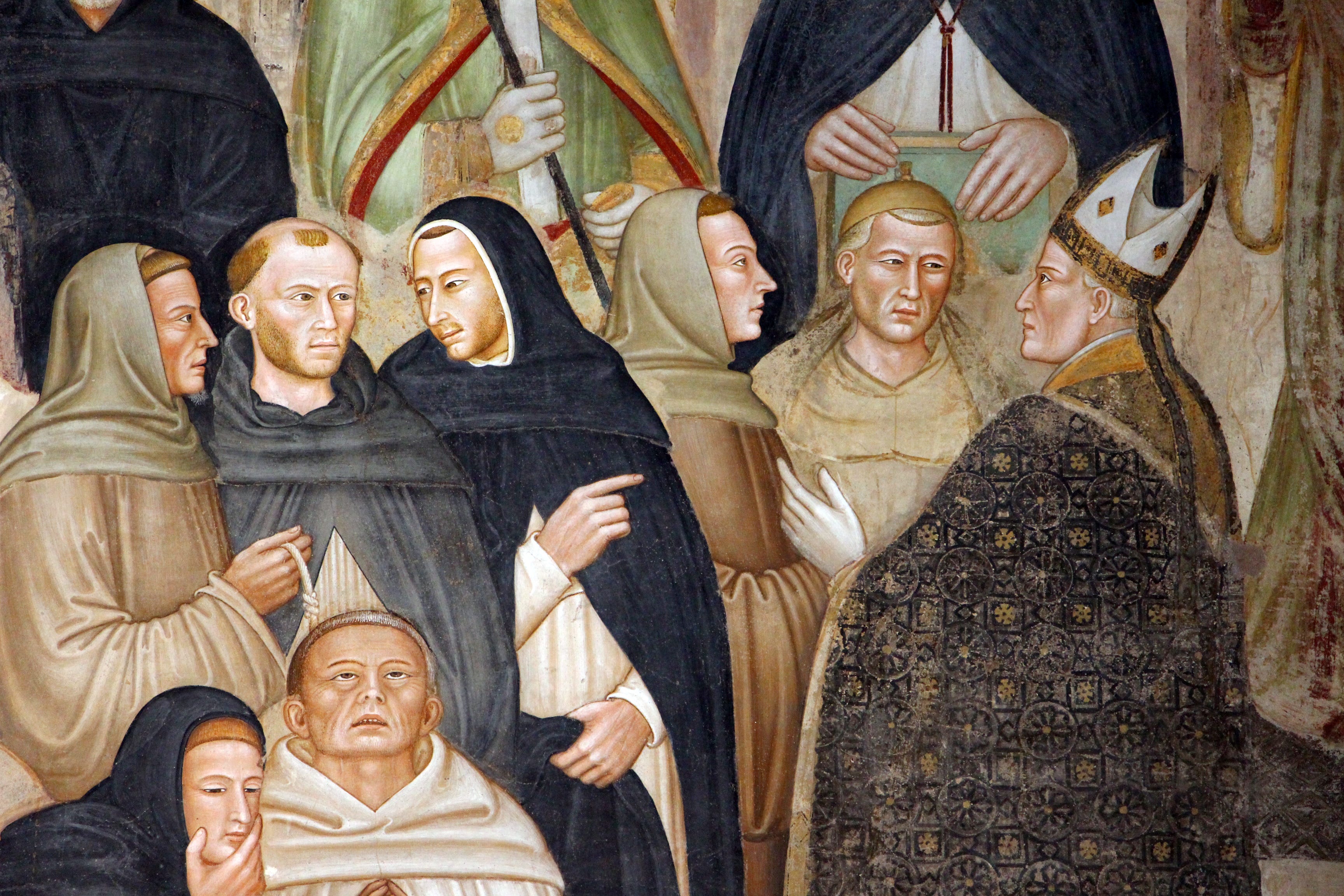

As my goal today is to outline the innovations of William of Ockham, I will begin with his moral theology, which picks up where Scotus left off.
Four distinct theses constitute the foundations of Ockham’s ethical theory.
There are no natures and no divine ideas of natures.
God has unbounded power to determine moral legislation and exempt from it.
The human will is autoteleological.
The normative value of right reason—the very rightness of right reason, so to speak—is subordinate to the dictates of the divine will.
1. No natures and no divine ideas
For St. Thomas, “a divine idea is nothing but a given way in which God views his essence as capable of being imitated by a creature. Prior to the actual creation of a given entity there is a divine idea to which that creature will correspond if it is ever brought into actual being.”1 Such an Idea captures not only the existence of the individual, but the essence of which the individual is a particular expression or instance. This is another way of saying that God knows John not only as John, but also as man, as animal, and as substance. As each of these, certain conditions and certain acts will be suitable for John’s perfection, others harmful to it. Rightness and wrongness of possible human acts will obtain regardless of whether or not John ever comes into existence. The creature’s essential foundation in the divine intellect makes it possible to speak absolutely of what is healthy and unhealthy, appropriate and inappropriate, good and evil, for the creature.
For Ockham, in contrast, the concept in God’s mind is not the “archetype” of any given nature; each idea is nothing more than the individual creature qua producible. For Ockham, the vocabulary of ideas is more a projecting of our own thought-process onto God than a reflection of the way the divine intellect actually is or operates. It may be difficult to say exactly what a divine idea can be after Ockham has applied his razor to it. But an important corollary cannot be evaded: there is no such thing as the ‘essence of man’ in the divine mind, there are no eternal types behind natural forms. God does not create John, James, and Peter as three instances of man, three circumscriptions or projections of an eternally-known archetype with its own inner structure and suitable perfection. He made John, James, and Peter as three individual absolutes who, by His free choice, happen to have the same basic set of characteristics. Do they share in human nature? No. Is there such a thing as humanity? No. They share in nothing. There is no all-embracing idea of what they are. Each man is a new and different creation not only in his material individuality but in his very essence. (For Ockham, there is neither a real nor a formal distinction between essence and existence.2) “Now what God wills are singular existents, each of which is independent of all the others. Any connection between them, any ordering of one to the other, is the result of that creating will.”3
2. God has unbounded power to determine moral legislation and exempt from it
In the field of ethics, Ockham is most famous for having entertained dazzling theses about the power of God over the content of morality. Once moral truths are accepted as having the status of revealed truths suspended by a thread from divine omnipotence and liberty, the entire created order, the moral law not excepted, is seen to be utterly contingent,
in the sense that not only its existence but also its essence and character depend on the divine creative and omnipotent will.… There are [for the tradition] acts which are intrinsically evil and which are forbidden because they are evil: they are not evil simply because they are forbidden. For Ockham, however, the divine will is the ultimate norm of morality.… God can do anything or order anything which does not involve logical contradiction. Therefore, because, according to Ockham, there is no natural or formal repugnance between loving God and loving a creature in a way which has been forbidden by God, God could order fornication. Between loving God and loving a creature in a manner which is illicit there is only an extrinsic repugnance, namely the repugnance which arises from the fact that God has actually forbidden that way of loving a creature. Hence, if God were to order fornication, the latter would be not only licit but meritorious. Hatred of God, stealing, committing adultery, are forbidden by God. But they could be ordered by God; and, if they were, they would be meritorious acts.4
Ockham is not, of course, suggesting that adultery, theft, or hatred of God are legitimate in the moral order of the world in which we find ourselves. But that is a matter of fact. As Ockham writes:
I say that although hate, theft, adultery and the like have a bad circumstance annexed de communi lege, in so far as they are done by someone who is obliged by divine precept to the contrary, nevertheless, in respect of everything absolute in those acts they could be done by God without any bad circumstance annexed. And they could be done by the wayfarer even meritoriously if they were to fall under a divine precept, just as now in fact their opposites fall under divine precept.… But if they were thus done meritoriously by the wayfarer, then they would not be called or named theft, adultery, hate, etc., because those names signify such acts not absolutely but by connoting or giving to understand that one doing such acts is obliged to their opposites by divine precept.5