


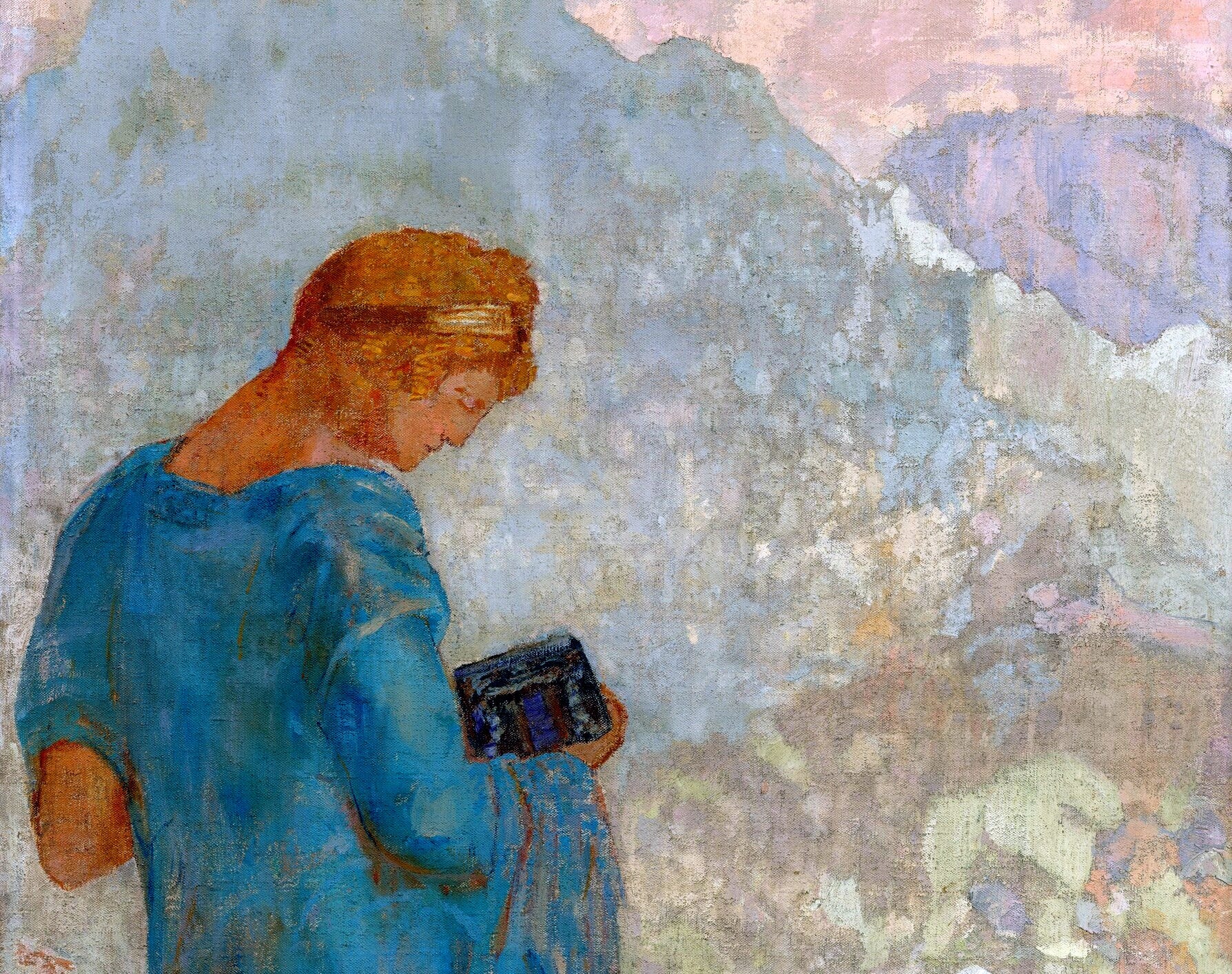
Not a single word uttered by St. Joseph is recorded in the New Testament. Hence, Pope Benedict XVI celebrated him as the silent man, drawing lessons for us:
His silence is permeated with the contemplation of the mystery of God, in an attitude of total availability to the divine will. In other words, the silence of St. Joseph does not demonstrate an empty interior, but rather the fullness of faith that he carries in his heart, and that guides each of his thoughts and actions. A silence through which Joseph, together with Mary, guard the Word of God, known through sacred Scripture, comparing it continually to the events of the life of Jesus; a silence interwoven with constant prayer, a prayer of blessing of the Lord, of adoration of his holy will and of boundless confidence in his providence. It is not exaggerated to say that Jesus will learn—on a human level—precisely from “father” Joseph this intense interior life, which is the condition of authentic righteousness, the “interior righteousness,” which one day he will teach to his disciples (cf. Matthew 5:20). Let’s allow ourselves to be “infected” by the silence of St. Joseph! It is so lacking in this world which is often too noisy, which is not favorable to recollection and listening to the voice of God. (Angelus, December 18, 2005)
Not everyone, needless to say, is called to be a Carthusian monk or nun who lives in nearly total silence, but I doubt you will contradict me if I claim that all of us could use some more silence in our lives. God has so much to tell us, such profound and lofty mysteries, so overflowing with indescribable joy, that He does not engage in chitchat or texting, but speaks “heart to heart,” in prayer, in Scripture, in the liturgy.
That means if we want to hear Him, we need to open up a space of silence every day—this is why all the spiritual masters say we should commit some sacrosanct portion of the day to quiet prayer—and we should find ways to reduce the constant noise that surrounds us in the form of music, videos, and social media. Way back in 1935, the poet T. S. Eliot said that moderns are “distracted by distraction from distraction”; what would he say today, with Twitter, Instagram, TikTok, and Lord only knows what else?
Silence is uncomfortable. We flee from it because sooner or later it will make us think about ourselves, about God, life, the universe, our happiness or lack thereof, and these are uncomfortable if we are not yet who and what we ought to be. Conversely, for someone who is really striving to be a “just man” like St. Joseph, silence is no longer an uncomfortable no-man’s-land but a welcome opportunity to be alone with God, yet never lonely.
When you’re in the car or public transportation, don’t automatically turn on the radio or stick in the earbuds. Learn to be quiet. Say some prayers or psalms instead, or just sit still.
Give yourself plenty of “down time” from social media. It’s very hard to do—I know it from experience—but the benefits are huge and even secular people are writing book after book about why our psyche benefits from this down time. I think it’s the new form of asceticism: we need to fast from too much consumption of media. Some recommend the Sunday shutdown, that is, leaving all devices turned off on Sundays. Go to a park and take a walk in nature, listening to the natural sounds the world makes.
If you don’t take steps to put up appropriate walls, various kinds of noise will invade your life and colonize your mind, and you will become a messy room cluttered with whatever other people want to put there, and not much room will be left for yourself or for God.
I am going to tell you something that almost no one says anymore.