


The indulgence offered by the Holy Father in honor of the 800th anniversary of the Transitus of St. Francis (Oct. 3, 1226–Oct. 3, 2026) is available until January 10, 2027. The requirements for fulfilling the indulgence can be found here.
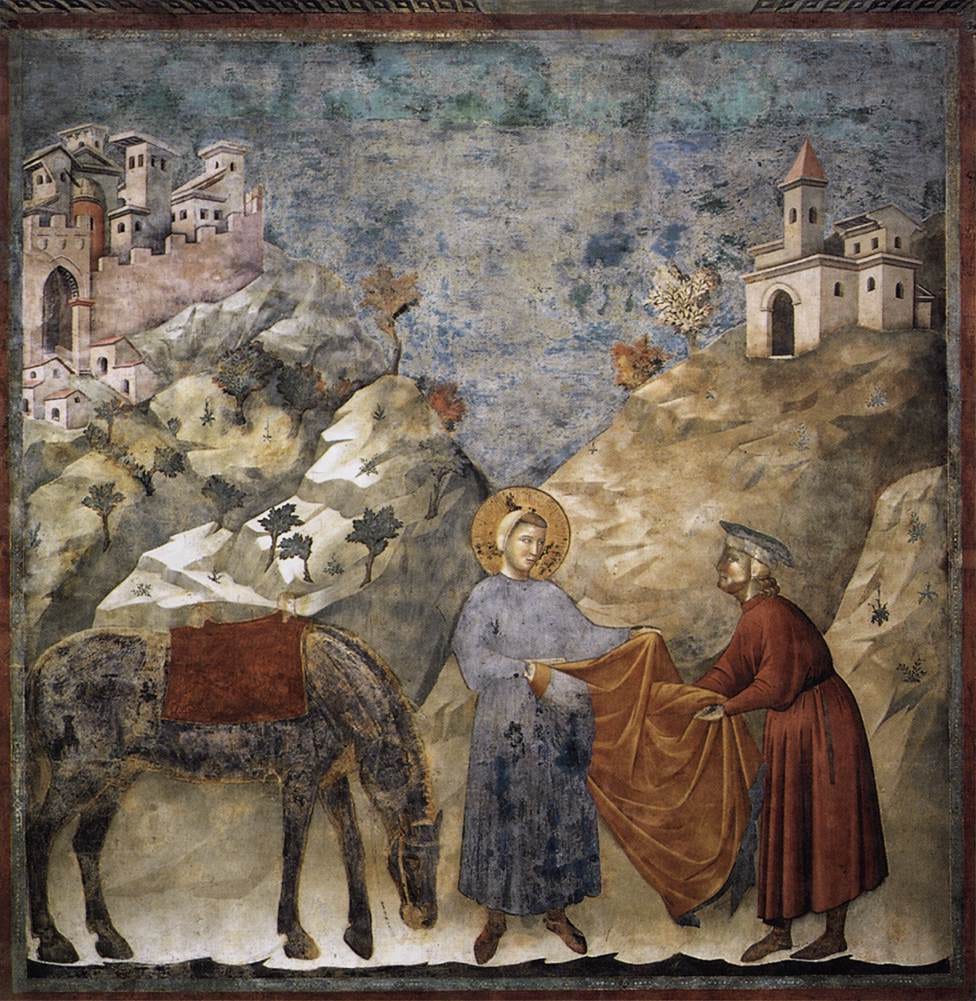
Giovanni Bernardone lay dreaming in Assisi. Forgotten for a time were the bloody fields of Collestrada, the year long night of imprisonment, and the illness that crippled his body, for he was born to be a knight, and adversity only heightened his valor. He hungered to reclaim the glory lost in Perugia. In his restlessness, he had that very day for the love of Christ given all his fine livery to a poor knight he met along the road.
Beneath the veil of sleep, he saw a spacious palace adorned with a “lovely bride,” and “filled with arms and military ensigns, all marked with the Cross of Christ, to make known to him that his charitable deed done to the poor soldier for the love of the King of Heaven should receive an unspeakable reward. And when he asked for whom all these things were reserved, a divine voice answered him that they were for him and his soldiers.”1
With utter simplicity, upon awakening, “he endeavoured, therefore, to go to Apulia to win knighthood; and after making the needful preparations on a lavish scale he hastened toward the attainment of the knightly dignity.” In a subsequent vision, he was admonished to return home and to serve the “God of infinite riches,” rather than a poor mortal, and to await the spiritual work that the Lord would have him do.
Thus, St. Francis of Assisi, like the child David, laid down his weapons of iron to take up the arms of the Spirit. Bare-breasted and “owning nothing but his harp,” Francis, a new man, walked among the woods of Umbria singing the praise of God, who by divesting him of every worldly defense, had so richly endowed him with the Holy Cross, that royal sign in which Christ our King forever conquers, forever reigns, and forever rules.
Mystical Marriage
St. Francis’ conversion occurred sometime around the turning of the year 1205. It is illustrative of the spiritually fallen state of his own time that he innocently misinterpreted the divine directive from the Crucified Lord to “repair the Church” as a call to physically repair the crumbling churches in the neighborhood of Assisi.
Materialism and heresy had set the Church tottering on her foundations, and neglect of divine service had led to a loss of faith everywhere. Seeing so many Christians valuing worthless things and leaving eternal things to ruin, St. Francis, a most ardent knight, took Lady Poverty for his own bride. They were henceforth inseparable partners in the terrible struggle for souls.
