
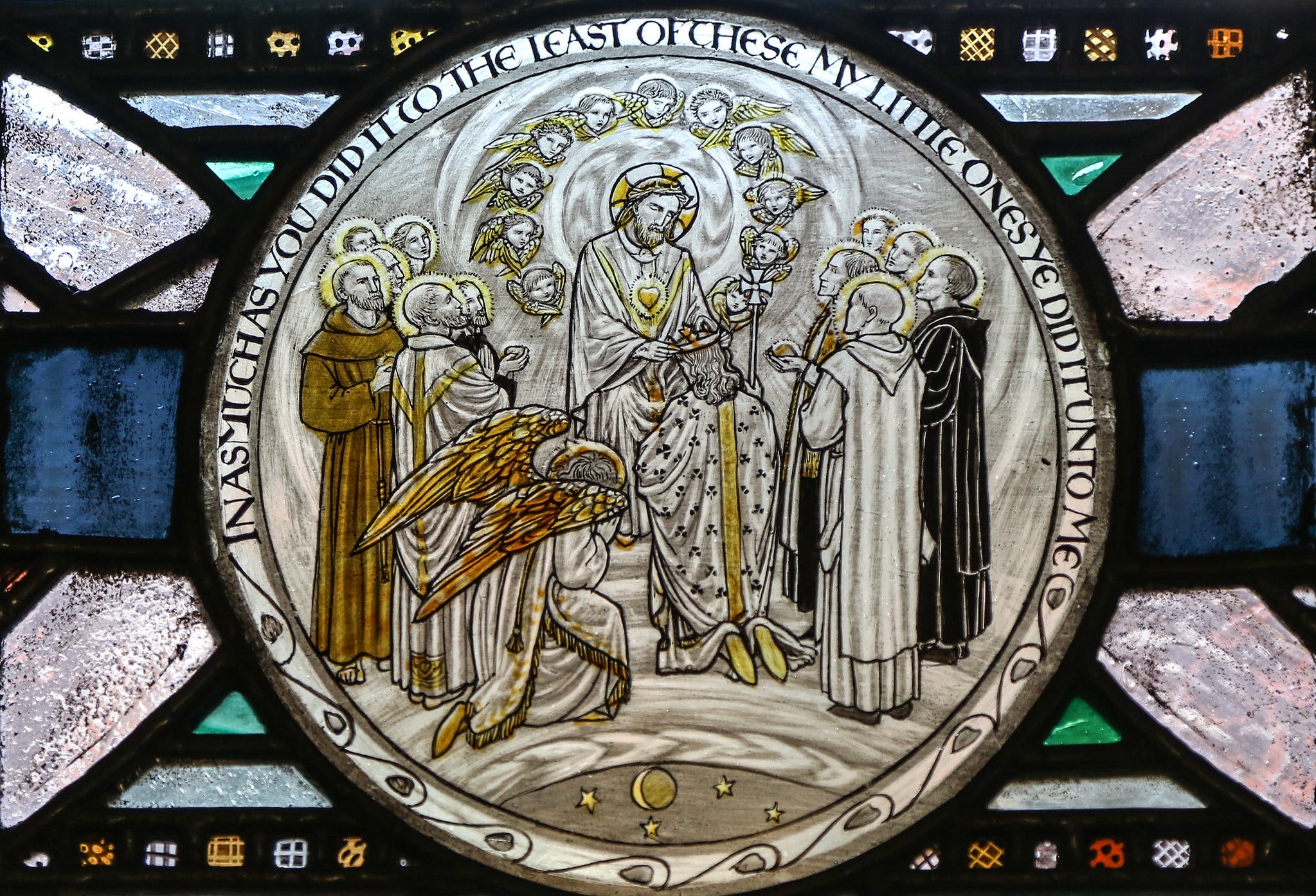
St. Robert Southwell: A Martyr’s Fire Within
The Mass and the Missions, Part III (1 of 2)
England was his Bethlehem.
As he wandered homeless in the deep night, amid frozen fields and hilly uplands, did St. Robert Southwell pause and turn his gaze upward to contemplate the crowded heavens, lighting the pilgrim’s way? His heart, rather, like the star of old, impelled him with vehement desire to seek the Holy Child where He lay, on countless outlawed altars hidden throughout the countryside. Blazing in the darkness, a compelling vision drew him onward into ever greater danger, ever greater sacrifice.
The year was 1588, and he was on a seven-week mission that would take him to the Catholic families of Cambridgeshire and the Midlands. His biographer would note, “wherever he went he was never alone. When he left hurriedly after Mass while it was yet dark, he could feel in the frost-bound countryside the echoing of that Heart whose Blood was still hot on his mouth. And it was in the air all around him.”1

Was it this sojourn in the country that Southwell would recall later in his most famous poem, “The Burning Babe?”
As I in hoary winter’s night stood shivering in the snow,
Surpris’d I was with sudden heat which made my heart to glow;
And lifting up a fearful eye to view what fire was near,
A pretty Babe all burning bright did in the air appear;
Who, scorched with excessive heat, such floods of tears did shed
As though his floods should quench his flames which with his tears were fed.
“Alas!” quoth he, “but newly born, in fiery heats I fry,
Yet none approach to warm their hearts or feel my fire but I!
My faultless breast the furnace is, the fuel wounding thorns,
Love is the fire, and sighs the smoke, the ashes shame and scorns;
The fuel Justice layeth on, and Mercy blows the coals,
The metal in this furnace wrought are men’s defiled souls,
For which, as now on fire I am to work them to their good,
So will I melt into a bath to wash them in my blood.”
With this he vanish’d out of sight and swiftly shrunk away,
And straight I called unto mind that it was Christmas day.
Who was Southwell’s newly born Babe, breaking time asunder, consumed like a Phoenix in His own ardor, melting with the heat of His own desire, but the spotless Host upon the paten? “The manger in Bethlehem is the altar of the Church,” wrote St. Aelred of Rievaulx.2
Wherever he went, the recusant priest brought glad tidings of great joy, for he held in his hands Emmanuel, God with us.


