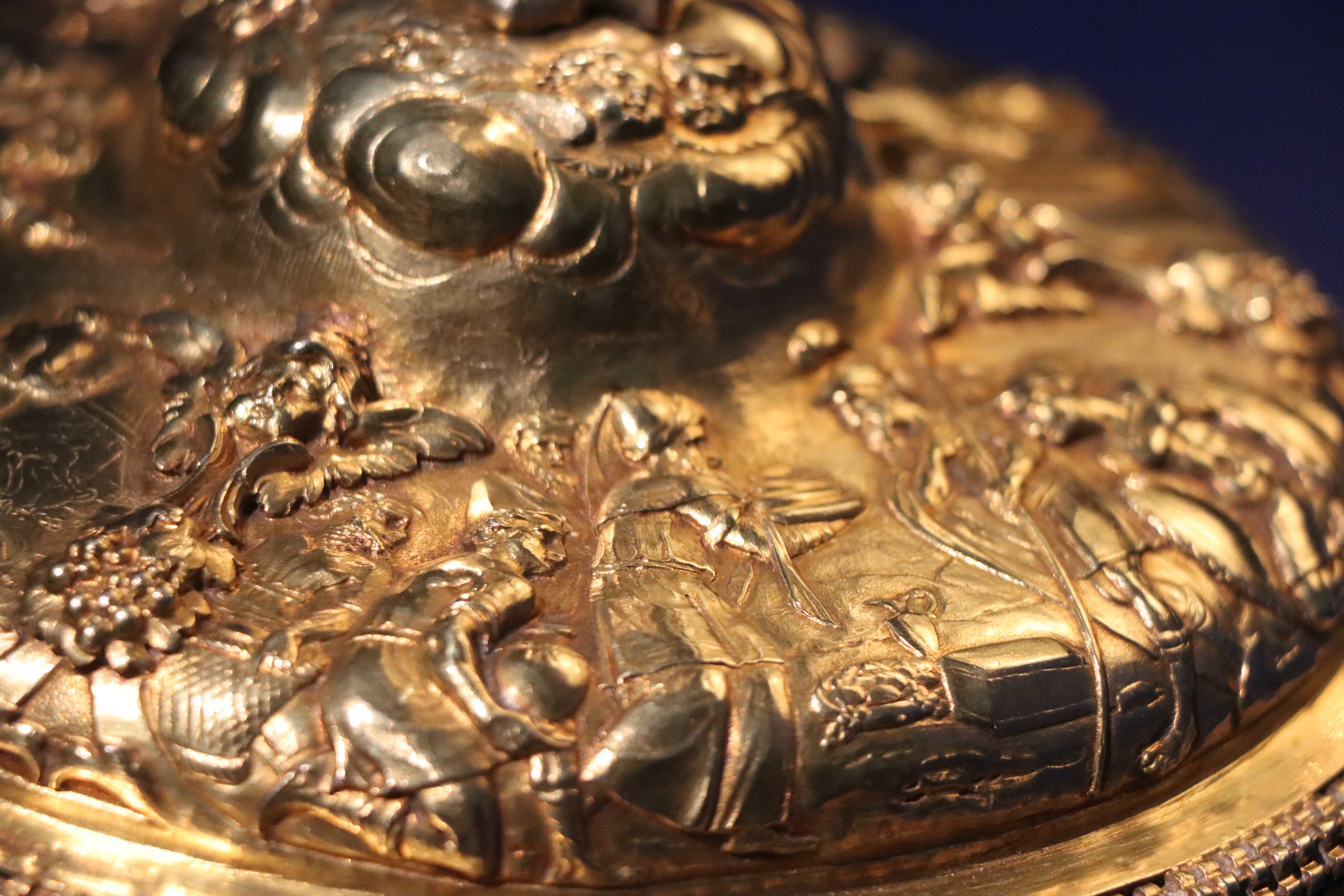
On July 12, thousands of visitors flooded the Kimbell Art Museum in Ft. Worth, Texas, for the final day of the special exhibition, “The Holy Sepulcher: Treasures from the Terra Sancta Museum, Jerusalem.” The exhibit featured over 60 pieces of exquisite 17th and 18th century liturgical art from the Terra Sancta Museum, formerly the Museum of the Franciscan Friars in Jerusalem. The treasures, some still in use at the Church of the Holy Sepulcher and the Monastery of Saint Saviour’s, are on loan while the Terra Sancta Museum is undergoing construction.
The exhibition items included copes, chasubles, chalices, lamps, and a variety of other priceless ornaments, many of them saved or restored from desecration. The items were made for the Franciscan custodians of the Holy Sepulcher. They represent the generosity of the Habsburg and Bourbon families, as well as numerous other European monarchies, who sought to adorn the altars of the Holy Land with glorious and lasting monuments.
The great popularity of the exhibit led the museum curators to extend “Treasures from the Terra Sancta Museum” for two weeks past the original closing date, and on the final day, lines of patrons waiting to see the exhibit extended out of the back of the building.
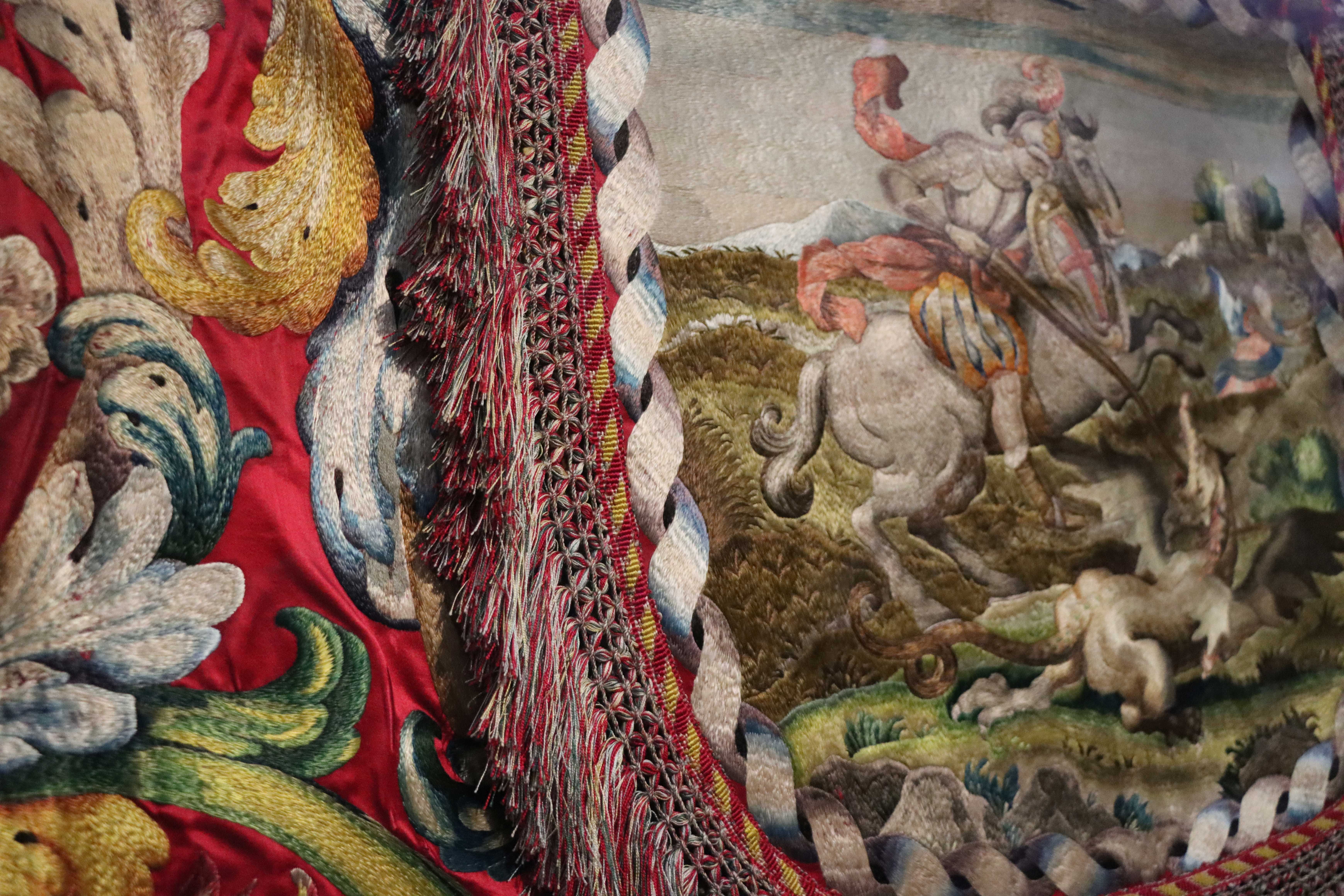
The beauty of the art, made by loving hands for the holiest site in Christendom, was nearly overwhelming in its richness and rarity. People lingered in awe before a crimson silk cope, embroidered with baroque flowering vines and fruits in cascading cornucopia, complete with delicate shading. They admired the hood, which featured a scene of St. George slaying a dragon and asked about the story depicted. They gazed in wonder at a jeweled monstrance and two majestic thrones for Eucharistic Adoration, marveled at scriptural scenes minutely depicted on ciboria, and saints grandly adorning enormous candlesticks and lamps. As may be expected, the pieces inspired friendly discussions among strangers about the possible meaning of the objects, their history, and their loveliness.
What follows here is a meditation on beauty in Liturgical Art, inspired by the Treasures and the conversations of the patrons, in gratitude for the anonymous, centuries-long work of preservation of these ornaments, carried on through continuous warfare, ecclesial turmoil, and liturgical upheaval. May we be moved to pray for our suffering brothers and sisters in the Holy Land, and our hearts drawn up into the Eternal Beauty that knows no shadow or change.
Dwelling in Unity
St. Francis de Sales begins his Treatise on the Love of God by summarizing St. Thomas’s teaching about beauty. Beauty, according to St. Francis de Sales, is composed of three elements: unity, harmony, and splendor (or clarity).
Of unity, he writes, “Union between several and distinct parts produces order.” Unity does not destroy difference, but directs each variation to the goal or purpose of the artist. The order that results pleases our minds and leads them to relish the good thing presented to us, and thus at the same time, we may enjoy both the beauty and the goodness before us precisely as a whole. Necessarily, the quality of our enjoyment will be in proportion to three things: the excellence of the artist’s goal, his skill, and our ability to receive the meaning of the object.
The magnificent artistic unity of each individual object in the exhibit, as well as the entire display, could be easily recognized in its sacrality, that is, in the pieces each being set apart for the solemn worship of God. Liturgical beauty is wed to purpose that transcends mere utility. Each thread, each delicate strike of the hammer, each stitch worked silently and anonymously, was made to serve an ancient liturgy of surpassing holiness, that in turn served the God Who Is Holiness.