


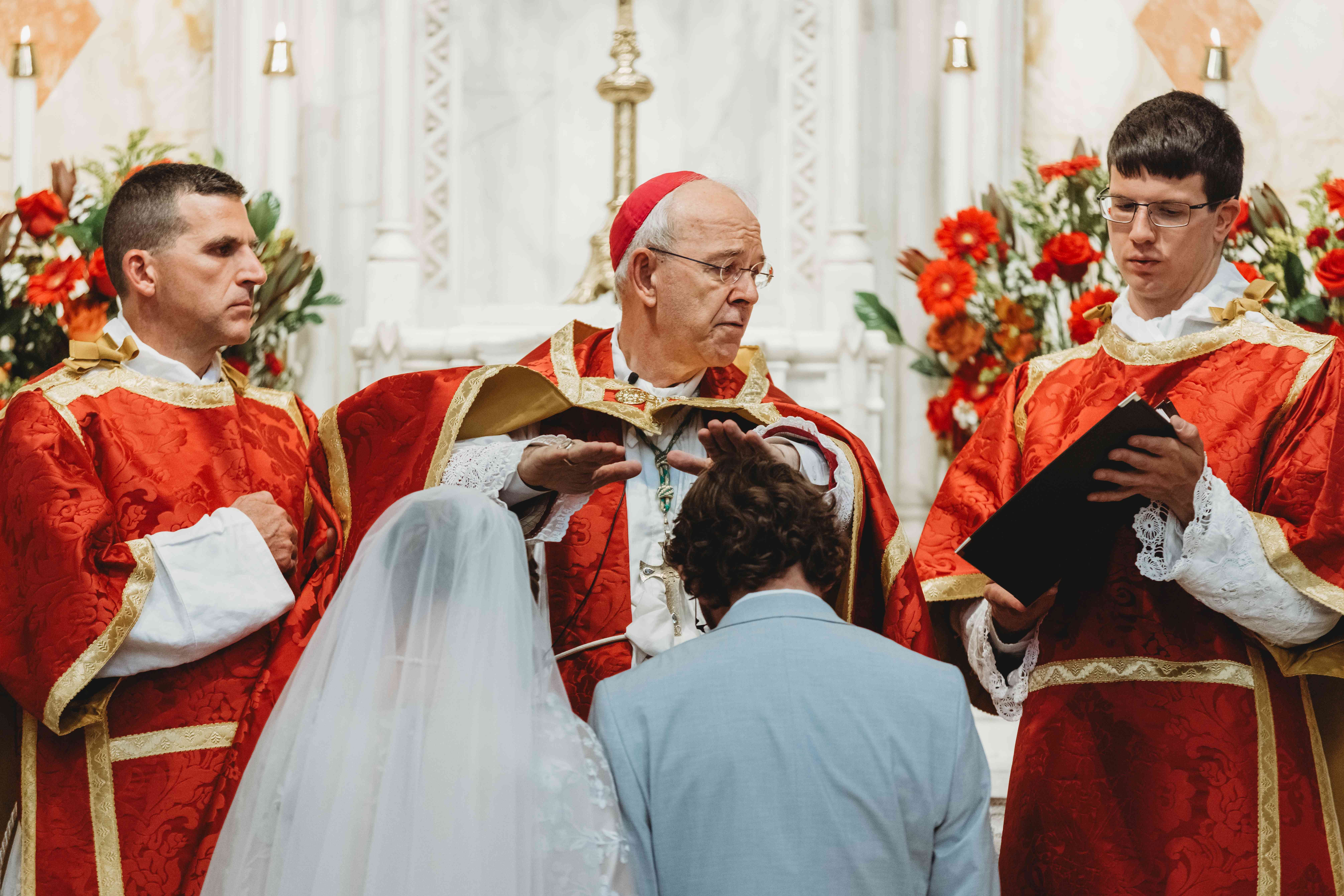
It cannot have escaped the attention of anyone who is even moderately aware of ecclesiastical affairs that the single most orthodox, articulate, dynamic, courageous, involved, precise, and profound Catholic bishop in the world at this time is Athanasius Schneider, who, as an auxiliary bishop from Kazakhstan, stands like a veritable shepherd boy like David facing the global Goliath of apostasy, corruption, indifference, and heresy. And what better day to honor him than on this feast of St. Athanasius of Alexandria, who almost singlehandedly battled against a worldwide episcopacy that had drifted into heresy or had fallen into a mute cowardice?
Over the years it has been my privilege to meet and speak with His Excellency on a number of occasions, to exchange letters, to work on projects together, to sing in the choir at his high Masses, to serve his low Mass, and, most memorably of all, to join my prayers to his at the altar as he celebrated a solemn pontifical Mass for the wedding of my son and daughter-in-law. But even if I did not know him personally, I feel I would still love and venerate him simply on the basis of reading his wonderful words, which pour forth with anointed profusion in the form of articles, statements, podcasts, and books, all of them widely disseminated and, I believe, decisively shaping the future of orthodox Catholicism.
Because the time we have for reading is limited and there’s always fierce competition for it, I’ve decided to publish today some of the finest passages from a few books of his that readers may not be familiar with: The Catholic Mass; A Shepherd Solicitous for the Whole Church; and The Springtime that Never Came (which happens to be on sale at Sophia at the moment). In this way, you can acquire at least some of the wisdom on offer in them, and perhaps be moved to acquire the books for future spiritual reading.
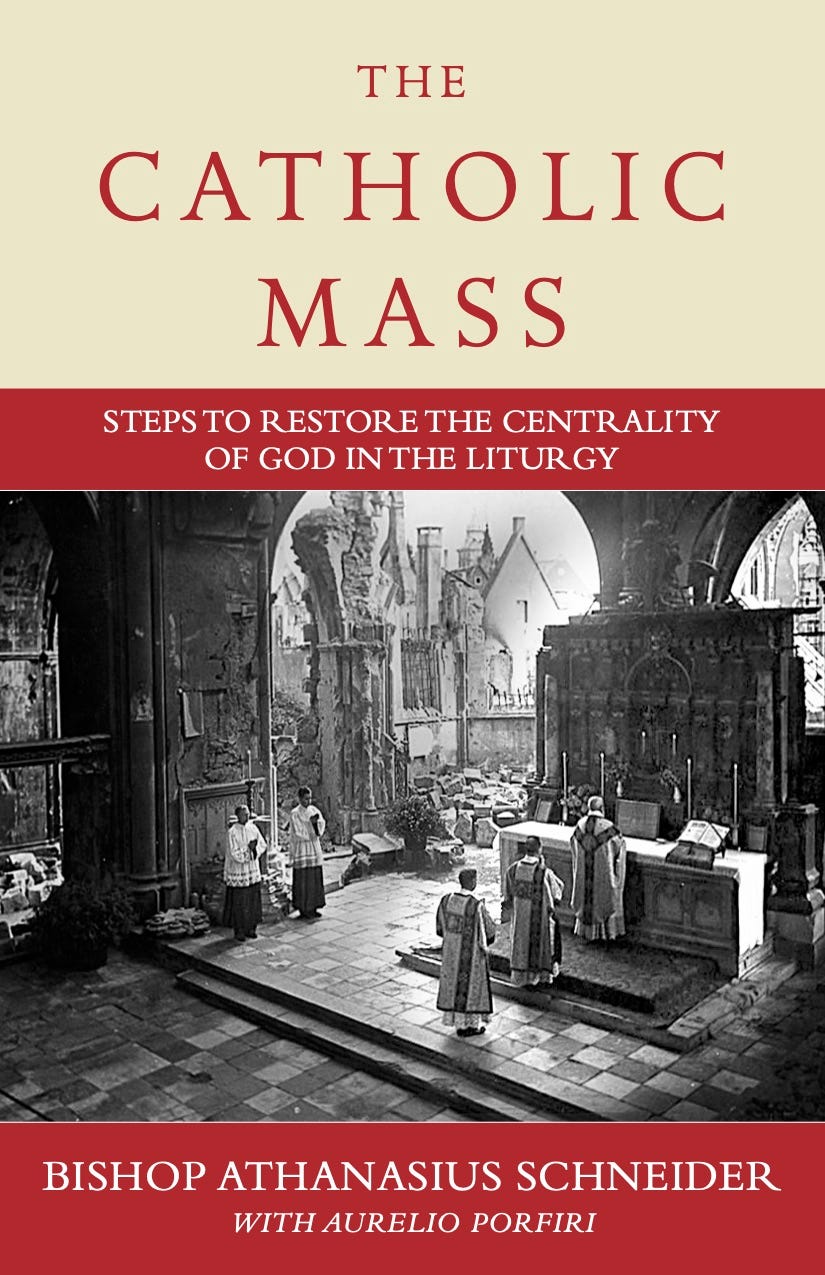
The Catholic Mass: Steps to Restore the Centrality of God in the Liturgy
The Novus Ordo Missae weakens the essential, sacrificial aspect of the Mass. This is most clearly seen in the new Offertory Prayers, which are essentially prayers for the blessing of a meal, emptied of their properly sacrificial meaning. This is dangerous because in the tradition of the Church the Offertory was always considered a small canon. All of the Eastern liturgies have prayers and gestures that are expressly sacrificial in the preparation of the gifts. The Holy Mass respects the way of salvation history, which anticipates in symbol a reality that is to come. The Old Testament anticipates the New but the New was hidden in the Old: “God, the inspirer and author of both Testaments, wisely arranged that the New Testament be hidden in the Old and the Old be made manifest in the New.”
The Sacrament of the Eucharist is a threefold sign, commemorative, signifying, and prognostic — that is, it commemorates the saving event of the past, signifies its sacramental presence in the present, and opens our vision to the definitive reality of eternal life in the New Jerusalem. This perspective of salvation history must be respected in the liturgy. The traditional Offertory Prayers date back to the ninth century, or even earlier. The Offertory is meant to point to the Cross, so the Church expresses in a solemn and somewhat drawn-out manner the intentio, i.e., what she intends to do, which is not to carry out a simple meal, but the greatest action, which is the sacrifice of Christ. That is why the Offertory must necessarily express the sacrifice that is to be offered. In the Offertory Prayers of the Novus Ordo Missae, on the other hand, the intentio expresses the aspect of a meal, or banquet. That is why the new Offertory Prayers are dogmatically, doctrinally, and spiritually defective and should be replaced by the ancient prayers, which correspond to the spirit of the universal Church of all times, and in particular to the spirit of the liturgy of all the Eastern Churches. (88-89)
In fact, the essence of the Mass and its final cause consist in its sacrificial character. In the Novus Ordo, on the other hand, the Offertory prayers express as the intention of the offering and preparation of the gifts, the reception of the Body of Christ and Blood of Christ, i.e., the aspect of the banquet. By expressing such a limited intention, these prayers are theologically ambiguous, and fail to recall the warning expressed by the Council of Trent: “If anyone says that in the Mass a true and real sacrifice is not offered to God; or that to be offered is nothing else than that Christ is given to us to eat, let him be anathema.” (90)
There is a great pedagogical wisdom in the ancient rite of the Mass. The blessing comes after the Ite missa est as if to tell the faithful: “do not leave immediately, stay longer to receive the blessing.” Even the priest does not depart the sanctuary immediately after giving the blessing but goes to the side of the altar to read the Prologue of St. John. And so the faithful are invited to remain in church and not to leave in haste. In these moments, Jesus is still in the body of the priest and in the bodies of those who have received Him sacramentally. Both priest and faithful, while listening to that beautiful text from the Prologue of St. John’s Gospel, especially its central words Et verbum caro factum est, ought to consider that the mystery of God’s Incarnation has been fulfilled in them, too, in an individual and personal way, through sacramental Communion. The Church knows that there can be superficiality, especially in the celebrating priest. And so she constrains him to remain at the altar and to pray the Prologue of St. John, responding with the last words, Deo gratias. (157-58)