


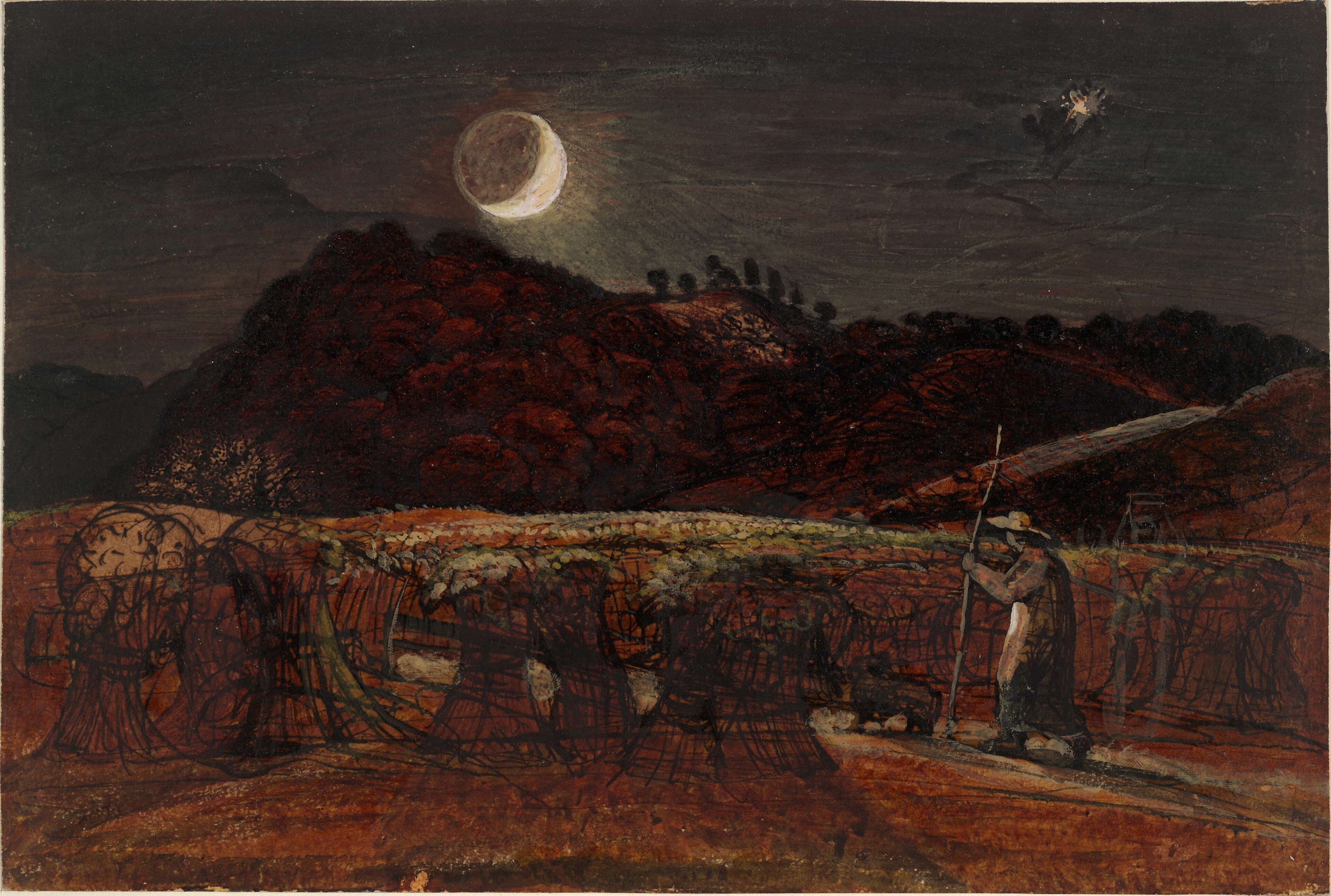

The title of this post is a quotation from T.S. Eliot, cited in the book under discussion.
Andrew Thornton-Norris is a poet and essayist, a convert to the Faith from Anglo-Catholicism, and a polite if uncompromising traditionalist. His short but sparkling work The Spiritual History of English attempts a remarkably ambitious project: to cover the entire arc of English literature from its multilingual birth to its Catholic apogee to its modern decline, evaluating this arc in terms of the religious and metaphysical commitments involved in each stage of the process, and suggesting ways in which the undeniable implosion of English letters can be remedied.
Lovers of literature, literary history, and the traditionalist critique of modernity will find this work thought-provoking. What follows are some representative excerpts.—PAK

This mode of thought also includes Scientism: the widespread belief that nothing may be believed in which is not verifiable through the scientific method, or is not susceptible to scientific proof. This represents an attitude to the scientific method, and so to knowledge, which is one of pure faith. The assumption that the scientific method is the only reliable or valid method of answering all questions, in any field of human knowledge other than the physical, is not in itself provable or verifiable as true, and is thus self-contradictory. (4-5)
Clarity, breadth, limpidity, and simplicity are spiritual as well as rhetorical virtues, and the spiritual poverty of language is of the highest spiritual significance. In contrast, the widespread use of jargon and code in academic and intellectual presentations of intellectual, cultural, and spiritual matters is a deliberate impairment of communication, a refusal to be intelligible. This is a practical rejection of the possibility of a common criticism and judgement, and a disdain for truth itself. “We have sunk to a depth in which re-statement of the obvious is the first duty of intelligent men,” wrote Orwell. (9)
The metaphysics and the culture that have replaced it [viz., our Christian and Latin Classical heritage] leave the individual alone to face his difficulties and blessings, and the profound questions of mortality, sin, and loss that are always with us. The fruit of this is the existential sickness of the art and culture we see around us. Vice versa, this decline in cultural standards has affected the liturgy of the Church. The tolerance of inferior texts is a consequence of the decline both of cultural standards and of orthodox belief. The coarsening of liturgy is a coarsening of the spirit as well as of the sensibility. (9-10)
What the Church did, as we shall see, was to sustain a culture of preservation of the standards of the past against which the achievements of the present could be measured. She thus established and sustained a living tradition, within which creativity could be nourished and guided. She also provided a context within which art or the individual were prevented from becoming a religion themselves. (11-12)
“The culture of a people” is “an incarnation of its religion” (Eliot). (14)
Genuine atheism or actual conversion are both rare. Much more common are a generalized agnosticism or superstition, consequences of a determination not to think about religion. However, the attempt of the secular or godless to ignore religion and concentrate on making the best of this world has not resulted in the successful transcendence of belief in the supernatural. Rather, it has enabled the relaxation of the spiritual discipline theology provides as a bulwark against superstition. For instance, belief in human progress or perfectibility may depend on faith in the ability of technology to liberate us from human history or to alter human nature. (15)
As Ted Hughes puts it: “How things are between man and his idea of the Divinity determines everything in his life, the quality and connectedness of every feeling and thought, and the meaning of every action.” (21)
The liturgy does this too:
According to Eliot, metaphysical poetry occurs when an intellectual statement or subject, such as a philosophical or theological idea, is translated into images which enable those ideas or concepts to be “seen” and “felt” rather than thought, “so that the world of sense is actually enlarged.” (47)
Paradox: The greatest art is made by those for whom art is not the greatest thing. Those who make art the be-all and end-all produce stupid art. Those who believe in something infinitely beyond art produce the masterpieces.
With the detachment of modern philosophical scepticism, the sensibility becomes dissociated from those ideas; thus it is psychology, individual thought, imprecise feeling and belief rather than philosophical or theological ideas and the practice they embody that is incarnate in modern literature. Individual reason and experience become the ground of belief and practice as ecclesiastical Christianity is replaced by “Paganism resurgent.” (59)
The influence of the Latin Classical tradition has been denied by the emphasis on individual creativity, by Romanticism, and that is the reason for the demise of literature. The sense of tradition in general as well as of a particular tradition stands opposed to the cult of the individual, which is the distinguishing feature of the religion of art that is the particular incarnation of the secular humanism or paganism associated with romanticism. (76)
The relationship between memory and creation is fundamental, between knowledge of the tradition and its reinvention: acts of creative remembering. (77)
This is unsustainable; there is no limit to scepticism, and the realization of this is what lies behind the crisis of postmodernism. The denial of the cultural authority of the Latin Classical tradition associated with historic Christianity becomes the denial of the authority of any external artistic and moral standards, that is, beyond apparent authenticity and power of expression: beyond the “personality which makes it plausible.” And the “personality thus expressed . . . [tends] naturally to be the unregenerate personality.” The principal modern phenomenon is that of the expression of individuality, personality, and identity, through innovation or originality, unrestrained by tradition or discipline. It is limited only by what people will buy, what is popular, what one can “get away with,” by how far one can go without infringing the rights of another sovereign subject to its own private dreams…. (89)
When feeling becomes reified and liberated from the control of an external spiritual authority, the result is sentimentality and the aggrandisement of the personality of the artist. It is no longer controlled by an external or formal system, a system of living designed to integrate and maintain proportion between the mind, the emotions, the body and the spirit. For this to happen, a person must see his previous or natural way not just of thinking but also of feeling and therefore of acting, as having had something wrong with it. In other words, he must have an idea like that of Original Sin and the belief in it. And this is not just an intellectual but a behavioural and, most important of all, an emotional conversion. (91-92)
The practice of an art is itself a discipline, which is contained within the tradition. When all is made new with no regard for that tradition, the consequence is chaos: an empire of the perpetual present moment. (93)
This is what lies behind the characteristic flaws of Romantic art: the cult of personality, technical mediocrity, metaphysical confusion, empty mysticism, and the attempt to create a religious aura without a religious content beyond the idea of art and creativity itself. (107)
Postmodernism is modernity without the remnants of the Latin Classical culture, without a literature which maintains standards from ancient to modern times. It is the logical conclusion of the development of the authority of the individual, the establishment of the “dictatorship of relativism which does not recognize anything as for certain and which has as its highest goal one’s own ego and one’s own desires.” It is solipsism and existentialism, the denial of the possibility of communication or shared rationality. It manifests as an egalitarian religion of human rights, a dictatorship of relativism, a denial of religious and cultural authority, and hence the death of literature. In these respects, it is the consummation of Romanticism, the exaltation of personality and passion; a final denial of classical form and order, whether intellectual or stylistic; and the rejection of the possibility of a common endeavour or tradition. […]
Each modern intellectual and cultural movement has come to prominence at a different historical moment, with different literary forms associated with it. Each to some extent represents a development out of the other, and a response to the historical moments of modernity itself. And their level of self-consciousness as movements has increased as they have progressed, with postmodernism as the movement to end all movements, the end of all movements, as it is of everything else. Nowadays, almost every word that is written is a manifesto, a statement, a theology or anti-theology, rather than an unselfconscious work of art, a contribution to the tradition or communal enterprise, as it was in the Latin Classical tradition. (120-21)
Time and death are transcended by the transmission and preservation of the image of the individual through television, film, and sound recording, in a way that they were not by literature or the other arts. Instead of the author’s spirit, which is also the spirit of his times and tradition, what is recorded is the image of his body, speech, and actions. It is a televisual religion, which elevates individuals, their identities, abilities, or attributes, into a virtual pantheon of sub-deities. Those attributes elevated in the television culture include fertility or sexuality, health, physical prowess, strength, beauty, enterprise, wealth, imagination, and emotion, all of which may be sublimated into a personal or collective belief system or way of life. All are materialistic, none transcendent. Modern people “believe in” sporting or political causes, business enterprises, products or brands, identities, secular charities, humanitarianism or human rights, in the same lukewarm and half-hearted manner—or puritanical, angry, and self-righteous—as that in which they believe in anything. (135-36)
The central question of this study has been whether the decline in literature has been caused by the decline in Christianity. Authority applies in religion, politics, and the arts. Either the individual submits to it, or the individual becomes the ultimate authority. In all spheres the consequence of the latter choice is chaos, whether moral, social, or cultural. In literature, as in the other arts, it is the chaos of the absence of tradition, the discarding of the inheritance of thousands of years. It is the insistence that the individual, the present, is sovereign; that nothing is any better than anything else except that someone says it is better for himself. It is the death of literature, and it is the result of the death of religion. (148)
Many Catholics will admit that the liturgical life of the Church at this time is sorely deficient aesthetically. Since words and images, rightly used, point us to the divine, they—and all the arts which derive from them—should be regarded with the utmost seriousness. The loss of religious seriousness has led to an inability to use words seriously, and vice versa. The language of the Elizabethans and the Stuarts is the language of the Prayer Book and the Authorized Version; the language of literature or liturgy now is that of unbelief. While some aspects of Anglo-Catholic liturgy and its integration into English identity may in some cases be desirable, it has also become practically identified with romanticism and apostasy. (149)
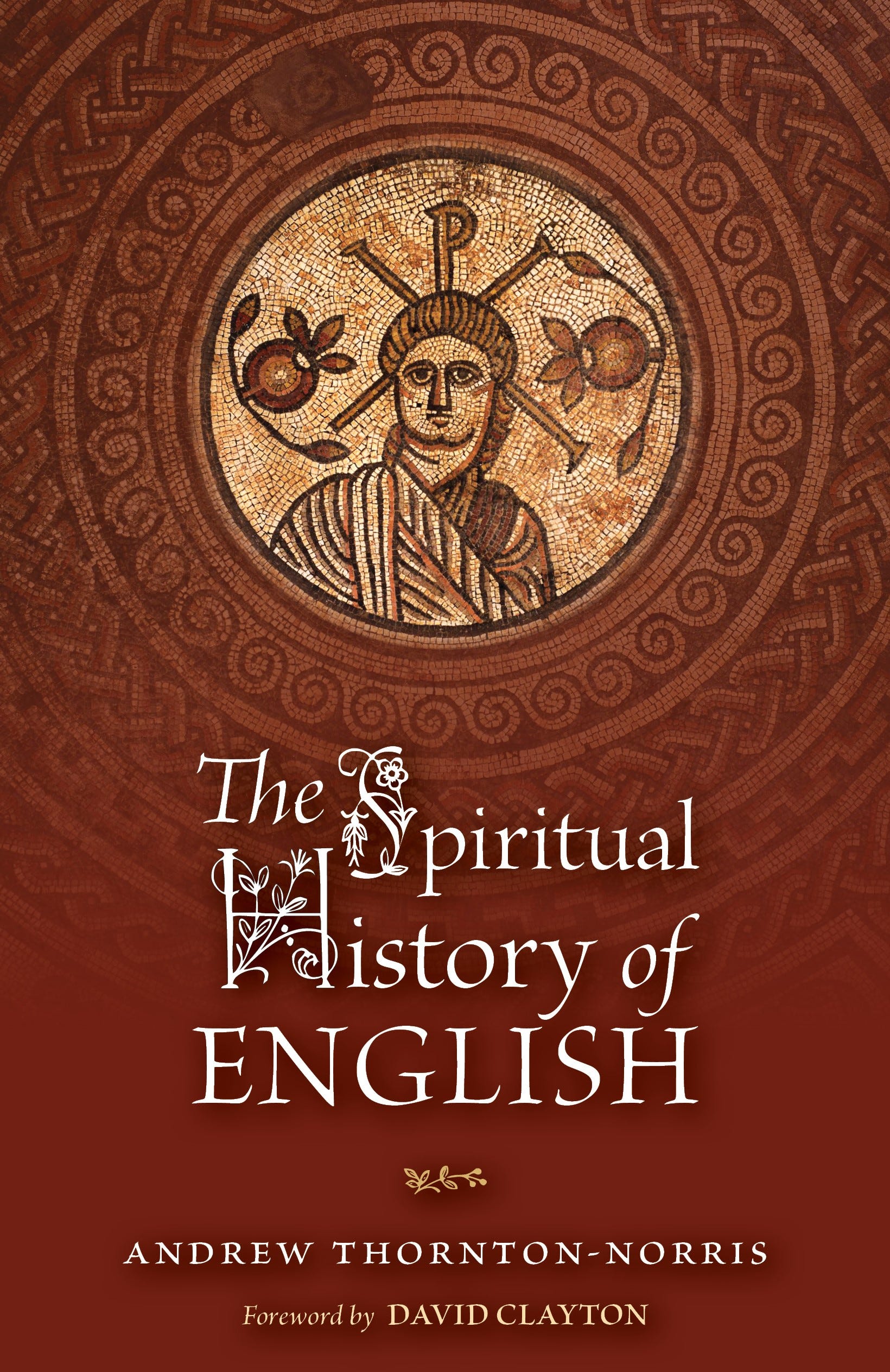
Andrew Thornton-Norris’s The Spiritual History of English is available from the publisher, Os Justi Press, or from Amazon.
One issue is that our culture of internet and social
media is radically changing people’s attention to liturgy…young people’s attention to prayer and the liturgy is affected by their brains being attuned to social media sites…and churches that do not adapt to young people’s need for God …for Christ in a non- traditional
manner will lose them…and thereby lose generations of youth who are seeking Christ…💌