The liturgy is the highest and the holiest expression of the thought and intelligence of the Church, simply because it is carried out by the Church in direct communication with God, in confession, in prayer and praise.1
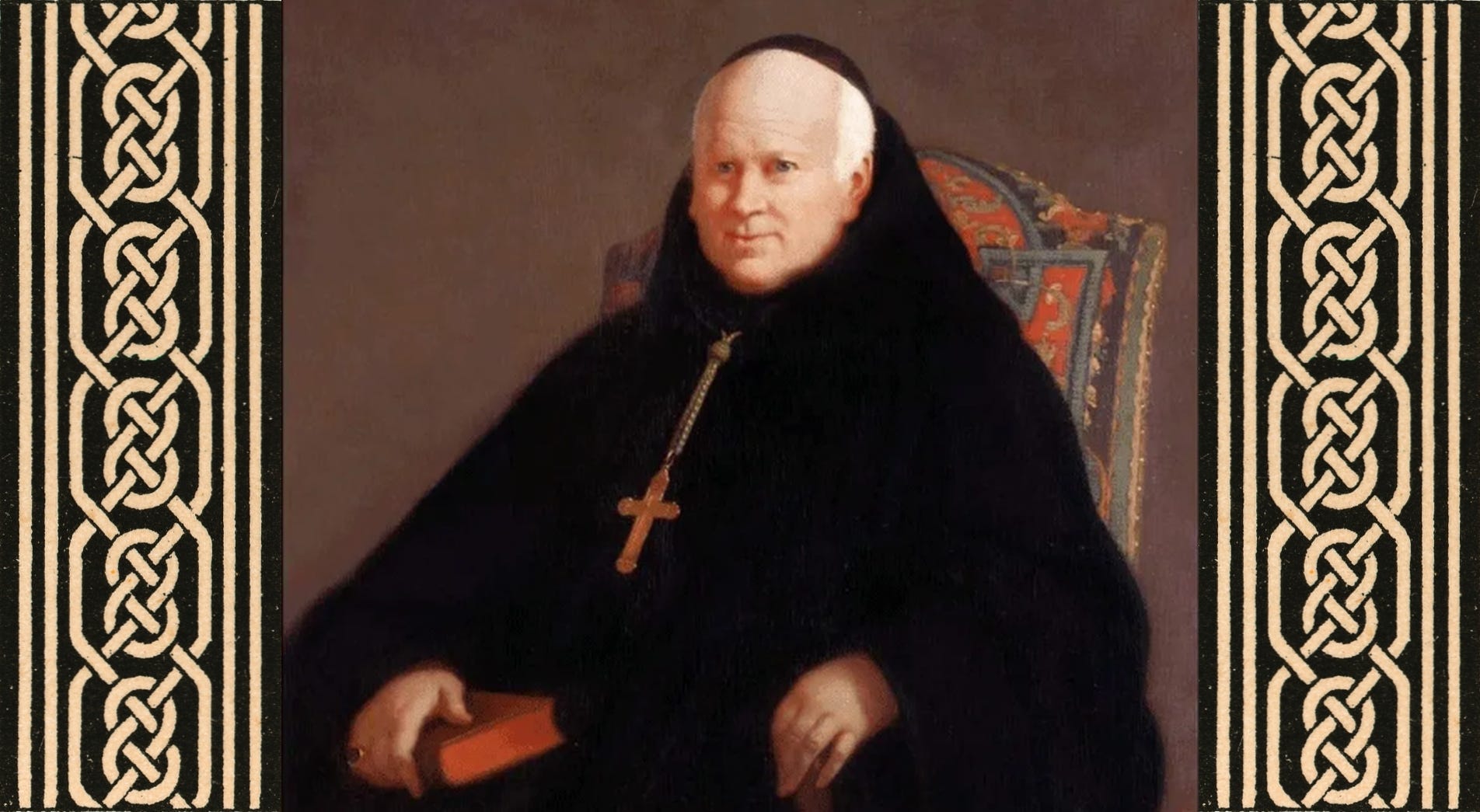
Prosper Louis Pascal Guéranger (1805–1875) was ordained a priest in 1827 and became Abbot of the newly-established monastery of Solesmes in 1837 at the age of 32; his protégé Cécile Bruyère later became first Abbess of Solesmes’ sister house, Saint Cecilia, at the age of 24. The story is told that when Dom Guéranger was criticized for having chosen such a young nun to be abbess of a new monastery, he replied, with a twinkle in his eye: “Youth is the only fault of which we are automatically cured with the passing of each day.”
This pair of facts—that he became abbot at 32 and Cécile abbess at 24—hints at the preternatural maturity and enormous energy of the movement to restore Benedictine monasticism in post-revolutionary France, where it seemed nothing could stop the Catholic revival, romantic in spirit and ultramontanist in politics.
Dom Prosper Guéranger was that unusual combination of a man of action and a man of letters. Like Nehemiah’s description of the rebuilders of Jerusalem—“Those who carried burdens were laden in such a way that each with one hand labored on the work and with the other held his weapon, and each of the builders had his sword girded at his side while he built” (Neh 4:17–18)—Dom Guéranger founded monastic communities and guided their growth, at the same time battling against a host of contemporary French foes—Jansenism, Gallicanism, naturalism, and liberalism—and defending the dogmas of the Immaculate Conception (1854) and papal infallibility as defined by the First Vatican Council (1870).
Were Guéranger alive today and had he the advantage of seeing the ways in which even good things can be corrupted (corruptio optimi pessima…), he would no doubt bitterly regret and repudiate the double misunderstanding of papal infallibility dominant in the period after the Second Vatican Council: on the one hand, some people limit the authority of the papacy to an almost non-existent exercise of extraordinary definition in order to justify their moral libertinism—usually contraception—while others drape this mantle of authority over any and all papal words and deeds, especially when they support the abandonment of Catholic Tradition. The great Benedictine founder would rightly have regarded both camps as odious.
Guéranger’s spiritual vision culminates in the primacy and centrality of the sacred liturgy: the opus Dei or work of God par excellence to which the monk and nun are wholly consecrated, but for which every Christian man, woman, and child has been equipped and set apart in baptism, as a royal priesthood, a holy nation (cf. 1 Pet 2:9).
It is thus eminently fitting that he is best known today for his The Liturgical Year (L’Année liturgique), a leisurely fifteen-volume tour of the feasts and seasons of the Catholic calendar, left unfinished at the time of his death but quickly completed by his disciples, and once again made available in a new and most beautiful edition from St. Austin Press—all the more timely, as ever more Catholics rediscover the riches of the classical Roman rite.
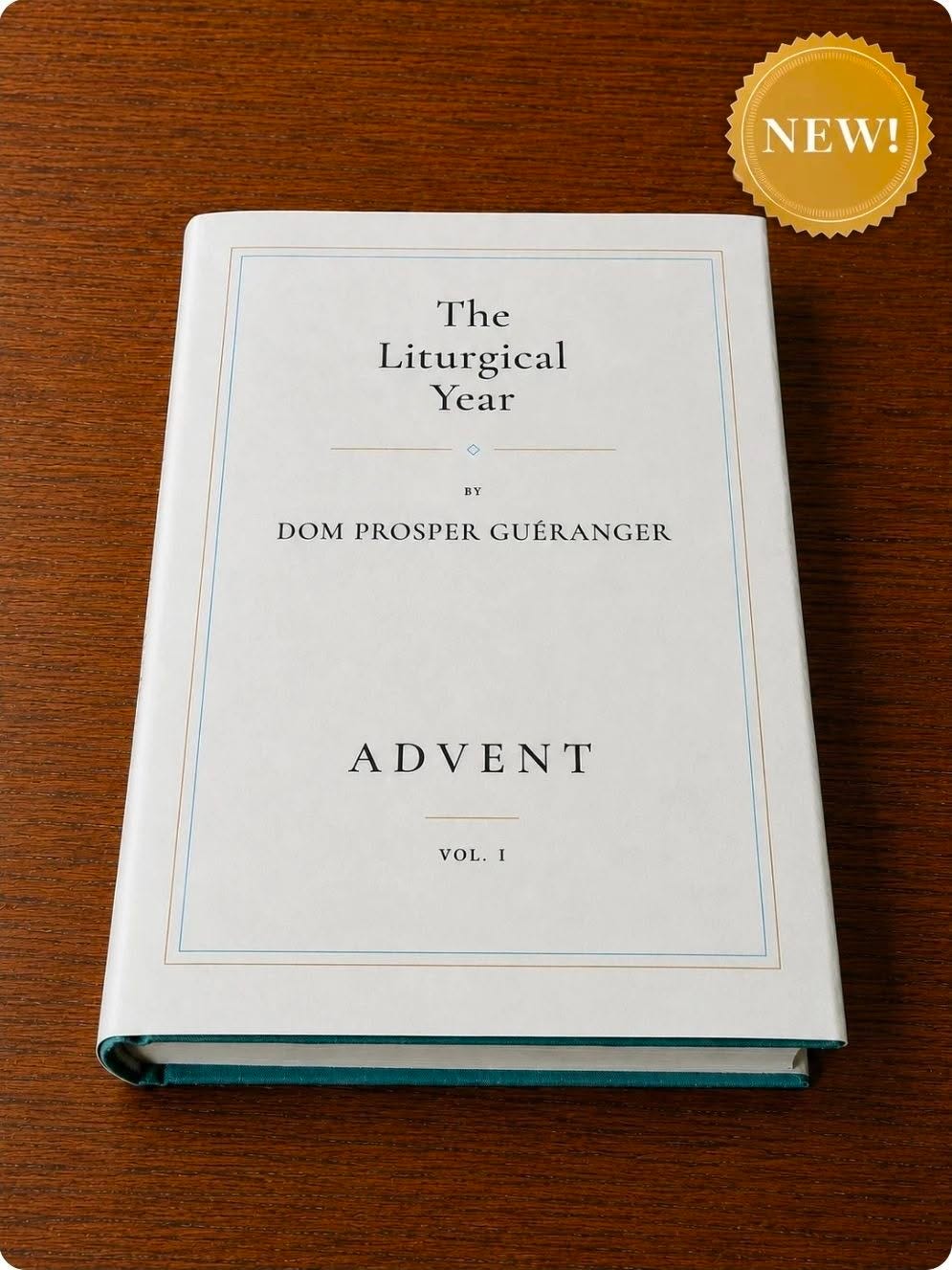
(This is a limited edition of only 100 sets. Other sets are also available, from, e.g., Preserving Christian Publications and Loreto Publications.)
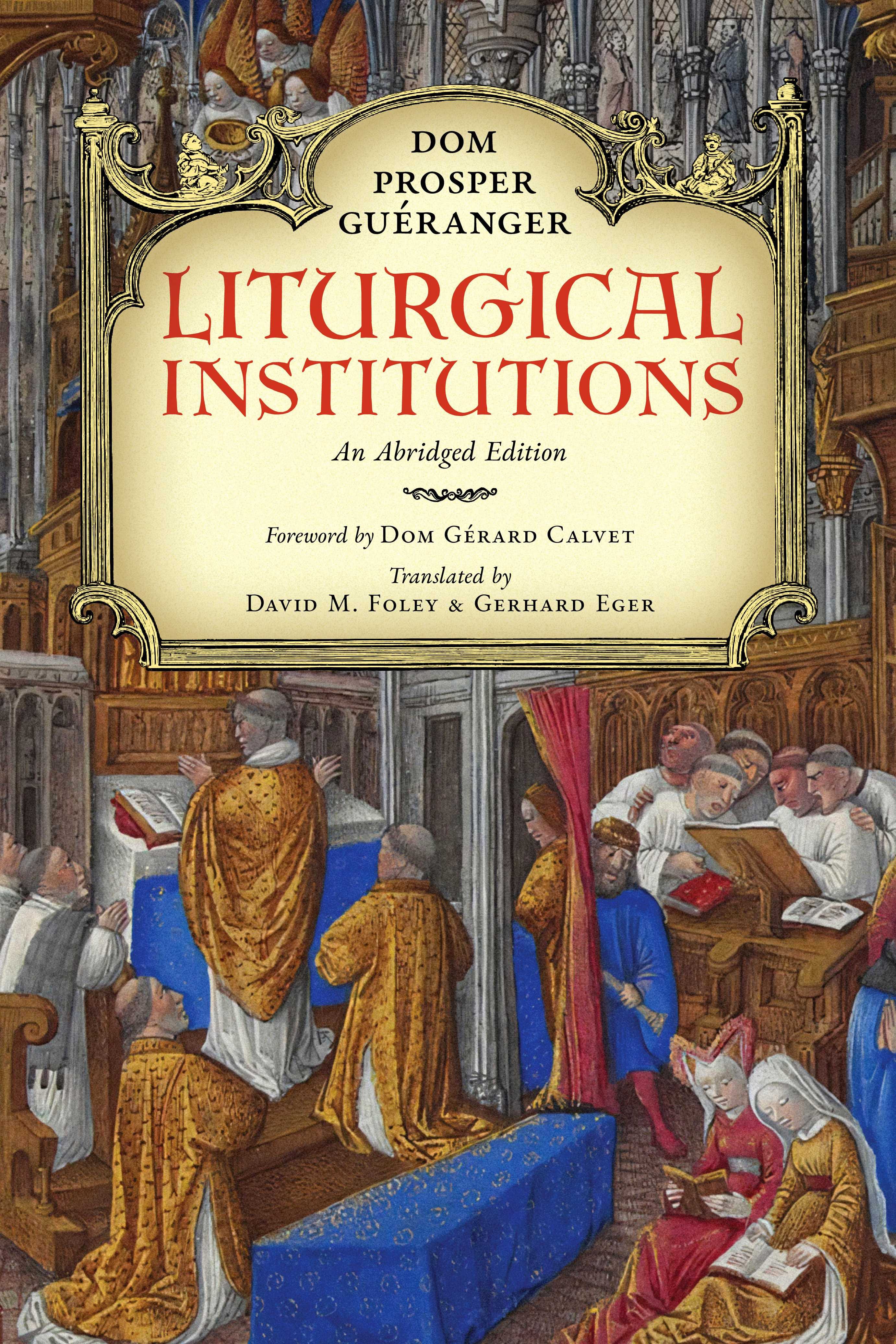
On a more scholarly side, the Institutions liturgiques, originally published in three volumes (1840, 1841, and 1851) and posthumously republished in four volumes (1878–1885)—and now, fortunately, available in English in the form of a skilful one-volume abridgement from Os Justi Press—is a groundbreaking work in every sense, abundantly justifying Dom Guéranger’s reputation as the father of the Liturgical Movement.2