


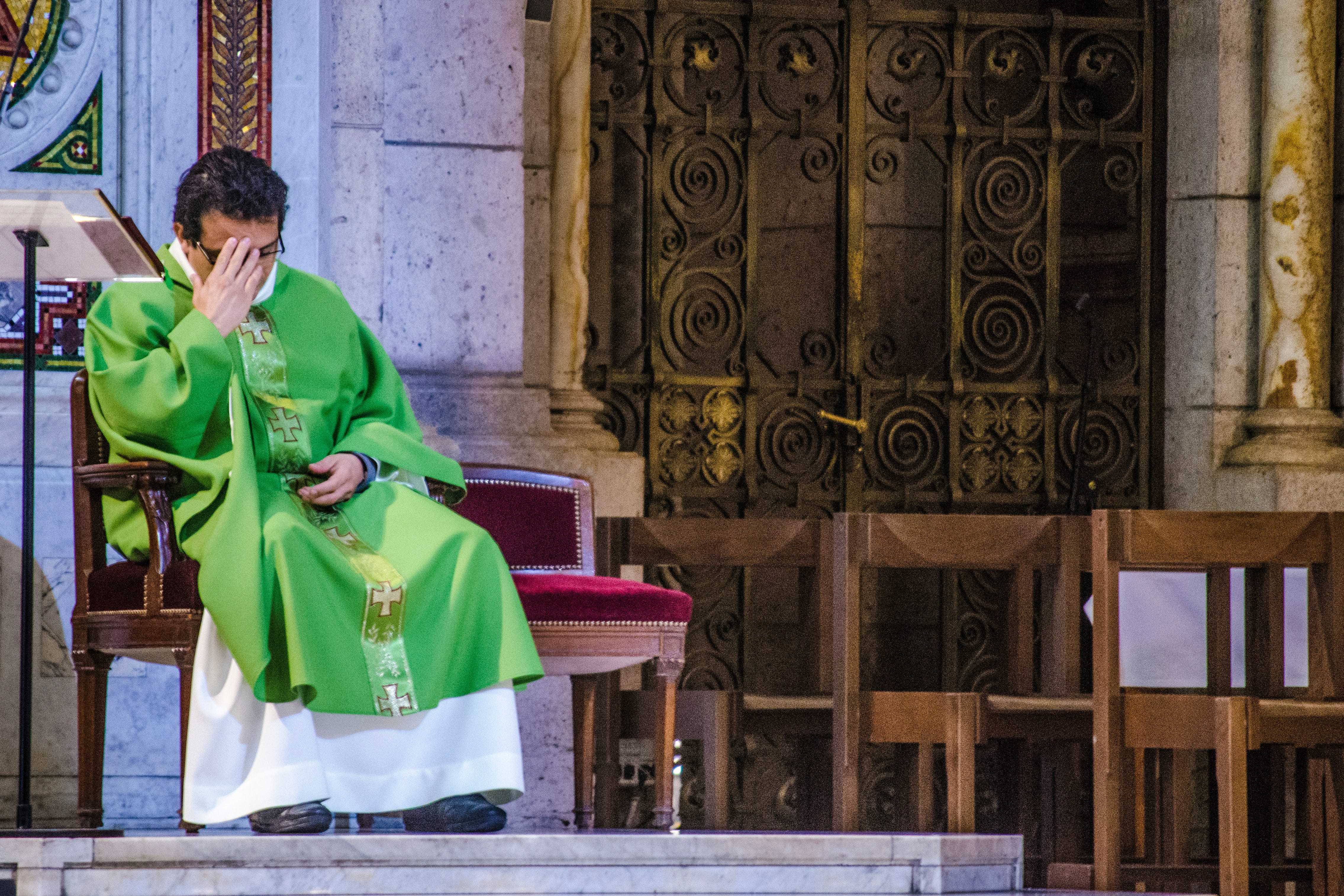
Nowadays one often hears invoked the phrase “sensus fidelium,” which could be described as the supernatural instinct the faithful have for what is and is not compatible with the faith they profess. If the sheep hear a suspicious teaching (or see a suspicious practice), they may well reject it because they do not recognize the shepherd’s voice. In that sense, they refuse to receive the novelty.
A friend once asked me what counts as “reception” of a liturgical rite, and whether we might say that the faithful never, in fact, fully and perfectly received the Novus Ordo, because the sensus fidelium balked at it. I agreed with him, for two basic reasons.
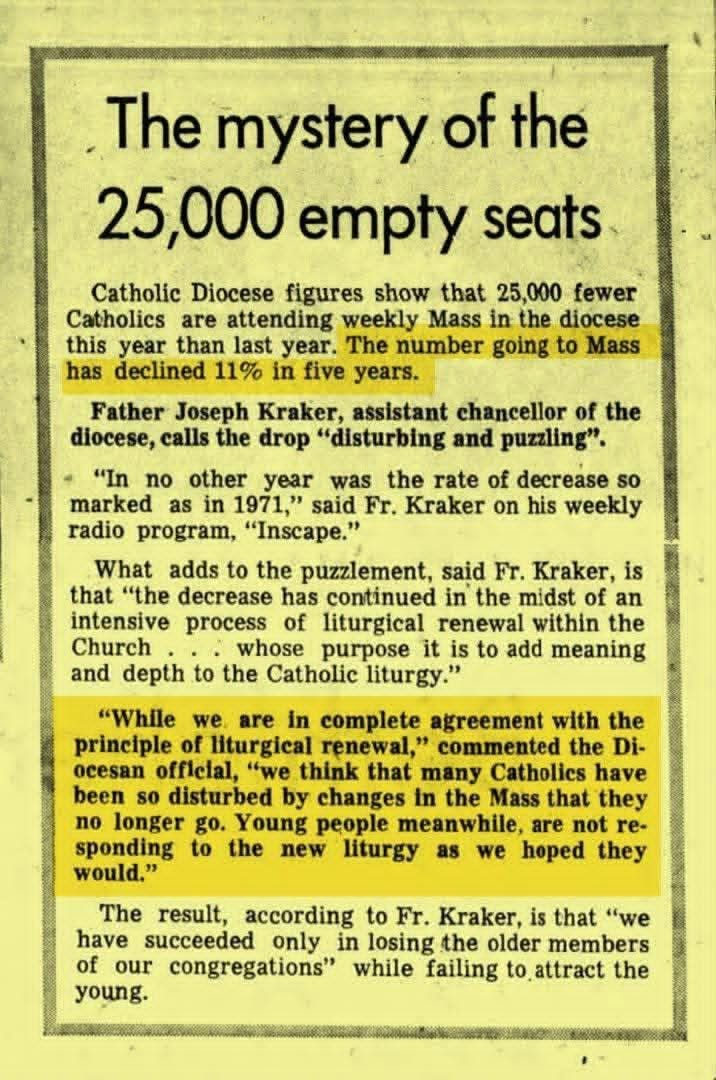
First, the introduction of the Novus Ordo coincided with, and certainly partially caused, a mass exodus of Catholics from the Church the likes of which had not been seen since the time of the Protestant Revolt in Europe. Catholics who abandoned the Faith obviously did not receive the liturgy but rejected it; believers who aren’t there can’t receive what they don’t want. And the ever-decreasing number of practising Catholics, at least in the Western world, may be taken as a sign that, whatever else may be the case, the new liturgy does not positively appeal to modern man—which was the entire rationale for its creation.
Second, and more to the point, with earlier liturgical “reforms” of the post-Tridentine era, each new edition of the missal totally replaced the previous edition and was used by all clergy and faithful without exception.1 The new missal, in contrast, was introduced by an apostolic constitution lacking the legal forms necessary to abrogate the previous missal (as a committee of cardinals under John Paul II found to be the case, and as Benedict XVI formally declared in 2007—see this article for a full explanation), and, in point of fact, some clergy received from Paul VI indults to keep using the old missal—not that indults were actually needed, but they were thought to have been needed. And with the birth of the traditionalist movement ca. 1965 (even prior to the promulgation of the Novus Ordo), there was always a core group of Catholics who continued with the ancient rites of worship and had as little to do with the modernizations as possible.
Consider the telling fact that the traditional communities such as the Priestly Fraternity of St. Peter, the Institute of Christ the King, the Institute of the Good Shepherd, the various old-rite Benedictine monasteries, Carmelite nuns and hermits, etc., altogether completely reject the notion of “instituted ministries” and maintain the immemorial practice of ordaining members to the four minor orders and the subdiaconate.
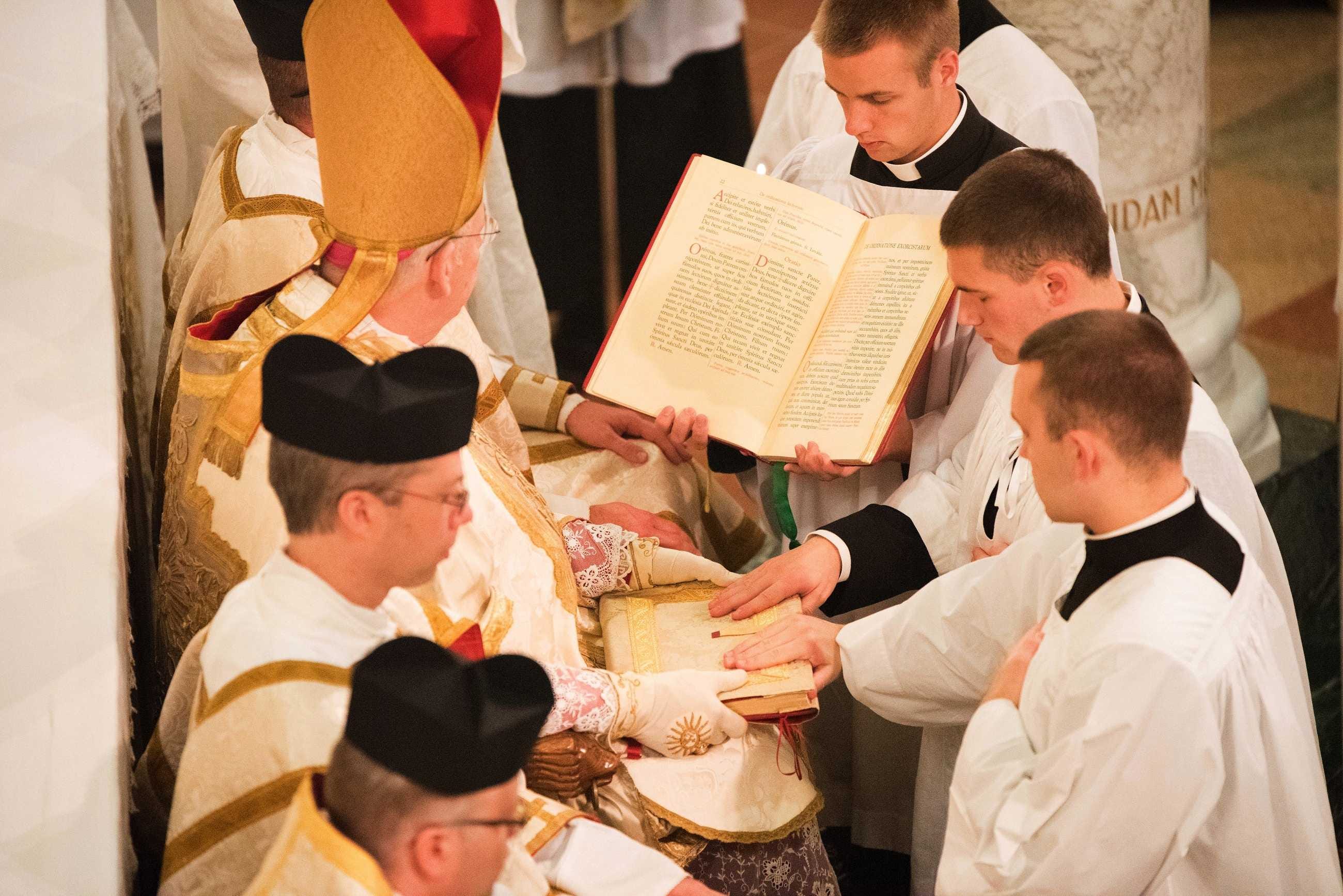
Since 1965, this minority in the Church has always been on the increase, at first slowly, then more dramatically after the promulgation of Summorum Pontificum—a momentum that has not waned even with the damage caused by Traditionis Custodes.
In short, there was never a universal acceptance of the new liturgical books and their unprecedented innovations by the Church on earth, either at any given time or over any period of time. All this suggests that the sensus fidelium yields a distinctly mixed verdict when it comes to the Novus Ordo.2
