
Traditional Sacramental Rites: More Needed Than Ever
The great Dominican Fr. Roger-Thomas Calmel once observed:
Modernism is deadlier than Protestantism; in effect, it does not proceed by open negation but by interior sterilization. Dogmas and sacraments are not denied outright, but, by a diabolical process of dismantling, modernism leads gradually to their denaturing and the voiding of their proper mystery.1
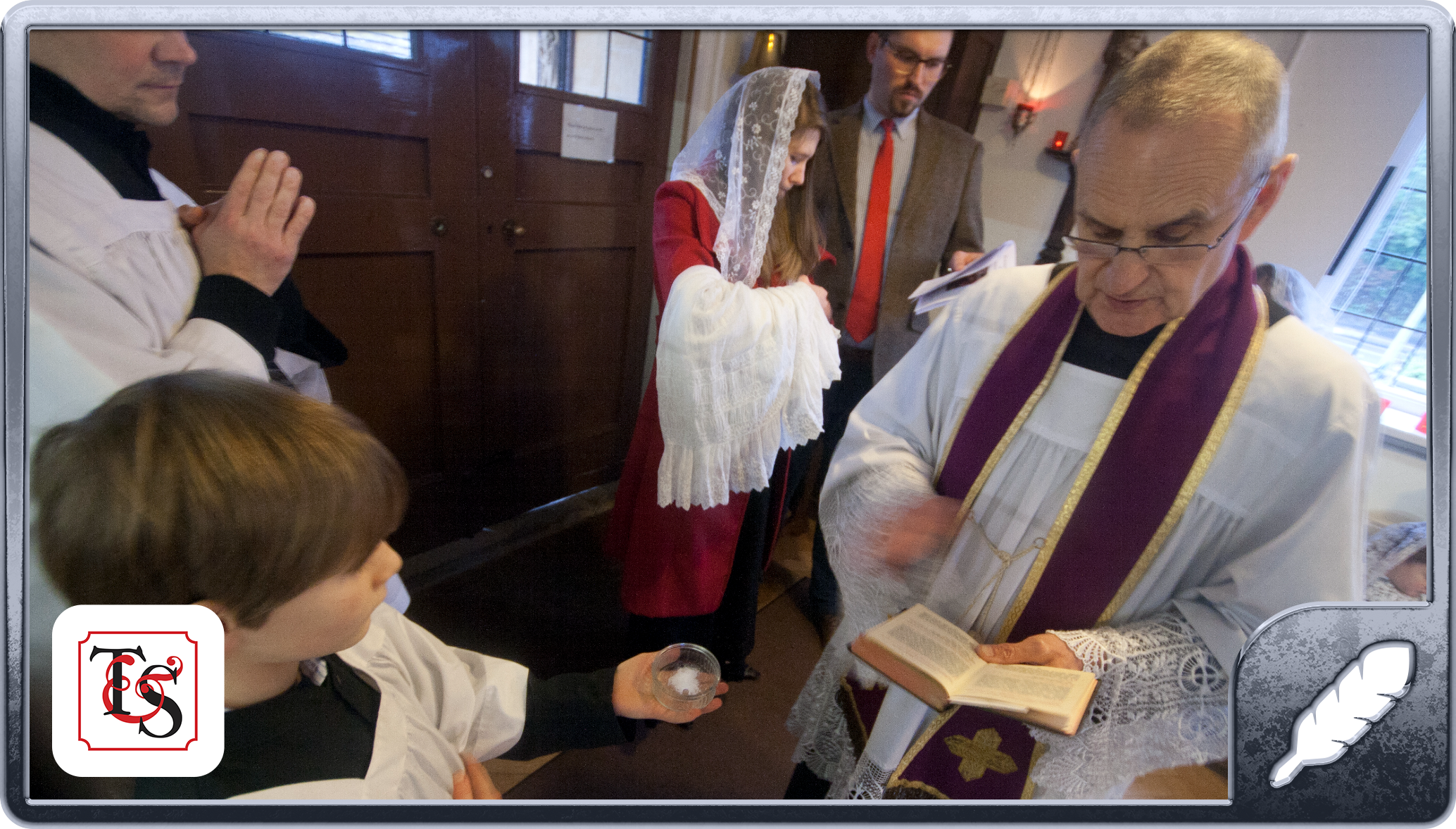
It was very important to my wife and me, many years ago, that our children should be baptized and confirmed in the traditional Roman Rite, using prayers that go back to the early Church and have been in continuous use for so many centuries. Our son and daughter were, accordingly, baptized and confirmed in the usus antiquior, as we knew a priest who was just as committed to it as we were, and who gladly stepped in to perform the rites.
Thanks be to God, this has become much more common in the past couple of decades, as a great many baptisms with the old Rituale Romanum are performed (and not only by the Ecclesia Dei institutes and the SSPX…), and as bishops confer confirmation, or delegate priests to confer it, according to the old books. Now that such has become a familiar feature of ecclesiastical life, woe betide anyone who tries to stop it. It would be easier to stop a train at full speed with one’s bare hands.
The severe and radical revisions made to the rite of baptism after the Second Vatican Council were an utter devastation, a deliberate repudiation of even the most ancient features—the uncompromisingly, almost terrifyingly supernatural and “vertical” prayers—which were replaced by a smoothly modern rite of communal welcome that quickly glosses over the darker realities and manages to make radical surrender to Christ look boring and perfunctory. Msgr. Nicola Bux, a close collaborator of Joseph Ratzinger’s, observes:
What [Cardinal Ferdinando] Antonelli says about the revision of the baptismal rite is striking: “I had to observe that where one would expect to highlight original sin, for instance when there is the little homily of catechetical character, it would appear that all trace of it had vanished. I dislike this new, vapid theological mentality.” What Paul VI did not want to happen, happened. Instead of secular humanism opening up to the Church, the religion of man who makes himself God penetrated the Church.2
The Novus Ordo baptismal rite reflects the naïve optimism of the sixties and seventies, the Rousseauean myth that, deep down, everyone’s born basically good but then society’s bad influences corrupt us: “men are born free, and everywhere they are in chains.” On that view, baptism becomes more of a social event, a welcoming into the parish community. As Thomas Pink demonstrates, the Rahnerian notion that sacraments are a kind of “salvation theater” in which we act out, for our edification, what is already the case, crept into the new rituals.
The true Catholic view is something entirely different. Fallen mankind belongs to the devil, and only through the supernatural miracle of baptism—by water, blood, or desire—are we snatched out of the dominion of the Evil One and made members of Christ’s Mystical Body. Baptism is a supernatural mystery of cosmic warfare and spiritual transfiguration: we are torn by the Church from the clutches of Satan and hell, plunged into the death and resurrection of Christ, lifted up into divine sonship.
St. Thomas Aquinas writes, with customary realism:


