


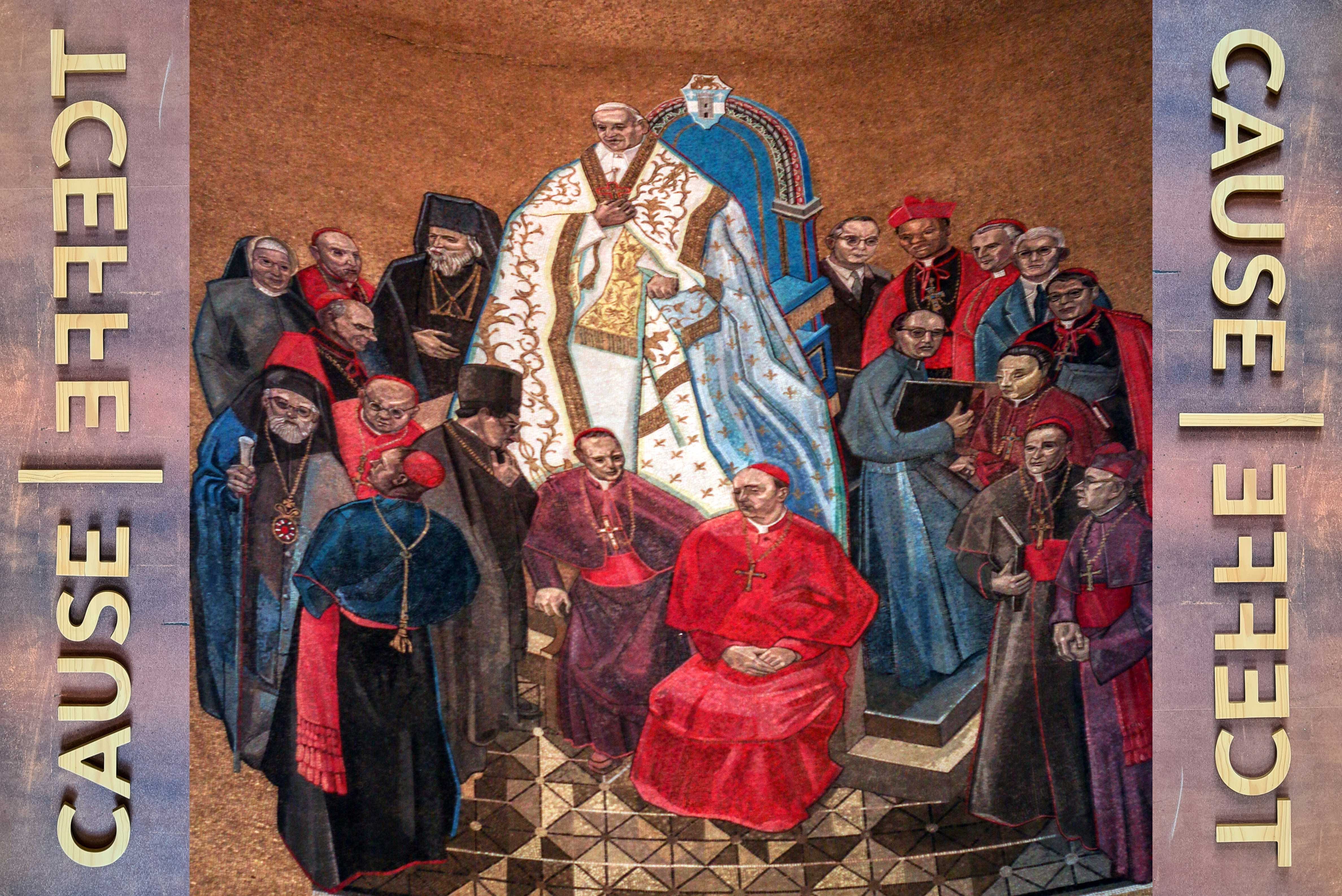
This article was first published (under a slightly different title) at Tradition & Sanity on February 19, 2024. We are republishing it today in honor of the 60th anniversary of the official closing of the Council by Paul VI on December 8, 1965.
It has been fashionable to present the Church’s leaders in the 1960s and ’70s as victims of that period’s tremendous cultural change, especially insofar as it prevented the realization of the Council’s putative promise. The standard conservative account is that Vatican II itself was fine but then the Church got blindsided by the spirit of 1968 and that threw off everything. The Council was hijacked and derailed; the world unexpectedly exploded with the Sexual Revolution after the Council and sucked it into the maelstrom.
I believe we have every reason to call this narrative into question; indeed, to hold that the opposite is true. It is far more likely that it was Vatican II that precipitated 1968, in the sense that the one institution in the Western world that had unequivocally represented timeless order, stability, tradition—even if people hated it—suddenly seemed to be reexamining everything from the ground up. As a friend of mine puts it, the Council (and especially the liturgical reform) betokened “a Great Unfreeze” in which all that had been held as sacred, normative, and unchangeable, or at least taken for granted, was now up for review, criticism, revision—even if the goal, at least for the majority, was to reaffirm the same truths using a “new language” adapted to Modern Man.
The gathering of over 2,000 prelates under a pope, pursuing the motto of aggiornamento, was the green light to a total reexamination of Western culture and society—a reexamination that quickly degenerated into a rejection of norms, strictures, customs, and heritage. Rather than being poor blindsided victims, the Church’s leaders in the period from 1958 to 1968 are more aptly characterized as generators or agitators of the cultural change that finally erupted in ’68 and has continued its course of dissolution ever since.
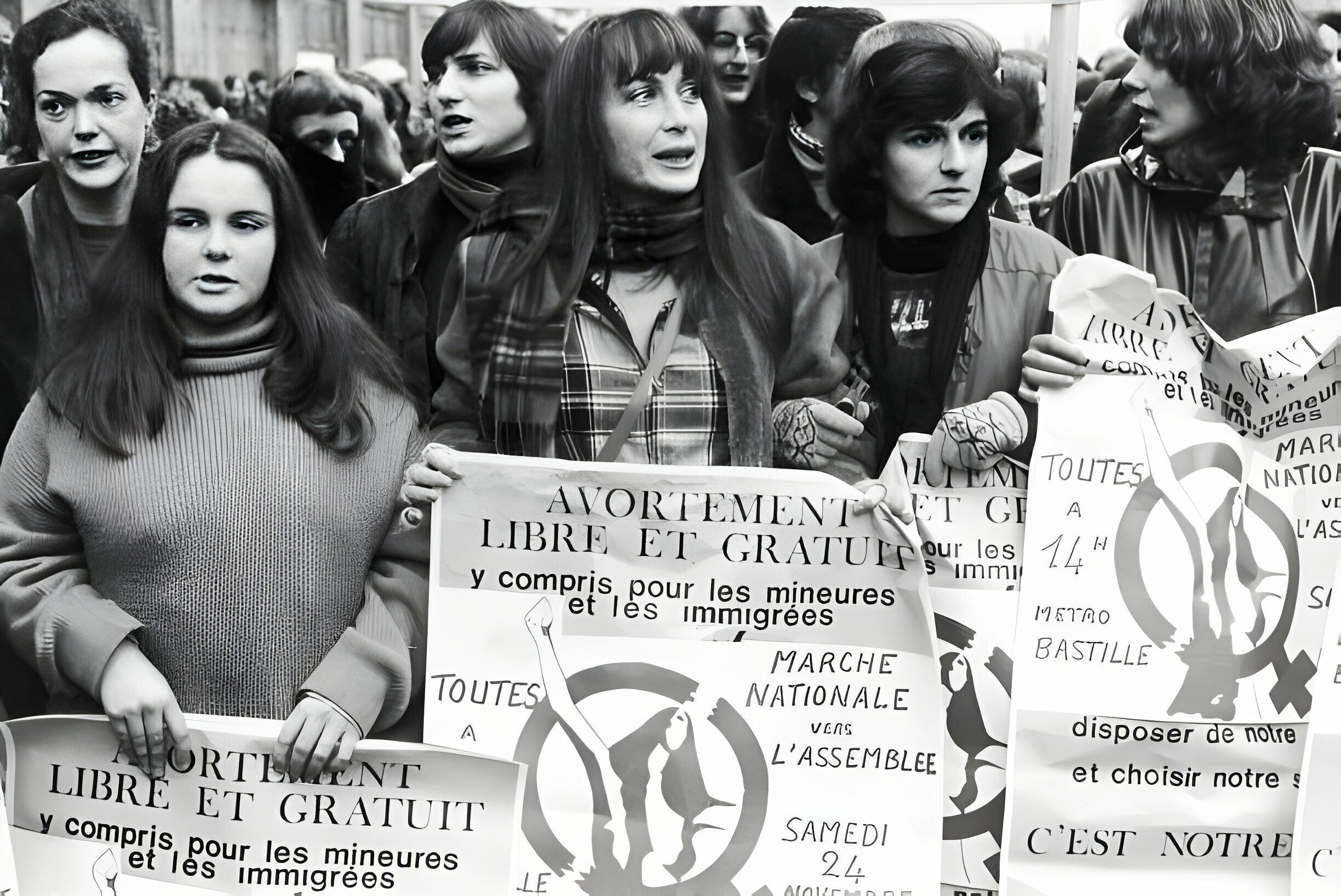
Destabilizing the foundations
Arguably, the two most stable areas of social life, where change is the slowest and least observable under normal circumstances, are the forms of worship and the relations between the sexes. This is to be expected: the relation of the sexes is the foundation of natural social life, and the worship of God is the core activity of supernatural social life. By mandating, authorizing, or permitting radical changes and disruptions in precisely these areas, churchmen opened the way for the dark forces to tear through what remained of Western civilization.
In my book Ministers of Christ, I bring out the intimate connection between divine worship and the relations between the sexes—and therefore the enormous potential for cross-contamination from one sphere to the other. Imagine what will happen if the Catholic Church, where both of these spheres had remained very stable compared to the social experiments outside of the true Church, decides to unlock and unloose bimillennial patterns of religious worship and fundamental Judeo-Christian norms about the sexes.
If a thirteen-year-old doesn’t know whether she is growing into a man or a woman, it may be in part because her priest suffers from similar confusion about the conditions necessary for the ordination he received—the conditions needed for liturgical representation of Christ the Bridegroom as these apply to all ministers in the sanctuary. If the priest is confused, it is because he belongs to an institution that has opened itself to rejection of tradition, experimentation, and a profound confusion that seeps into the consciousness of all believers.
Continue reading (or listen to the voiceover) at Tradition & Sanity’s new home on Pelican+…
Thank you for validating something that I came to advocate many years ago. I now have the names of scholars and a Cardinal to back it up.
I think there is not enough emphasis upon Pope Paul VI putting an end to the Papal Coronation. This was for me a sign to the world that the Catholic Papacy was abdicating its authority and power. The words are: Receive the Tiara adorned with three crowns and know that you are Father of princes and kings, the Ruler of the world, The Vicar of Our Savior Jesus Christ on earth, to whom be all honor and glory, world without end.
Have any of the Popes since carried any real authority or power since?
Another point: the breakdown of morality and the family was precipitated by the breakdown of the Clergy and Religious Life of Women, who broke their vows and left God for worldly ambitions. This led to the breakdown of Sacramental Marriage as the Vow was replaced by the "promise" and in short order annulments.
I do not fully blame the Catholic Church for all this horror, the rebellion since 1517 has persecuted God in His Mystical Body to the point that: "Furthermore, since they did not think it worthwhile to retain the knowledge of God, He gave them over to a depraved mind, so that they do what ought not to be done." Romans 1:28
Notre Dame from 1983 until John Cavadini was basically Catholic modernism. Fr. David Burrell was removed as chair, Fr. Richard McCormick replaced Stan Hauerwas as primary ethicist; Paul Bradshaw headed up the liturgy program. Catholic became an ethnic designation. Hesburgh implemented his Land of Lake statement. Would all this had happened without Vatican II? Probably not in this manner. David Schindler was not in the Department of Theology but in the Program of Liberal Arts. The 19th Century Catholic Tubingen school was all the rage. Americanism rules the roost.