

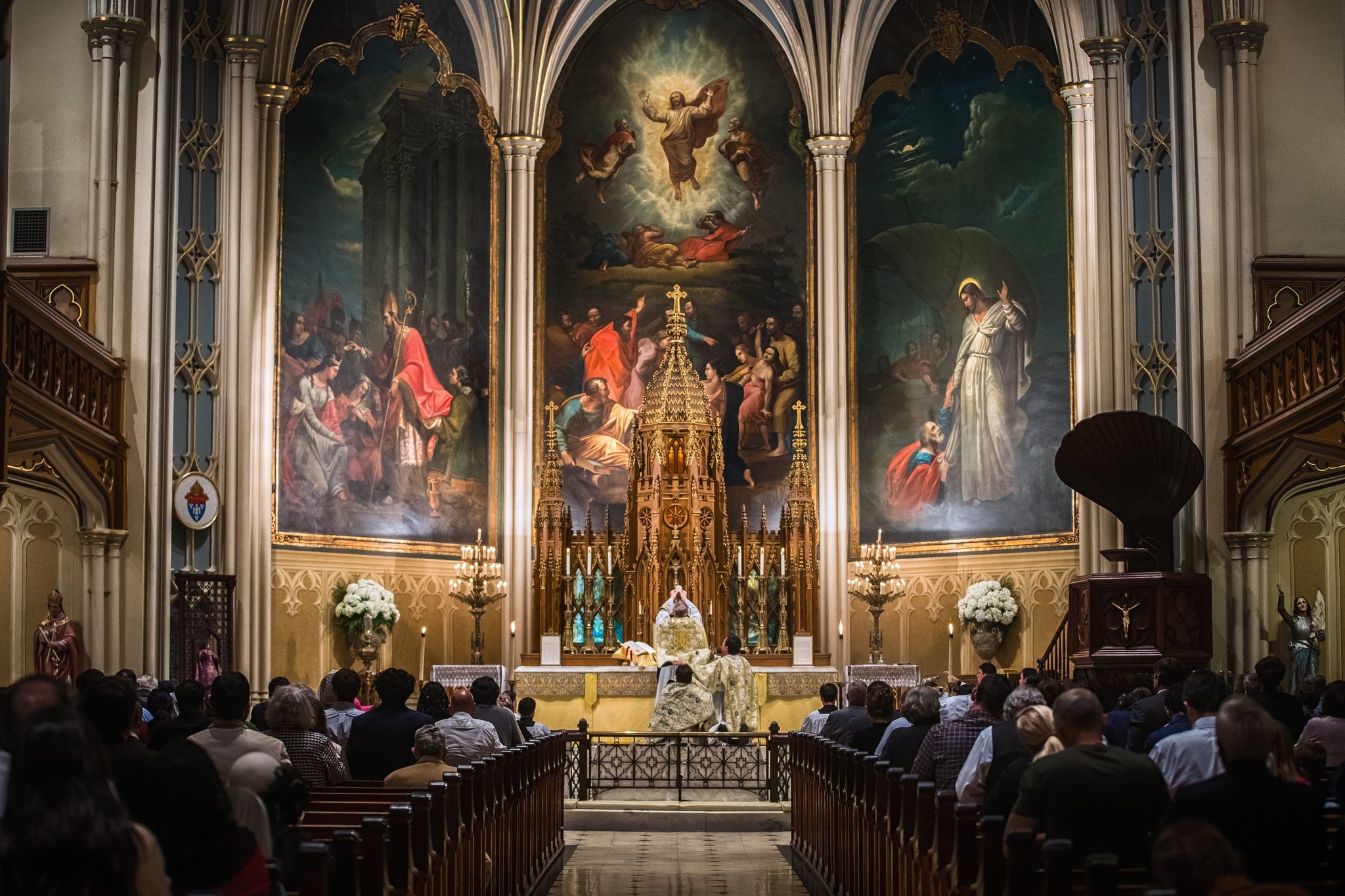
I hear it often — “I’m a Christian” — as if that means something definite. But today, it doesn’t. The word has been stretched so thin it could cover half the planet and still not touch a shred of truth. Everyone claims it. Pastors with podcasts, influencers with crosses in their bios, and politicians whose moral compasses spin like ceiling fans. It’s all become a label of convenience, not conviction. That’s why, before I call myself a Christian, I call myself a Catholic.
Across the Christian world, belief has splintered into tens of thousands of denominations — Baptists, Methodists, Pentecostals, Anglicans, Lutherans, and countless others, each convinced they’ve cracked the divine code. Some emphasize personal experience, others prioritize Scripture. Some worship in solemn silence; others in stadiums that feel more like rock concerts than reverence. There’s nothing inherently wrong with variety — the Christian story has always allowed for difference. But somewhere along the line, the center started to dissolve. The faith that once formed civilizations now struggles to form a sentence everyone can agree on. Once, Christianity bound empires, shaped laws, and inspired cathedrals that reached toward heaven itself. Now, it’s dissolved into a puddle of personal brands and private revelations. Where there was once a shared creed, there are now competing and incompatible interpretations.
Catholicism stands apart. Not always in moral superiority but in scope and depth. It’s the Mother Church, not a sibling trying to reinvent the family name. Its strength lies in its coherence — creed, confession, continuity. When Rome says “Catholic,” it means universal. The sacraments in Lagos are the sacraments in Lisbon, Lima, and Los Angeles. The same prayers echo through marble halls and modest rooms alike. There’s a structure. There’s a rhythm that resists reinvention. That’s no small feat in an era where the Ten Commandments are treated like suggestions—or worse, rough drafts.
Read the rest of this article at Pelican+
This has helped me to articulate my title as a Catholic. Now I have a reasonable argument. “As long as Rome stands, so will I. “ Yes, what a beautiful Church!
"Across the Christian world, belief has splintered into tens of thousands of denominations — Baptists, Methodists, Pentecostals, Anglicans, Lutherans, and countless others, each convinced they’ve cracked the divine code."
Arggh. I'd argue Catholics still do not 'get' denominations, and repeat this idea over and over again. It's incorrect in terms of how most evangelicals and orthodox Prots understand themselves.
Then there's this old quote from a beloved Catholic author:
Catholicism and Protestantism do not essentially define our identity, as Christ does. If I should die and find out that Christ is not my Savior, I could not be me, I could not exist in such a world. Christ is essential to my very self: “For me to live is Christ.” The Church is like my family: very close to me, loyal to the death.—but not my essence. Saint Paul did not say: “For me to live is Catholicism.” He did not say: “I live, nevertheless not I but Protestantism lives in me.” The only absolute certainty we have is Christ. The unity we already have in Christ includes doctrinal unity, for if we accept the teacher we also accept all his teachings, at least through Scripture. None of the Catholic Church’s interpretations of or additions to Scripture is as important as the scriptural agreements between Protestants and Catholics. The agreements between orthodox Protestants and orthodox Catholics are more important than the agreements between orthodox Catholics and liberal, or Modernist, or demythologized Catholics, and more important than the agreements between orthodox Protestants and liberal Protestants."
I love the Church. And much of this article. But juxtaposing two complimentary identities is not helpful. I'm happy to call myself Christian, with or without a modifier.