



REMINDER… Take advantage of the discount in honor of Our Lady of the Most Holy Rosary (running from October 1-8): 25% off on your Tradition & Sanity subscription!
I’m pleased to publish today a guest article by Linton Hatcher, a writer and illustrator who created Rondo-nominated WONDER magazine, which traces how the numinous can be found in all manner of oddball popular culture. He is currently at work on a science-fiction graphic novel, “Send in the Clowns,” and writes at his new Substack “Lost in the Church,” which I highly recommend. In my correspondence with him, I’ve found him to be consistently deeply insightful about the situation in the Church; one exchange in particular led to this essay, which I commend to your attentive reading.—PAK
So, there I was: attending the first night of our parish’s weeklong Eucharistic Congress. The whole point of the event—organized by a parishioner I knew—was to pray steadily before the very Presence of Our Lord for our parish, for the Church, for the entire world.
The Eucharist was exposed in the monstrance with ceremony and reverence. Adoration followed.
Then, the organizer approached the ambo, made sure the microphone was working, and began to introduce a speaker. “From Steubenville!” she was careful to emphasize. As she spoke, she seemed to realize furtively: the monstrance remained on the altar, the Host remained exposed. She blinked. She offered a tiny bow. She continued. “Like I said, from Steubenville…!” The speaker stepped up from one of the pews. She, too, seemed momentarily taken aback. But she dove into her presentation, pacing back and forth in front of the altar.
I was shocked. There was the Lord. On the altar. Truly present. We should be on our knees—adoring.
I gazed around, bewildered. There was our kind, faithful priest from Africa, his arm casually draped across the back of his pew. There were the “old Catholics,” by which I mean the retirees who attend morning Mass every day, and who faithfully pray the Rosary afterward. I knew these people were devout. Yet, there they were: smiling, chuckling—not at all affected as I was.
Was I in the wrong to be disturbed? A snob? A troublemaker?
I went home and did a bit of research. Turns out: back in the day, should a talk be given during extended adoration, it was common practice to veil the monstrance. I wasn’t crazy after all. The pain and bewilderment I felt was true.
Veiling the monstrance was a simple matter. I reached out to our pastor and asked if, for the rest of the Congress, something along those lines could be observed. No reply.
There is a thorn in my poor cerebellum. This thorn is triggered when a priest (or an entire diocese) defends the Real Presence, yet persists in actions—choices of form—that undermine that very reality. The frequency of such choices suggests, not occasional mistakes, but a bona fide syndrome.
It was with great interest, then, that I read a recent article by Peter Kwasniewski in which quotations from Yves Chiron’s biography of Pope Paul VI illustrated precisely the same contrast: in his writings, Paul VI takes a firm stance against Modernism, in favor of traditional Catholic doctrine, and yet, in his actions, Paul VI ventures—one might even say sprints—in the opposite direction.
Understanding the Conflicted Soul of Paul VI

Many readers will have heard of the name of French historian Yves Chiron (b. 1960), who has written over fifty highly-acclaimed works, especially in the field of modern Church history. He has written full-length studies of (inter alia) Urban V, Pius IX, Pius X,…
Naming a thing sometimes reduces the pain it causes. Based on Chiron’s biography and on Martin Mosebach’s book The Heresy of Formlessness, it struck me that perhaps Giovanni Battista Montini experienced—as a lens through which he saw the world—a “predisposition toward formlessness.” Let me explain.
Rooms Without a View
“All bishops had been consulted on the opportunity of authorizing the distribution of the consecrated host into the hands of the faithful,” writes Chiron. “The majority of the bishops of the world were…hostile to a modification of tradition on this point.” Paul VI, too, “was personally hostile to communion in the hand.” Nevertheless, “out of concern not to hinder the liberty of episcopal conferences, and anxious to respect diverse opinions, Paul VI refused to establish a common law for the Church on this matter.”
This is but one example of many. That this could occur within one individual suggests, at some fundamental level, a bifurcation between content and form. Content sits in one mental room. Form in another. A solid wall divides the two. Somehow, Paul VI was capable of living this way—affirming the content of the Faith on the one hand, while on the other pursing experimental forms that diminished the perennial lex orandi that incarnated that same content in the lives of the faithful.
The average layperson, by and large, does not have content in one room in his mind and form in another, so that one may do whatever one likes with form, while leaving content intact. When “what we have always done” is radically altered—even with the claim of returning to a more vital, early Church expression—a centuries-old interdependence of form and content is shattered. The laity balk. And walk.
As Martin Mosebach puts it, “If people who have been kneeling for a thousand years suddenly get to their feet, they do not think, ‘We’re doing this like the early Christians, who stood for the Consecration’; they are not aware of returning to some particularly authentic form of worship.” Instead:
They simply get up, brush the dust from their trouser legs, and say to themselves, ‘So, it wasn’t such a serious business after all.’ Under such circumstances, anthropologically speaking, it is quite impossible for faith in the presence of Christ in the Sacrament to have any deeper spiritual significance, even if the Church continues to proclaim it and even if the participants of such celebrations go so far as to affirm it explicitly.
Shades of the Eucharistic Congress!
Paul VI witnessed an unanticipated collapse in the laity’s response. He frantically attempted to fix this. But—if our theory holds—he saw through the lens of bifurcation. He had no other set of eyes. He rushed to the Content Room! Affirmed the Creed! And left the new “orientations” of the Form Room entirely in place, to do their work, as they necessarily will.
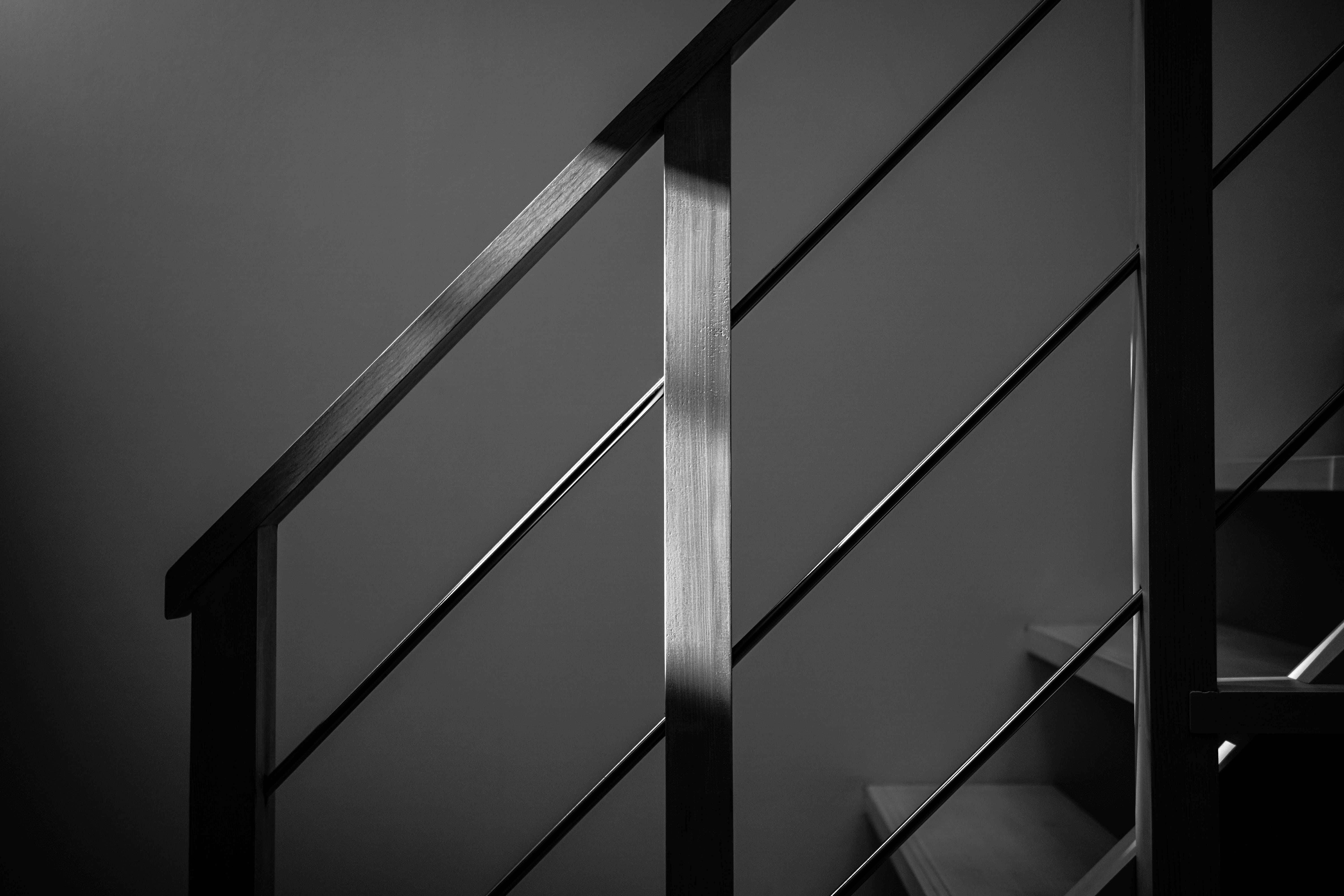
A “Two-Story” Model
Is there a sociological term for this bifurcation? Does it show up in other areas of life?
I am put in mind of something I encountered in the writings of Dr. Francis Schaeffer, back when I was an Evangelical. Schaeffer proposed a Two-Story structure in modern minds. The Lower Story deals with the “real world” where, it is taken for granted, truth can be had only by way of the scientific method. Reason is associated with this Lower Story—exclusively. The Upper Story—in the clouds, as it were—deals in faith, meaning, beauty, moral notions, none of which are (according to “science”) credibly tethered to reality.
There is no staircase in the Two-Story structure. The Upper Story just sits there. Apart. And yet, the modern mind desires belief, meaning, purpose. So, an attempt is made to enter the Upper Story—by an irrational “leap of faith.” Faith being, by nature (again, in this view), removed from reason.
Is there something helpful in this model? Certainly, we find a similar concept: two rooms in the human mind, separated, where wholeness should exist. What I want to know is: “Where are the stairs?” And, not insignificantly: “Of what does the staircase consist?”
Sunk deep in scientific materialism and existentialism, Western thought, Schaeffer insisted, had crossed a “line of despair” beyond which the Average Joe had no credible methodology for establishing truth in religion or morality. Thus, while the ancient mind possessed a holistic, built-in staircase, the modern mind woke up in the very same house—the human condition—and gazed about, asking, “Excuse me, but where are the stairs?”
Paul VI refers to this plight when he states: “The new way of religion which the current liturgical reform intends to restore” is, of its very nature, a “response to the character and needs of modern man.” So, wait a minute… Did Paul VI set out to build a new staircase? And was this because, at some fundamental level, he found himself sympathetically aligned with modern man? Because he “saw” as modern man “sees”?
