


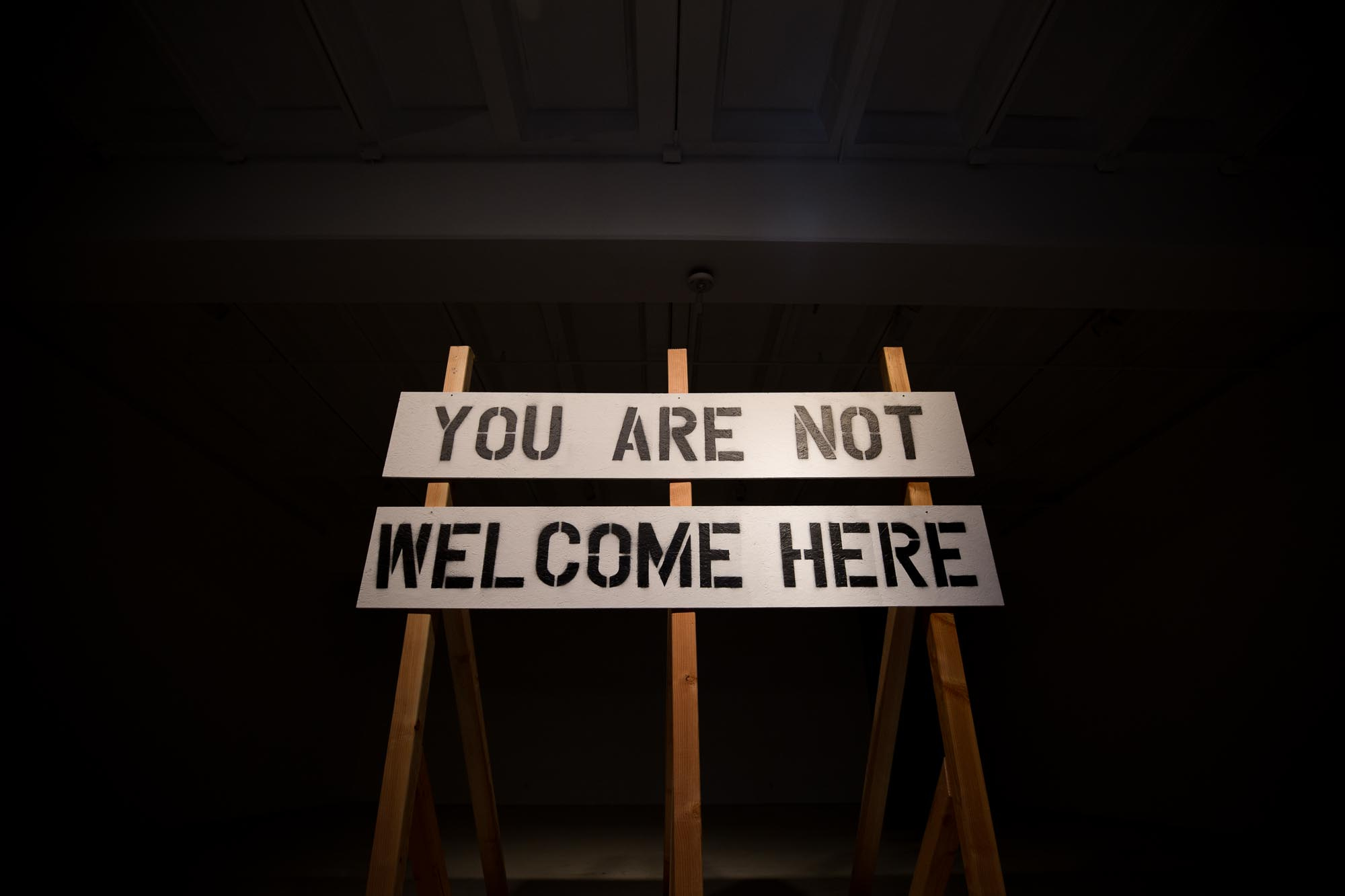
The Blitzkrieg has happened.
In the diocese of Tyler, Texas, almost exactly a year after Bishop Joseph Strickland was uncanonically and illegally deposed from his cathedra, Apostolic Administrator Joe S. Vásquez has announced that, as per Vatican instructions sent to him (at his request), all five diocesan Latin Masses in Tyler are to be shut down effective November 30th. No recourse.
In this post, after recounting what is happening in Tyler and elsewhere, I will explain why we need heroic priests to continue offering the TLM regardless, even if this means operating independently of diocesan structures for a time. I will give examples of how this was done successfully in the 1970s, with happy endings, and must be done again today as part of a correct and proportionate response to the diabolic attack on the fullness of Catholic tradition, which is also an attack on the baptized faithful, beloved children of God purchased by the Savior’s Precious Blood.
What has happened and what it forbodes
An article at Rorate provides full details but we may summarize the highlights (or lowlights) as follows.
Recall that one of the reasons why +Strickland was deposed is that he would not implement Traditionis Custodes in his diocese. He declared: “As a shepherd and protector of my Diocese, I could not take actions which I knew with certainty would injure part of my flock and deprive them of the spiritual goods which Christ entrusted to His Church.” The Dicastery for Divine Worship shows no similar desire to be pastoral and protective: all five diocesan TLMs are to canceled, in the towns of Tyler, Malakoff, Texarkana, Gilmer, and Nacogdoches, leaving only the FSSP parish, St. Joseph the Worker, in operation. Henceforth no other priests will have faculties to offer the TLM.
The trouble is, St. Joseph the Worker is already crowded. Unlike in Europe, where the faith is dying, in the little diocese of Tyler the TLM communities are flourishing. There is no possible way that five additional congregations’ worth of faithful can be crammed into the FSSP parish — even if only some of the laity make the journey there. The Vatican once again shows its utter contempt for the faithful who belong to one of the few sectors of the Church that is flourishing; indeed, one suspects by now that it is precisely because it is flourishing in orthodoxy and divine worship that modernist and/or homosexual prelates wish to destroy it.1
On Facebook I posted my reaction to the news in the following words:
Absolutely sickening, petty, vindictive, short-sighted, unjust, uncharitable, unworthy, and damnable. In the words of the Psalmist: “Make them [viz., the bishops responsible] bear their guilt, O God; let them fall by their own counsels; because of their many transgressions cast them out, for they have rebelled against you.... Because they do not regard the works of the Lord, or the work of his hands, he will break them down and build them up no more.”2
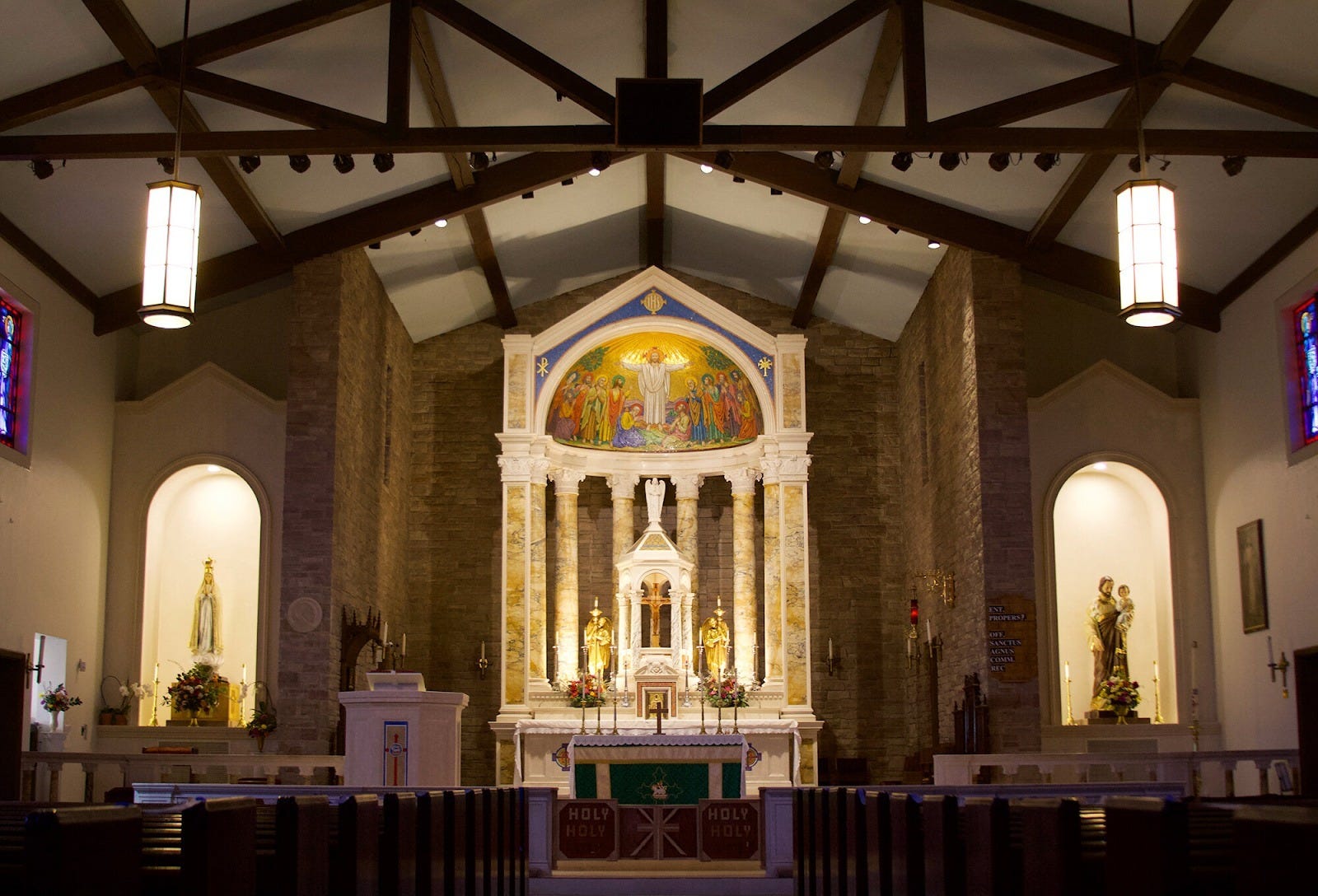
We know that similar evils are happening elsewhere. For example, the longstanding and very popular Latin Mass at the Cathedral in Santa Rosa will be ended — against per Vatican decree — on November 24th. After saying this place was home to him, a friend of mine lamented:
The high altar was brought in specifically for the TLM. I would like to be there [on that final Sunday]; my grandfather was there the last time it went away.
That is, this man is now being forced to re-live, in 2024, the horrible experience to which his grandfather had been subjected around the year 1970: to see the Mass of the Ages stamped out by our latter-day ‘c’atholic Cranmers. How unutterably sad. To have done this to people even once, based on predictions of a “new springtime,” was bad enough; to do it a second time, in the deep ecclesial midwinter, is sheer ideological vindictiveness.
As the slow machinery of the Dicastery for Divine Worship grinds through diocese after diocese, we can be certain — short of a sudden end to this pontificate and the election of a pope with a quite different mentality — that more and more TLMs will be shut down, and also that the former Ecclesia Dei institutes (FSSP, ICKSP, IBP, monasteries, etc.) will be targeted next, not necessarily to be shut down, but to be lured or cajoled into this or that compromise (the trial run with the French Dominicans of the Holy Spirit should place everyone on guard; see my article “The Next Possible Anti-TLM Strategy: A Novus Ordo/TLM Hodge-Podge to Demonstrate ‘Acceptance of the Reform’”). That is the obvious trajectory in view; only God knows how far the wicked will be able to prevail before their downfall.
God will not be mocked. The Catholic churches that manage to stay open in the coming decades — as opposed to the vast number of buildings that will be shut down as the mainstream Church collapses into its predicted demographic sinkhole or that will be burned down by progressivist radicals, especially in reaction against four years under Trump — I say, these still-open churches will sooner or later get the Mass of the Ages back.
Here is my message to the Latin Mass faithful in Tyler, TX:
“Do not, whatever you do, give in to the serpentine tactics of those who seek to tear you away from the most sublime expression of our Roman Catholic faith: the traditional Latin Mass. Even though it will be more difficult to attend because of commuting to the FSSP parish (and because of that parish’s tight space), your ongoing fidelity to tradition will be richly rewarded, especially now that you are undergoing active persecution. Do not let anyone deceive you with reassuring promises of a ‘Latin Novus Ordo with chant’ or some such simulacrum. There is no substitute for the Mass of the Ages: the new rite is radically different from it at every level. Stay close to Our Lord in His Passion and Our Lady in her Compassion. They understand what it means to suffer for love and for the salvation of souls.”
Priestly heroism and devotion more needed than ever
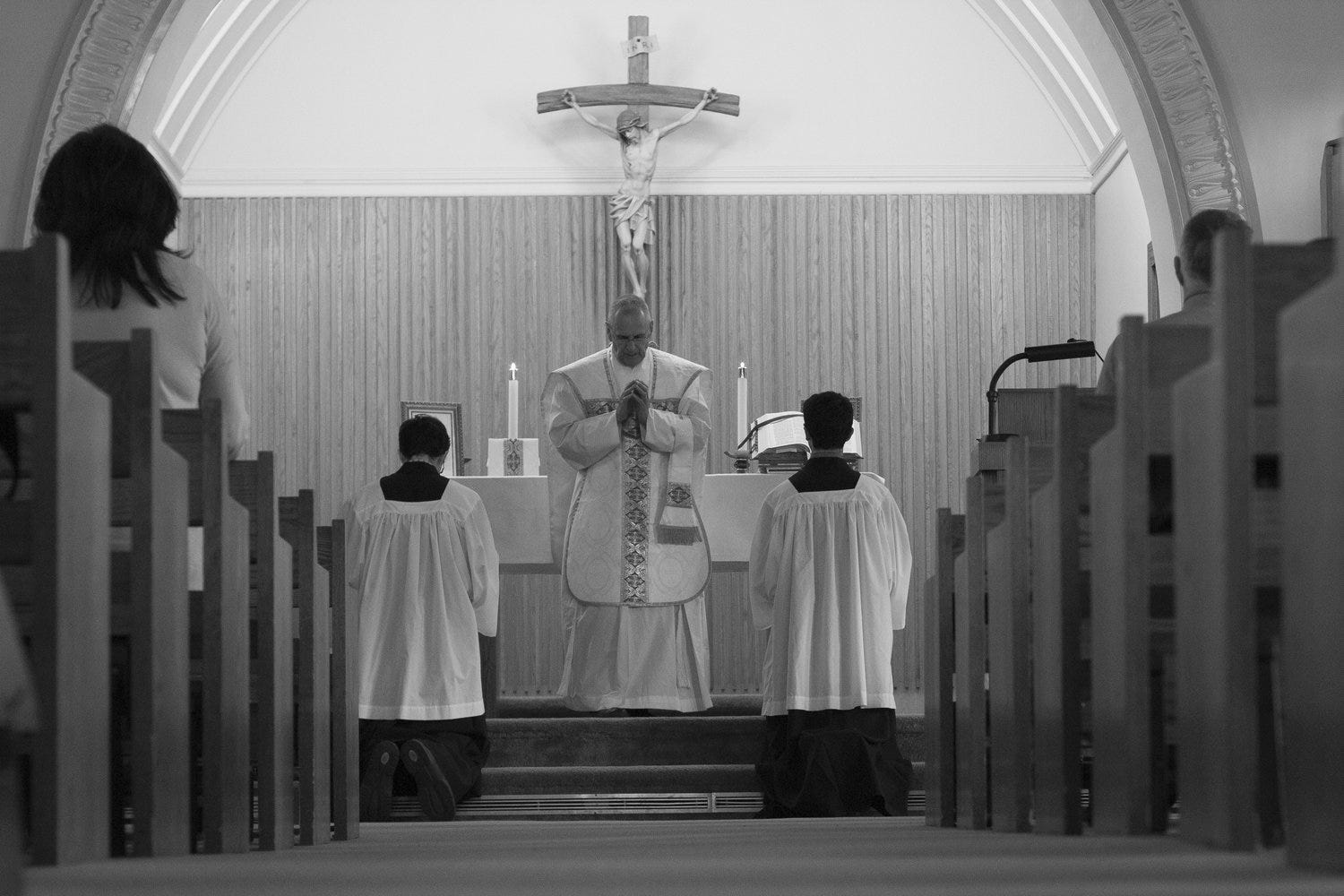
To all priests who are placed in a situation like this — suddenly forbidden to offer the TLM — I say:
“Band together and make a common stand. State to the bishop as a group that the TLM has become an essential and intimate part of your priesthood and of the lives of your faithful people, and that therefore you will not be ceasing to offer it exactly as before. Make it clear that this is a non-negotiable part of your priestly identity and of the good of the faithful you serve. You are fully justified in making this stance for the reasons given in my booklet True Obedience in the Church, written precisely for the era of Traditionis Custodes.
“Now, when you make this stand, two things could happen. (1) The bishop realizes he has a problem on his hands and seeks to find a solution; after all, a loss of five priests would be no small loss in most dioceses. (2) The bishop summarily removes you all from your positions. In this latter case, you should set up a chapel or chapels and continue to offer the Mass and other sacraments outside of the diocesan structures. This is the kind of heroism that will be needed to keep the TLM going strong, just as it was necessary in the period from 1969 to roughly the mid-1980s to keep it alive at all.”
Let it not be forgotten that with the ever-growing number of deaths and retirements among the clergy, soon any bishop who wants to staff a decent number of parishes will be compelled to use every priest he can find; and so, if more priests were more resolute and absolute in their commitment to tradition, more bishops would be forced to accommodate them. A bishop who still believes the Catholic Faith and cares for the spiritual good of his flock — I realize this may be a minority, and even a rather small minority at this point — will not fail to assign the TLM-exclusive members of his presbyterate to parishes, chapels, oratories, and the like. There is strength in numbers and, in a paradoxical way, in fewness of numbers; there is strength equally in an uncompromising black-and-white stance, where one does not leave the door open by a crack (“I prefer the TLM but I’m willing to do the Novus Ordo”) but closes it firmly: “I celebrate exclusively the TLM.”
This step could be taken by any priest in any diocese that is affected by the savage reprisals of Cardinal Roche & Co. A diocesan priest goes to his bishop and says, with all simplicity: “I no longer celebrate the Novus Ordo; I just can’t do it anymore. I celebrate only the traditional Roman Rite. I understand if you have no place for me, but I hope that you will find pastoral work that I can do, as I am eager to continue serving.”
(As for why a priest might reach that conclusion, I recommend reading the powerful article “Discovering Tradition: A Priest’s Crisis of Conscience,” and this follow-up, “Not Abandoning the Flock—Not Abandoning the Truth.”)
An understanding bishop, or at least a flexible one, may react by making this priest a hospital/prison chaplain, letting him go to a Carmelite convent as a chaplain, or assigning him to a remote country parish attended by only a small number of people. A less friendly (not to say heartless) bishop simply might “cancel” him on the spot, saying: “If that’s you’re settled view, then I have no work for you to do, and you are discharged from all responsibilities, with your salary cut in half.” Or even no salary at all. Such a priest might take steps to incardinate into a friendlier diocese or petition to join a traditional institute or community, if they will have him.
But if neither of those steps is possible, he may and should continue to minister to communities of traditional faithful. In our post-TC era, such communities now exist in well-established networks and are prepared to be very generous in their financial and personal support for clergy who keep tradition alive in their midst.
Underground chapels and independent chapels will be the temporary placeholders, the well-planted seeds, of future parishes run by the so-called “Ecclesia Dei” communities or by diocesan priests, once a future pope restores something like the policy of Summorum Pontificum (if not an even better policy). Of this we may be confident. Just as in the 1970s it was necessary for some priests to work outside the canons and norms when the Church structures were dominated by wolves preying on the flock and self-destructive modernists dismantling the Faith, so too in our era it will be necessary for some priests to work outside the canons and norms precisely with a view to preserving and handing on the Faith in its fullness. In God’s good time, the Church structures as Christ willed them will be replenished by the influx and participation of those who, in the time of crisis, refused to collude with the forces of dissolution and desacralization.
The basic point is this: a priest should make the right decision and let Divine Providence decide what further use to make of him, rather than feeling he should continually repeat decisions that, in his heart of heart, he knows to be compromises or capitulations concerning what is most intimate and important, what is most priestly and most divine. These are so many detours to a dead end. What is needed now is simplicity, clarity, consistency, courage, and zeal. Such qualities will mark out the priests who have lent themselves wholeheartedly to the Lord’s work of purifying and restoring His Church, which has fallen into ruins. May He grant that there be more and more such priests as time goes on.
The likely importance of independent chapels in times to come
In the state where I grew up, New Jersey, there are three exclusively TLM chapels I often attended that began as independent chapels in the evil days of the immediate post-council, when I was just an infant. The priests in charge of each had simply said, “I am not going to stop offering the traditional Mass and sacraments for my flock. It would be wrong to do so.”
Of course, all the usual penalties were thrown at them, but they persevered. In time, the priests died and the people were left with a conundrum. The stories are complicated but we can simplify by saying that, in each case, the chapel was regularized with the diocese in which it stood.
The Our Lady of Fatima chapel in Pequannock was entrusted to the FSSP, and it was here that my wife, a convert, made her first confession and her first Holy Communion.
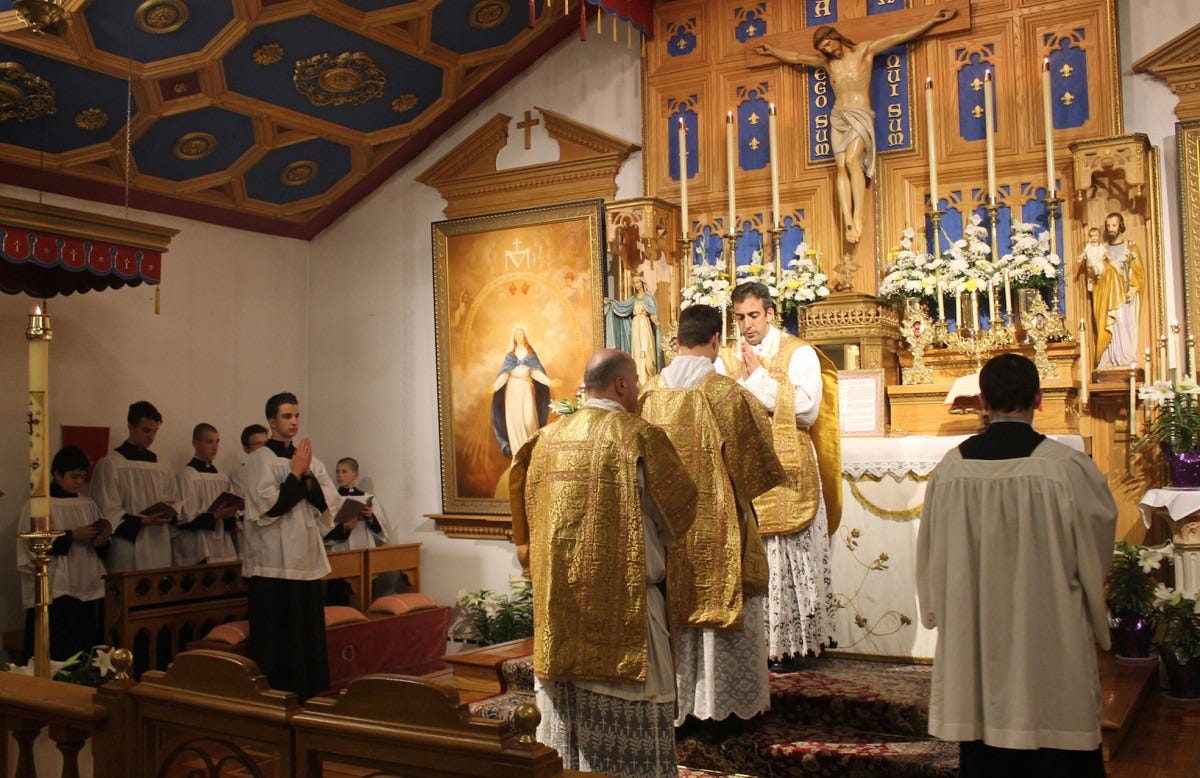
The Mater Ecclesiae chapel in the town of Berlin was erected as a diocesan parish and is one of the few exclusively TLM parishes in the country that is run by a diocesan priest. It was there that my wife and I were married in 1998, in a Tridentine High Mass on the feast of St. John (as I’ve discussed here at Tradition & Sanity: see part 1 and part 2).
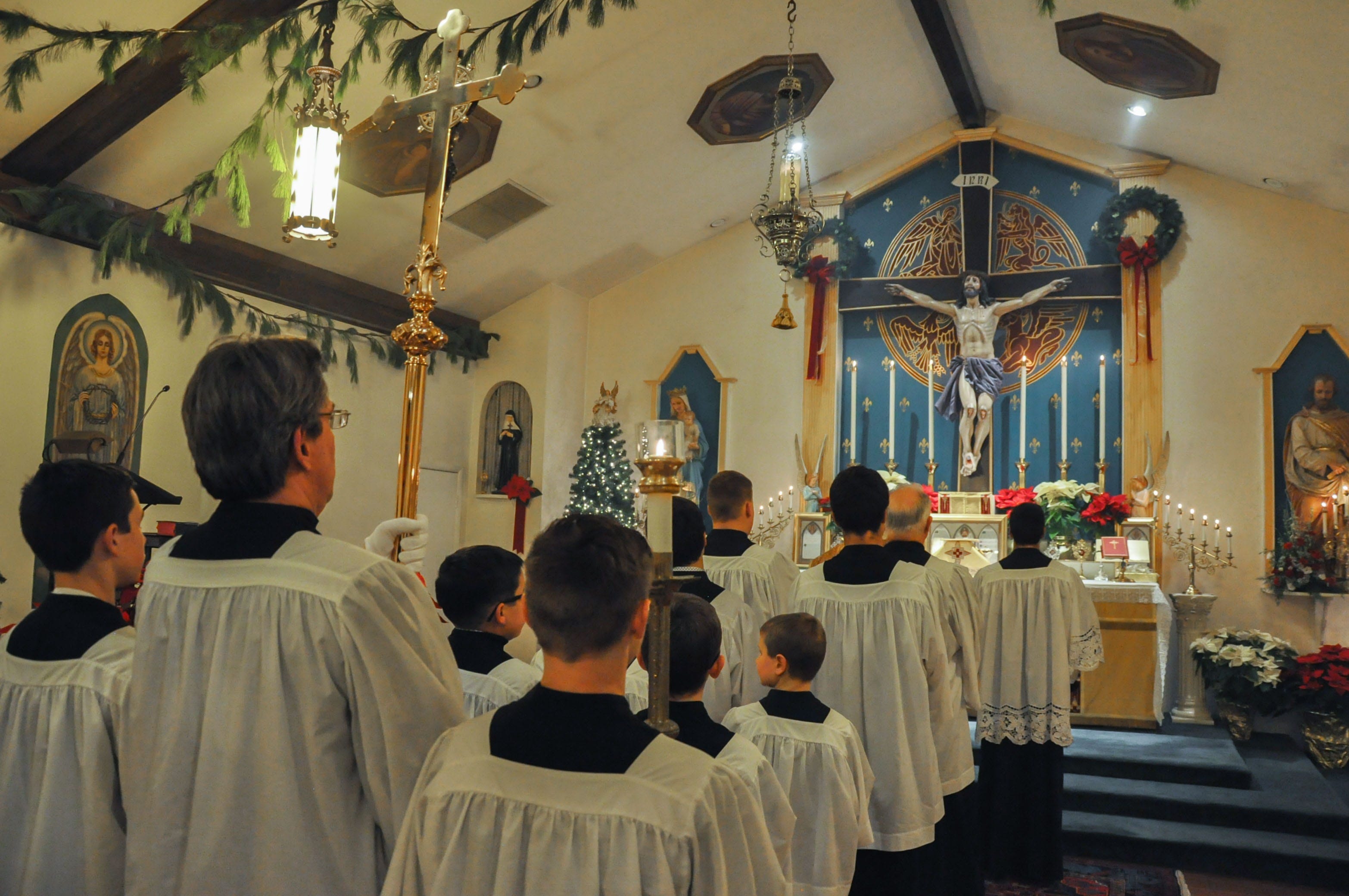
St. Anthony of Padua Oratory in West Orange was entrusted to the care of the ICKSP; and it was there that a priest, a dear friend of mine, offered a Requiem Mass for my mother shortly after she died.
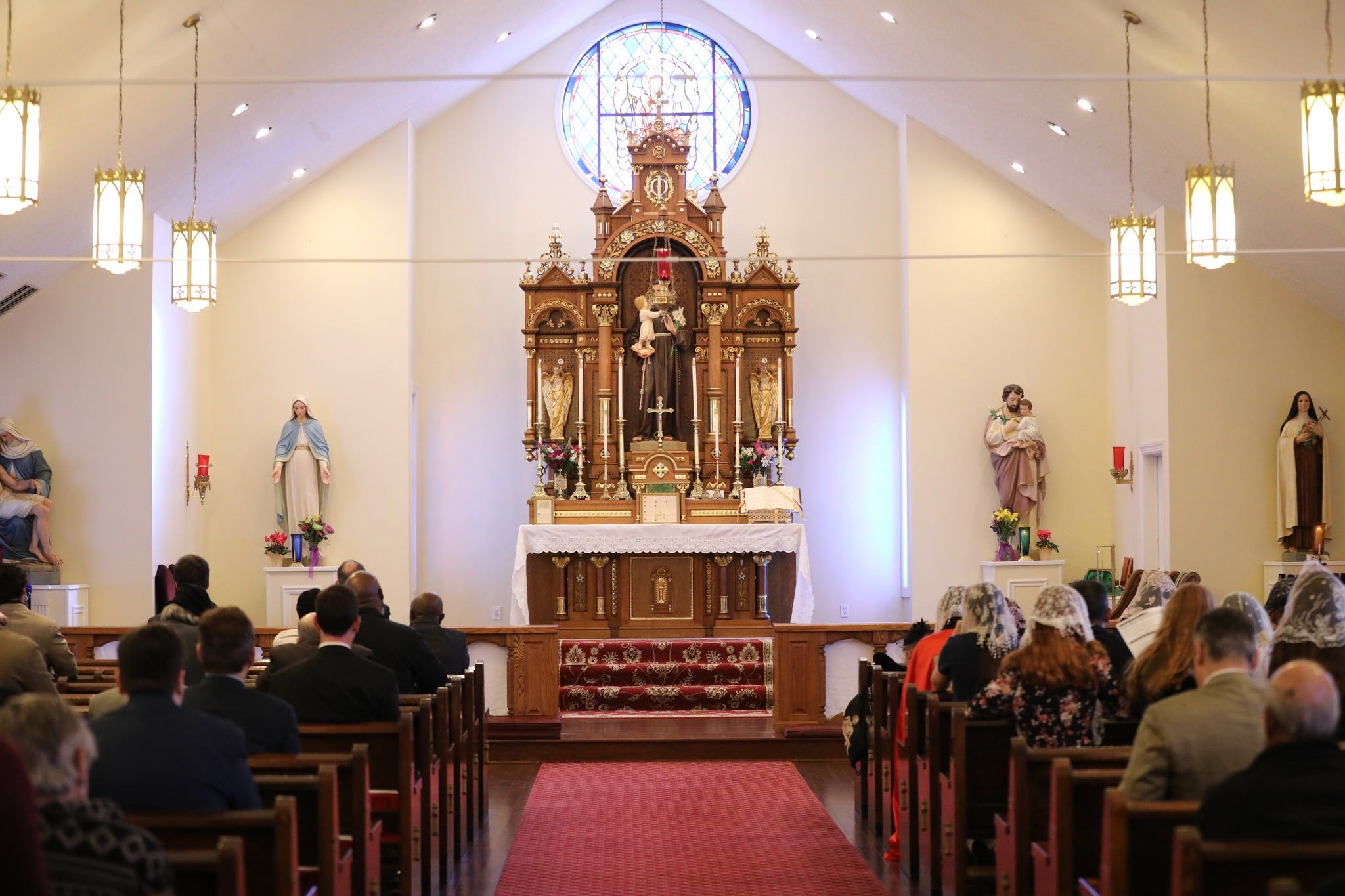
All three of these places, for obvious reasons, have a very special place in my heart and in the heart of my wife. All three chapels began in acts of overt “disobedience” to papal and episcopal tyranny; all three are flourishing today, “in full communion with the local bishop,” as the saying goes. The Lord does indeed write straight with crooked lines. None of them would exist but for the priests who established them and the faithful who built them up in their love for the unchanging Catholic faith and for the venerable Roman Rite that perfectly expresses it.
Without heroic individuals, among the clergy and the laity, who stood up for what they knew to be right, in spite of any and every command, prohibition, threat, or penalty, there would never be a traditional movement today. Today’s Catholics are often ignorant of the inspiring and harrowing stories from the years after the Council, and therefore often do not understand the determination and wisdom necessary to resist ecclesiastical self-destruction. I highly recommend becoming familiar with this history, for it is not only inspiring but instructive. (See Further Reading at the end.)
Without such loyal resistance, our Mass, our entire tradition, would have been torn from us and thrust down the memory hole. That is what the architects of reform intended, and it looked for a time as if they might succeed. The FSSP and the Institute of the Good Shepherd, to take two major examples, simply would not exist without Archbishop Lefebvre and the SSPX. Summorum Pontificum was in part the fruit of Joseph Ratzinger’s reflections on the sad state of affairs in which faithful Catholics who love the faith and love the liturgy were treated worse than sorted and recycled garbage.
Here I would like to make a brief remark, entirely positive, about the vital contribution that the Society of St. Pius X has made to the fight for tradition. While I am not prepared to say that it alone is responsible for the traditionalist movement — this would be an unhistorical oversimplification — nevertheless Lefebvre was the galvanizing and organizing figure who gave it structure and worldwide prominence, and his Society today continues to bring authentic divine worship and orthodox preaching, catechesis, and schooling to many Catholics. For this we must be eternally grateful.
My views on the SSPX may be found in my articles “On the SSPX and the Situation of Catholics ‘in the Trenches’” and “Is It Ever Okay to Take Shelter in an SSPX Mass?,” to which I’d add Paul Casey’s “SSPX Masses and Fulfilling the Sunday Obligation.” Among my friends and regular correspondents are priests of the Society as well as laity who frequent their chapels. I have encouraged many, in particular circumstances, to attend there. I myself have attended SSPX Masses. So, in that sense, I do not have “an axe to grind.”
Long-time readers will know my general view: I believe it best for the faithful who are able to get to a chapel run by one of the former Ecclesia Dei institutes to do so, for the simple reason that I believe it is better to have more goods than fewer goods, and communion with the local church is a true and important good. Contrary to what some have asserted, the Ecclesia Dei institutes, in my experience — and I have been to many chapels — are totally orthodox and traditional in their preaching and all other aspects of parochial life.
In any event, what Catholics need and deserve is a stable, coherent, fully traditional community life. The implementation of TC is making this increasingly difficult, and sometimes impossible, on the diocesan level.
At a crossroads
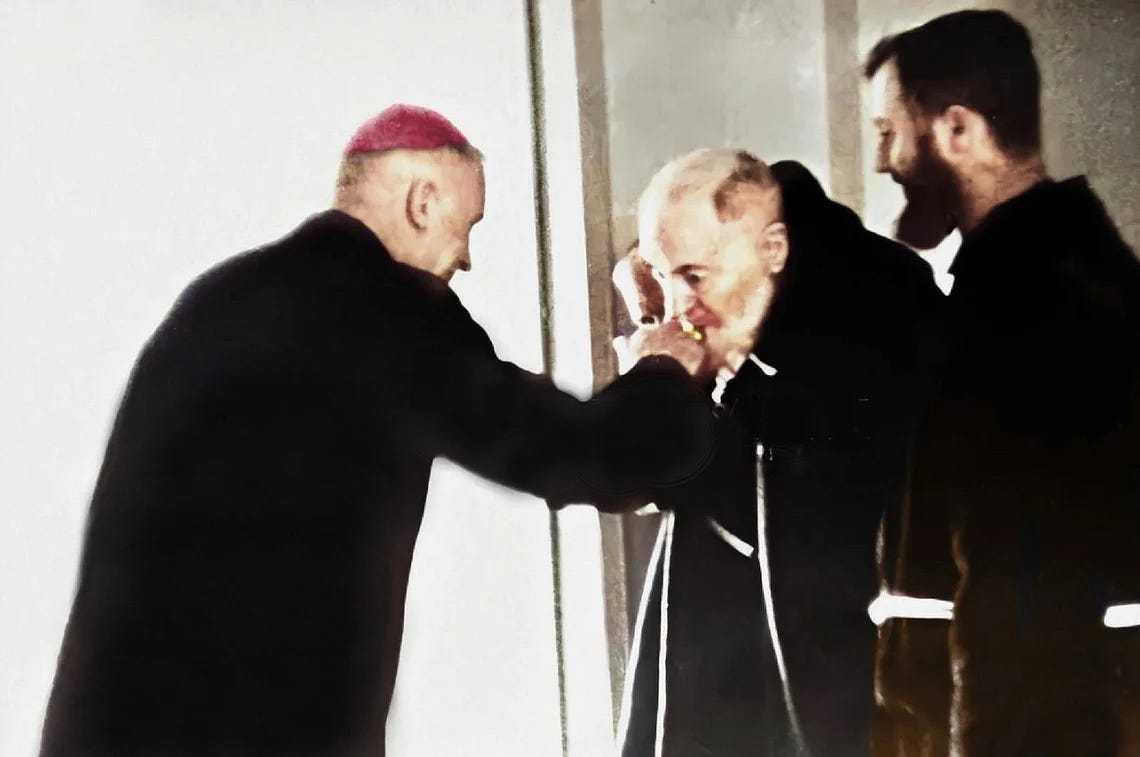
We are again at a crossroads, just as Archbishop Lefebvre was in the early 1970s. And again, the same boldness and conviction will be needed. Obviously, I advocate working with the Church’s pastors — to the extent that they are willing to be worked with, reasonably and charitably — and thus I believe that, wherever bishops still care about their flocks, the best way forward is to bring into a diocese the so-called Ecclesia Dei institutes, as long as they have not been forced by the Vatican to undergo “aggiornamento.”
At this time, however, both the Vatican and most bishops are ready to hurl traditional Catholics under the bus, and run over them backwards and forwards. Faced with such persecution, the true lover of the fullness of Catholic tradition does not simply surrender and abandon the fort to its enemies. He resists, in a calm and principled manner. In such grim circumstances, independent and underground chapels will arise of necessity — and they should. I see disobedience, irregularity, and independence as last resorts; but I also do not condemn them, as long as the individuals involved understand clearly that their stance is and must be temporary, that is, it will last only until better episcopal counsels prevail and regularization becomes possible with the diocese, under the local bishop.
I therefore condemn utterly, and have no truck with, sedevacantism in any of its varieties. I wish to be as clear as possible to my readers: Do not simply assume that any independent chapel will be suitable to attend. You need to find out first if they have rejected the visible structures of the Church, for if they have done this, they are of dubious lineage and theology.
The independent priests of whom I am speaking — it is better perhaps to call them priests who have been forced into an independent situation against their will — are still praying for the pope and the local bishop in the Canon of the Mass. They have been forced out of the institutional structures, but their intention is always to remain within them and united to the one and only Church established by Jesus Christ. A sign that this is their true belief is that they are ready to be canonically recognized by those who will not persecute them for being Catholics.
I would even say — and I am aware of independent priests who already do this — that once a year the priest de facto in charge should send a courtesy letter to the local bishop, telling him that the community is praying for him and for the pope every day in the Canon of the Mass, and that he is prepared to meet with the bishop to discuss an amicable arrangement whereby the chapel may be incorporated into the diocese as a parish, an oratory, a shrine, or what have you. Naturally, nine out of ten times this letter will either be ignored or receive a reply to the effect of, “We don’t recognize you, we don’t want you, go away and stop bothering us.” Still, it’s the thought that counts, isn’t it? “The Lord seeth not as man seeth; for man looketh on the outward appearance, but the Lord looketh on the heart” (1 Sam 16:7).
Above all, let us not underestimate the sinfulness of what the pope, Cardinal Roche and his Dicastery, Bishop Vásquez, and others are doing as they seek to suppress the most venerable rite of Christendom and injure the faithful legitimately attached to it. The pope is the servus servorum Dei, the servant of the servants of God: his role is entirely to preserve and protect the tradition he has received and to feed the flock in abundant pastures. Instead, this pope and his henchmen have uttered the cry Non serviam: I will not serve the orthodox Faith, I will not serve sound Catholic morality, I will not serve Catholic tradition, I will not wash the feet of the disciples of Christ. Therefore, the bishops who follow the lead of Francis and his court make this Non serviam their own; and the priests who follow these bishops do the same. As obedience cascades down through the chain of command, so too does disobedience. Of this hated and hateful disobedience, we wish to be absolutely free and uncontaminated, as with all the saints and angels we yield our willing obedience to Christ, to His truth, to His divine worship handed down across the millennia.
The stakes are high, and that is why it is not a time for niceties, compromises, or shoulder shrugs, but a time for integrity, honor, and fortitude. Ours is a dire situation, but faith, zeal, and perseverance will pay off in the long run, as it did for our forefathers in the traditional movement.
Further Reading
Three books present the essential arguments for why we can and should materially disobey TC in the name of obedience to higher goods. I wrote the first two and edited the third:
True Obedience in the Church: A Guide to Discernment in Challenging Times
Bound by Truth: Authority, Obedience, Tradition, and the Common Good
From Benedict's Peace to Francis's War: Catholics Respond to the Motu Proprio Traditionis Custodes on the Latin Mass
Here’s a three-part series I published at OnePeterFive shortly after TC came out. It has lost none of its relevance:
Another piece:
The classic trilogy by Fr Bryan Houghton:
Mitre and Crook (fictional account of a bishop who decides in his diocese to roll back Vatican II and the new liturgy — brilliant!)
Judith’s Marriage (fictional account of a Catholic laywoman convert who keeps her traditional faith in spite of the era of Vatican II)
Unwanted Priest (memoirs of the author, including how he resigned rather than say the Novus Ordo and ended up a TLM chaplain in France)
Histories of the movement:
Yves Chiron, Between Rome and Rebellion: A History of Catholic Traditionalism with Special Attention to France
Stuart Chessman, Faith of Our Fathers: A Brief History of Catholic Traditionalism in the United States, from Triumph to Traditionis Custodes
Joseph Shaw, ed., The Latin Mass and the Intellectuals (in spite of the title this book has quite a broad reach and many fascinating stories)
Examples of heroic priests who were “canceled” but kept on going:
Fr. Yves Normandin, Pastor Out in the Cold: The Story of Fr. Normandin’s Fight for the Latin Mass in Canada
Fr. Alphonsus Maria Krutsinger, The Story of Fr. George Kathrein
If readers have any favorite articles or books they’d like to suggest, by all means please add them in the comments!
This shows you, by the way, the utter cruelty of the prelates who make these decisions. At a time when the Church is dying in so many places, here six healthy congregations are being forced into one — all to please the ideological vendetta of a pope and his curial martinets. No bishop who had a beating heart would countenance this for one moment.
These words were, incidentally, among the many excluded from Liturgy of the Hours. NuChurch doesn’t even want you to pray with the prayers that God Himself inspired for times and situations like our own.
ADDENDUM
What if someone made the objection:
"Obedience is the surest way to sanctity, as is demonstrated through the Saints time and again. We have no other choice than to trust Mother Church. One can not separate themselves from the Pope and Magisterium without risking danger in our personal lives."
I would say, fair enough, this is true as long as Mother Church is the one really at work, and not renegade churchmen; as long as the Pope is teaching and practicing the Faith; as long as the Magisterium is in fact coherent with perennial doctrine and sound discipline.
Let's not forget that the "obedience above all things" mentality has been a major instrument in the dissolution of Catholic tradition and the sex abuse crisis. I am someone who tries to see things from all points of view, without committing myself definitively in any one direction. I like to say that I view the diocesan TLMs, the Society, the independents, and the Ecclesia Dei communities as being like Army, Navy, Air Force, Marines. All are needed to win through to victory.
I view the rupture with Catholic tradition after Vatican II to be a metaphysical wound in the Church that must be healed if the Church is ever to flourish again. Moreover, I view the loss of it as a sharp and profound loss for the spiritual lives of all the faithful. Therefore, I regard the retention of the TLM as a life-and-death matter, as something more important than obedience to those who would crush it or who would treat the faithful attached to it as second-class citizens. And just as a homeowner can use lethal force against an intruder breaking in, though he couldn't do that in any ordinary situation, so I believe that there are times when bold steps need to be taken against those who are violating our rights and duties as Catholics.
It's clear that all of us agree about this to one degree or another, or else why would we ever bother having any attachment to an old rite that Pope Paul VI made very clear should be discontinued? The traditionalist movement exists only because it disagrees with the prudential judgments of several popes in a row.
Legal positivism is no way to live a coherent Catholic life, since it would mean putting on and putting off our practices like garments, depending on who happens to be in office. No sane person had ever thought or acted that way prior to Vatican II, but now it seems to be taken as a virtue. This is the mess that has to be cleaned up, and I pray that future popes and bishops will be equal to the task. They sure aren't right now.
May God protect the FSSP, ICKSP, and IBP. All three orders are doing so much to preserve the Faith throughout the world. The two IBP priests in North America are so kind and genuinely happy to bring the Faith to those around them. Cardinals in Rome are so far removed from this kind and joyful grassroots ministry; how could they possibly make just pastoral decisions regarding any of these orders. I pray that the Ecclesia Dei orders may be permitted to continue to offer only the Mass of the Ages, for they are truly the lifeline of the Church and her faithful.