


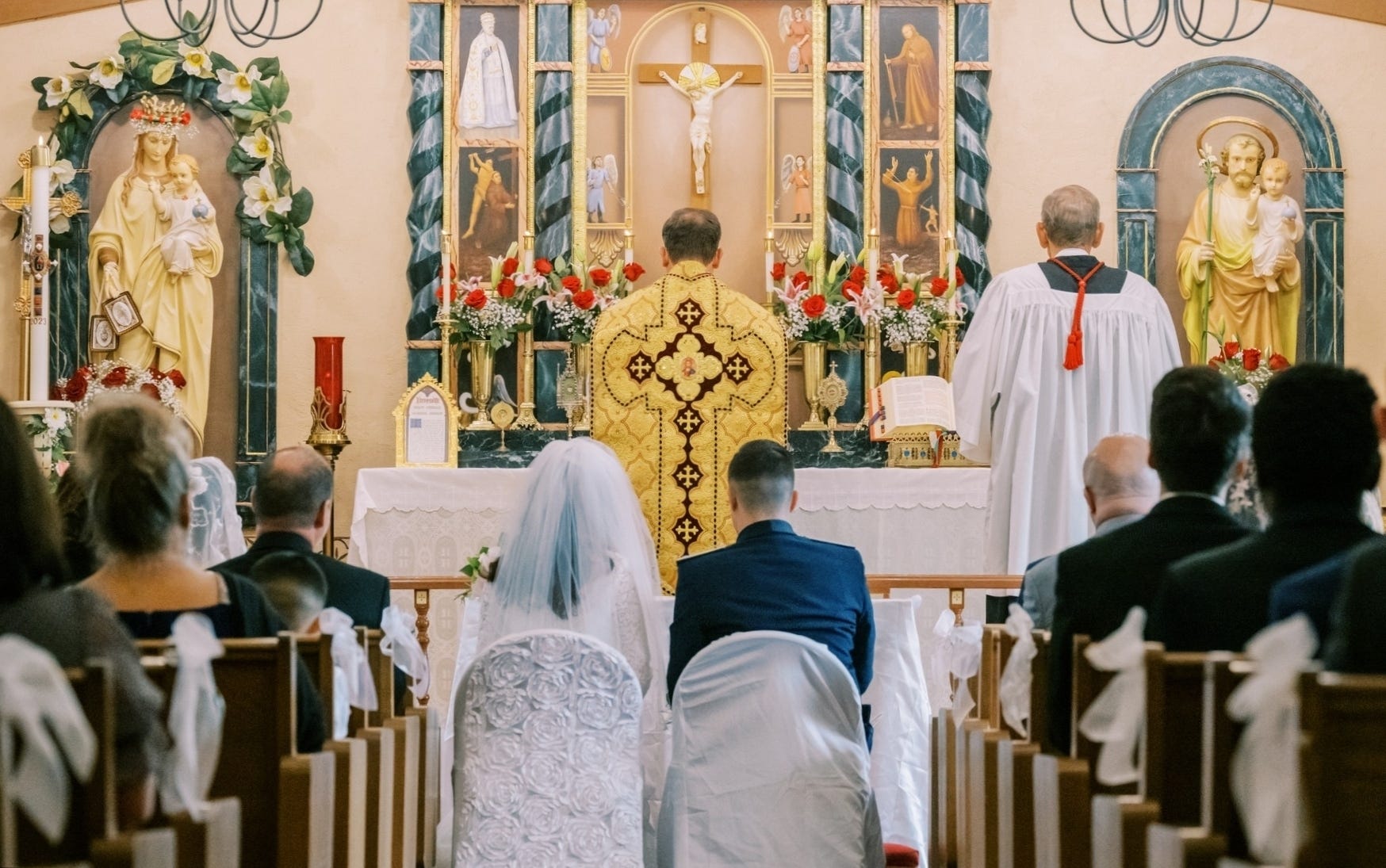
As we just celebrated the feast of the Holy Family (the Sunday in the Octave of Epiphany), and this coming week (on the Second Sunday after Epiphany) we will recall the Wedding Feast of Cana, it seems fitting to spend some time learning about the goods of marriage in the school of the Angelic Doctor. For there is indeed much for us to learn (or relearn) from St. Thomas, particularly when it comes to truths we may be in danger of losing sight of, in the face of countless attacks against the divine order.
Though not an original thinker in this area, Thomas masterfully analyzes and synthesizes traditional data, and this is already an immense help.1 That Thomas viewed Christian matrimony positively can be seen in his remarkable declaration that, from a certain vantage, the sacrament of marriage stands first among the sacraments: “As regards what is signified . . . marriage is the noblest, because it signifies the conjunction of the two natures in the person of Christ” (Sent. IV.7.1.1.3) and “the perpetual conjoining of Christ to the Church” (Sent. IV.27.1.3.2 arg. 1).
There are, to begin with, countless anti-Manichaean swordthrusts in the works of Aquinas, who defends, at times pugnaciously, the metaphysical goodness of bodiliness, sexuality, marriage, and procreation, as well as their moral goodness when right use is made of them. All that comes from the infinitely good God, the Creator of heaven and earth, is itself good (by participation). Marriage was intended by the Creator for man and woman, and so it is natural to them, and pleasing to God when used according to his plan.2 Unlike many of his contemporaries, Aquinas confidently argues that the marital embrace, duly motivated, is sinless or blameless (Sent. IV.26.1.3), in accord with right reason,3 honorable,4 valuable for the human community,5 meritorious for spouses on their pilgrimage to God,6 and holy (sanctus).7
Thomas says that marriage was ordained against guilt “by preventing it from occurring” and by cleansing the soul “from the cause of guilt, which is concupiscence — and thus, marriage, which restrains and orders it, has a cleansing power”;8 that “marriage offers a remedy by repressing concupiscence at its root, through the grace that is given in it” (Sent. IV.26.2.3); more generally, that “the goods of marriage pertain to grace or virtue” (Sent. IV.31.2.2, arg. 1). Whenever the motive for the marital act is either children or sacramental fidelity, “spouses . . . are totally excused from sin” (Sent. IV.31.2.2). Even a pagan husband “commits no sin in knowing his wife, if he renders the debt either for the good of children or from the fidelity with which he is bound to his wife, since this is an act of justice or temperance” (Sent. IV.39.1.2, ad 5).
On Hebrews 13:4, “Let marriage be held in honor among all, and let the marriage bed be undefiled,” St. Thomas comments:
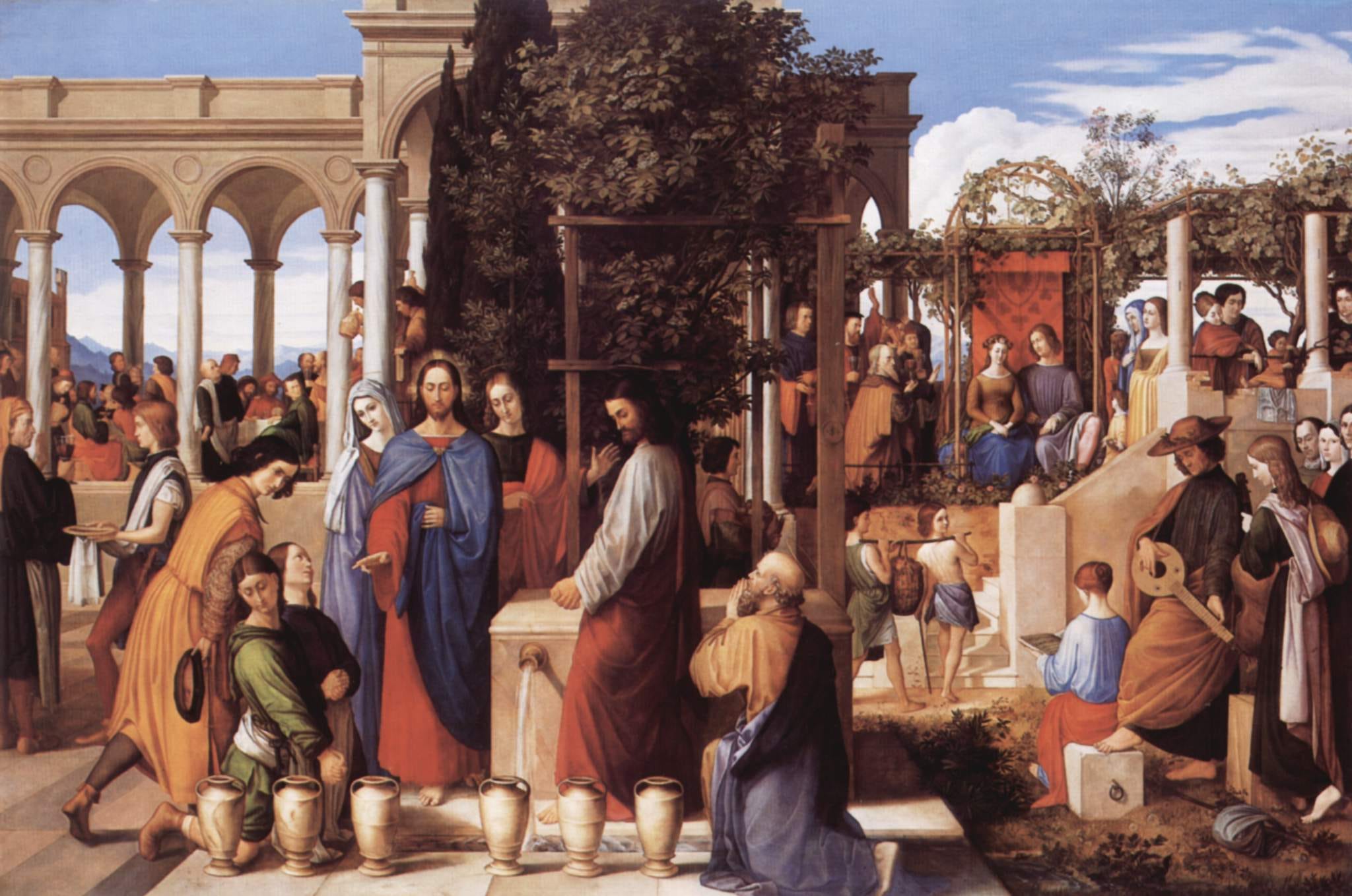
This [verse] shows that the marital act can exist without sin; which is against certain heretics: “If a virgin marries, she does not sin” (1 Cor. 7:28). Hence, the Lord, in order to show that the marital act is good, worked His first sign during a wedding and ennobled marriage by His bodily presence [there], and [moreover] willed to be born of a married woman.9
It is of tremendous importance to understand that, for St. Thomas, the conjugal act does not belong to marriage’s essence but is rather its natural consequence. As he explains with customary rigor: “Fleshly commingling is a certain activity or use of marriage, through which a faculty is given for this [use]; hence fleshly commingling will be of the second integrity of marriage, and not of the first” (Sent. IV.26.2.4). He cites approvingly a statement of St. John Chrysostom: “it is not sexual intercourse but free will that makes a marriage” (Sent. IV.27.1.2, sc 1).
Thomas distinguishes marriage’s “first perfection,” its very form — described as “an indivisible conjoining of souls, by which one of the spouses is bound to keep faith indivisibly with the other” — from its “second perfection,” the activity by which it attains its end, which is “the begetting and upbringing of children” through “conjugal intercourse . . . and the other works of husband and wife by which they mutually serve each other (sibi invicem obsequuntur) in rearing their children” (ST III.29.2).
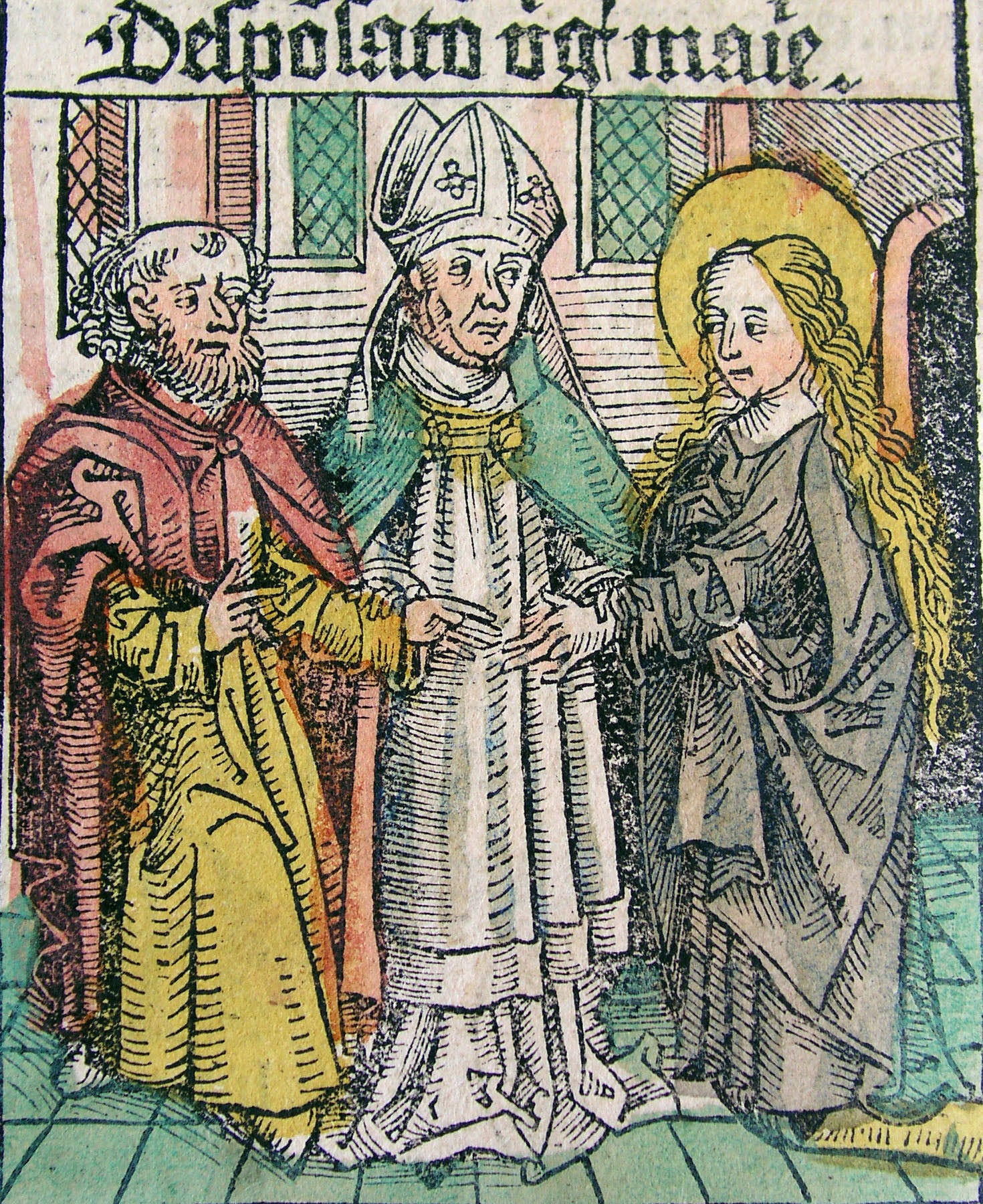
This distinction between the first and second perfections of marriage lies at the heart of Thomas’s defense of a true marriage between Mary and Joseph. Mary and Joseph “consented to the conjugal uniting, but not expressly to the fleshly uniting save on condition that it should please God” (ST III.29.2); hence their marriage really came into existence.10 St. Thomas argues as he does because, in his view, the consent to marriage is not a consent to carnal intercourse per se, but a consent to the marital consortium or society that implies such intercourse; put differently, it is a consent to the mutual power of the spouses over each other’s bodies that is carried out in the fleshly coming-together.11 Hence Mary and Joseph, fully consenting to be each other’s spouses, thereby became spouses, but because it was the Lord’s will that they not unite sexually, they remained “in suspension” as regards the bodily exchange that normally follows upon this consent.12 In fact, Thomas goes so far as to say that if Mary, in wedding Joseph, had not willed to remain open to the procreation of children by him if God wanted this, then their marriage would have been invalidated through her rejection of one of the essential goods of marriage, the good of offspring.13
This scenario suggests its contrary: a relationship can be consummated but not true, that is, not marital. At one point St. Thomas brings up an argument that sexual intercourse ought to be construed as sufficient consent to marriage, because, says the objector, “there can be no greater construal of consent” than this act (Sent. IV.28.1.2, arg. 2). But he rejects this idea, since the sexual act in and of itself is ambiguous, and need not mean commitment to lifelong marriage; even a favorable construal “does not change the truth of the matter” (ibid., ad 2). The reason is that this act becomes marital through marital consent and in no other way. As Thomas puts it: “What that [unmarried] man who mingles carnally consents to, is, in truth, carnal intercourse; but from this fact alone he does not consent to marriage” (ibid., ad 1).
What one sees here and elsewhere is a rudimentary awareness of a theology of the body that recognizes how our physical acts are a language that we speak to one another, presupposing a hermeneutical context. My thinking and willing affect the very meaning of what I am doing with my body. If I lie with a woman who truly loves me but I intend no permanence in the relationship, I am lying to her, because she will “construe it as consent” to permanence — as Thomas remarks: “consent to someone for a time does not make a marriage” (Sent. IV.31.1.3, ad 4). The same thing is true when it comes to procreation: there would seem to be no greater consent to children than the generative act, yet if the possibility of offspring is obstructed, the act is a contradiction in terms, a lie.
That the marital act is meritorious and holy for spouses in a state of grace — a view that may now strike us as obvious — was routinely denied in the Middle Ages. In the Scriptum super Sententiis Thomas frequently rehearses arguments that express a crass contempt for marriage and sexuality14 and refutes them with crystal-clear logic. Probably the worst is an opinion he reports before trampling on it: “To seek out pleasure in this act would be mortal sin; to accept the pleasure offered would be venial sin; but to hate it would be a thing of perfection” (Sent. IV.31.2.3). To this Thomas replies, like a good Aristotelian: “the pleasure connected with a good activity is good, with an evil activity, evil.” From the perspective of sacred doctrine he is able to go further:
By the goodness of the sacrament [of marriage] . . . an act is called not only good, but also holy; and the marital act has this goodness from the indivisibility of the conjoining by which it signifies the conjoining of Christ to the Church. (Sent. IV.31.2.1).
Elsewhere he calls marriage a “remedy of holiness for man against sin (remedium sanctitatis homini contra peccatum)” (Sent. IV.26.2.1).
A short digression: it should not embarrass Catholics to admit that the medieval period, notwithstanding its incomparable achievements, bequeathed to succeeding ages certain erroneous habits of thought and omissions that have taken centuries to redress. The contemporary crisis of marital morality in the Church cannot be unrelated to the frequent lack of sound teaching and wholesome piety for married couples. That Catholics so easily fell prey to the lies of the sexual revolution points to an utter paucity of intellectual and moral preparation. Could a Baconian-Cartesian-Enlightenment conception of sexual freedom and mastery over nature have triumphed if a robust culture of the intrinsic nobility of the marital vocation and the sacredness of sexuality in service of the gift of life had been firmly in place?15 The resources were already there in St. Thomas, but one might argue that they were not well harnessed, they did not always manage to “trickle down” to the popular level.

About properly sacramental marriage, St. Thomas has still better things to say. Considered as a sacrament of the New Law, marriage between the faithful is a genuine cause of grace, indeed a continual cause (Sent. IV.2.1.1, qa. 2).16 Although marriage does not confer a sacramental character,17 it establishes something like a character, namely, a permanent spiritual nexus between spouses, which “operates dispositively to bring grace by the power of divine institution” (Sent. IV.26.2.3, ad 2). This nexus is an ever-flowing source of actual graces for spouses who remain in the state of grace.
Moreover, “from the fact that Christ represented it in his passion,” marriage has power to sanctify the spouses, even as His passion sanctifies the Church (Sent. IV.26.2.3, ad 1). It joins spouses not only in body but, more importantly, in soul, in spirit;18 it empowers them to live their common life in the friendship of charity. Along these lines, Aquinas answers a slightly humorous objection with a noble reply. The article is on whether marriage is a sacrament, and an argument against it goes like this: “The sacraments have their efficacy from the passion of Christ. But the human being is not conformed to the passion of Christ, which was penal, through marriage, since the latter has pleasure attached to it. Therefore it is not a sacrament” (Sent. IV.26.2.1, arg. 3). The reply: “Although marriage does not conform [a spouse] to the passion of Christ as regards punishment, it nevertheless conforms one to it as regards the charity through which he suffered for the conjoining of the Church to himself as [his] Bride” (ibid., ad 3).
Agreeing with Aristotle, moreover, Aquinas writes that “the friendship that is between husband and wife is natural and comprises in itself the noble, the useful, and the pleasant” (Sent. IV.31.1.1, arg. 2). He pursues this point in the Summa contra Gentiles:
The greater the friendship the more stable and lasting is it. Now, between a man and his wife there seems to be the greatest friendship; for they are made one not only in the act of fleshly intercourse, which even among animals causes an agreeable fellowship, but also as partners in the whole of domestic life (ad totius domesticae conversationis consortium). (ScG III.123)
Indeed, Thomas’s insistence that there must be a “generous and intense friendship” (liberalis amicitia, amicitia intensa: ScG III.124) between husband and wife is one of his main arguments against the practice of polygamy, which, given the resurgence of radical Islam, is no mere speculative question. In Sent. IV.33.1.1, he writes that polygamy “greatly impedes the second end” (fides) and “completely destroys the third end” (sacramentum). In this sense, while polygamy could be tolerated under the Old Law for a time, it was not God’s original intention, and any return to it is not only contrary to the human good, but also contrary to the union of Christ and the Church that marriage was and is instituted to signify; thus, polygamy after Christ is anti-Christic.
In Part II on Thursday, I will continue to explore St. Thomas’s theology of marriage by considering the nobility of the good of offspring from both a social and a spiritual point of view, and then we will step back to admire the “big picture” of how marriage symbolizes and actualizes charity.
Thank you for reading, and may God bless you!
St. Thomas did not have a chance to pen his definitive account of holy matrimony in the tertia pars of the Summa theologiae, in which he had reached the fourth sacrament, Penance, before ceasing his literary labors in December 1273. Nevertheless, we have the Scriptum super Sententiis, the Summa contra Gentiles, the Scripture commentaries, and numerous other works, which offer many detailed and mutually consistent discussions.
See Sent. IV.26.1.1 and ScG III.122–26 for extended argumentation in favor of the naturalness of monogamous, indissoluble marriage. Cf. Super Matt. 19, lec. 1 (Marietti ed., n. 1551).
See ScG III, ch. 126; ST II–II, q. 153, a. 2; In IV Sent., d. 31, q. 2, a. 1, ad 3; In IV Sent., d. 26, q. 1, a. 3, ad 6; In IV Sent., d. 26, q. 1, a. 4, ad 4; ST II–II, q. 153, a. 2, ad 2.
See Super Hebr. 13, lec. 1 (Marietti ed., n. 732); Super Ioan. 2, lec. 1 (Marietti ed., n. 341); In IV Sent., d. 30, q. 2, a. 1, qa. 2, sc 2.
See ScG III, ch. 136, solutio ad tertium.
In IV Sent., d. 26, q. 1, a. 4.
In IV Sent., d. 31, q. 2, a. 1; cf. In IV Sent., d. 26, q. 2, a. 1.
In IV Sent., d. 2, q. 1, a. 2.
Super Hebr. 13, lec. 1 (Marietti ed., n. 732).
Thus Aquinas maintains it was not inconsistent for Mary and Joseph to know that God wanted them to remain virgins, and yet for them to keep their hearts so open to the divine will that they did not insist on maintaining this virginity “at all costs”: “She [Our Lady] planned on virginity, unless the Lord should arrange otherwise; hence she entrusted herself to the divine arrangement. To the idea that she consented to fleshly intercourse, one should say that she did not; she consented to marriage directly, but to fleshly intercourse implicitly, so to speak, if God should will it” (Super Matt. 1, lec. 4 [Marietti ed., n. 93]; cf. Sent. IV.30.2.1, qa. 1).
See Sent. IV.28.1.4; Sent. IV.34.1.2, ad 1.
See Sent. IV.30.2.1.1, ad 1–3.
See Sent. IV.30.2.1, qa. 2, ad 2.
See, e.g., Sent. IV.2.1.3, arg. 1; Sent. IV.42.1, arg. 3; Sent. IV.26.1.3, arg. 3 and arg. 6; Sent. IV.31.2.1, arg. 3.
At the same time, we should guard against oversimplifications regarding the highly complex thought and practice of medieval Catholics regarding the sacrament of marriage. For a positive assessment, see F. Stan Parmisano, O.P., “Spousal Love in the Medieval Rite of Marriage,” Nova et Vetera 3 (2005): 785–806.
The same point is made more extensively in Sent. IV.26.2.3 and ST III.65.1. Cf. Sent. IV.26.2.3, sc.
Sent. IV.31.1.3, ad 5. Formally speaking, marriage confers a specific power “for bodily acts,” namely those ordered to the suitable and dignified procreation of children, which includes the power to bring them up well. This is why marriage does not confer a character, which is always ordered to “spiritual acts” (see Sent. IV.31.1.3, ad 5), as can be seen in the sacraments that do confer it — baptism, confirmation, and holy orders. Put differently, since character is a metaphysical participation in the high priesthood of Jesus Christ, only those sacraments confer a character that confer the ability to share in the very activity of Christ; and marriage equips earthly spouses to do something other than what Christ Himself actually does (although obviously not anything inherently incompatible with what he does). Some Thomists speak of a “quasi-character” conferred by Christian matrimony.
Sent. IV.42.1, sc 2; ibid., ad 3. Sent. IV.27.1.1, qa. 2, ad 3.
"Though not an original thinker in this area, Thomas masterfully analyzes and synthesizes traditional data, and this is already an immense help." Could we say satan is the progenitor of much that goes by the name "original thinking?" I'll take the Angelic Doctor's synthesizing over most "original thinking" any day and twice on Sundays. (Even though it's still an ongoing project for me to follow Aquinas and his thought-patterns.)
"That Catholics so easily fell prey to the lies of the sexual revolution points to an utter paucity of intellectual and moral preparation."
Similarly:
“Well, if things were so great before Vatican II, why did everything fall apart so rapidly? It must have been a great hollow shell.”
Sed contra:
"I think this reaction is facile (in both senses: easy and superficial). The reality is, the dividing line between fidelity and apostasy is always tissue-paper-thin, and what it takes to disrupt a whole population and throw it careening off-balance is far less than we would like to think, flattering ourselves. A healthy ecosystem requires pretty optimal conditions, and if enough of those conditions are shifted rapidly enough, the ecosystem will collapse.
"So, yes, you can have a large, healthy system, but it can also be fragile and vulnerable. Such is fallen human nature."